Murray's Raclette: The Science Behind Switzerland's Most Meltable Cheese
Discover how this Alpine classic transforms from stinky wheel to silky perfection through the magic of French terroir and New York affinage.
Estimated Reading Time: 6 min
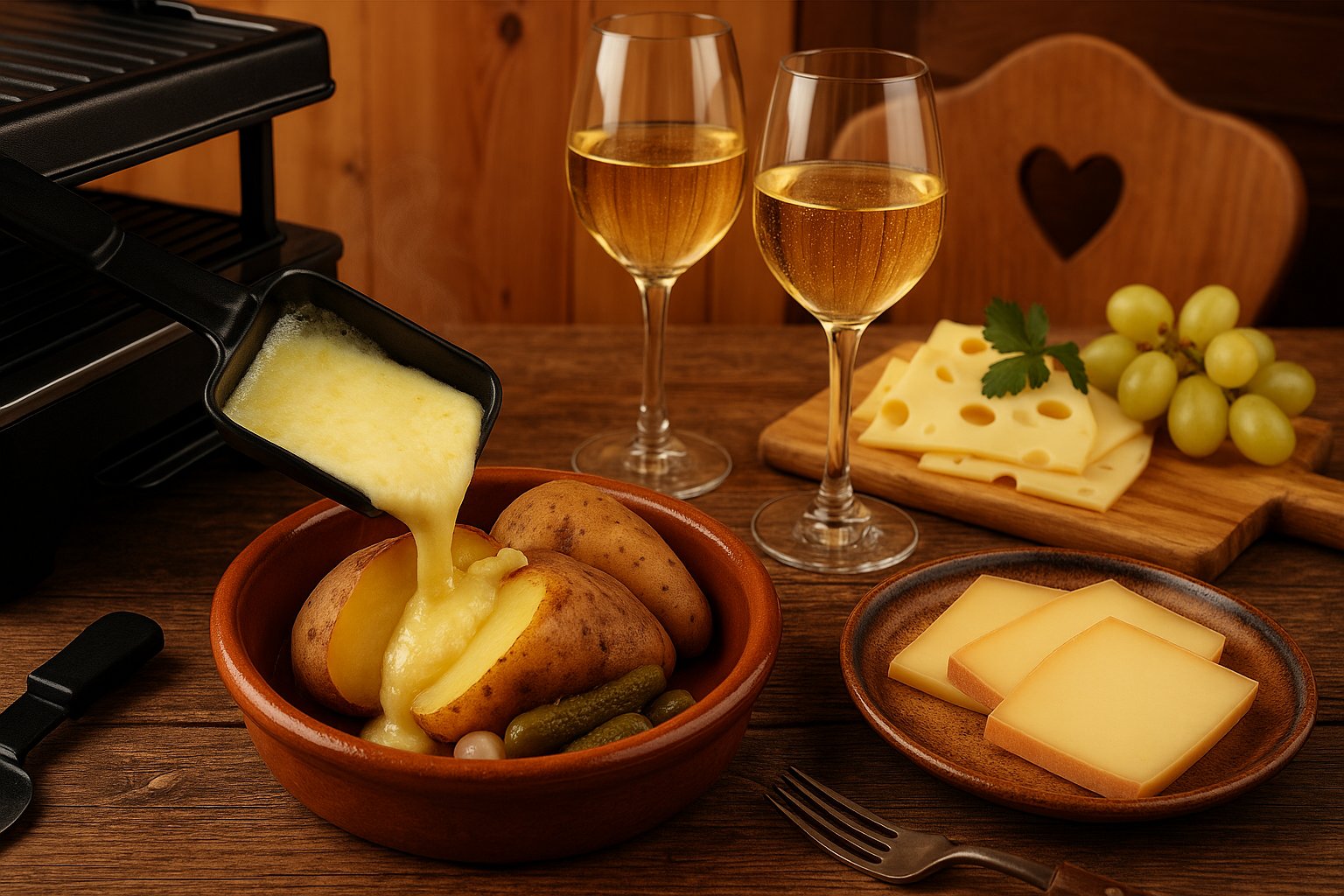
You've probably seen it at parties: that dramatic moment when molten cheese cascades from a heated wheel onto waiting potatoes and pickles. But Murray's Raclette is far more than Instagram-worthy theater. This semi-soft Alpine cheese represents a fascinating marriage of Old World tradition and modern dairy science, where French mountain milk meets New York City cave aging to create the ultimate melting cheese.

What makes Murray's version special isn't just its pedigree, it's the precise control of moisture, pH, and surface bacteria that transforms a humble wheel into liquid gold. From the high-altitude pastures of the French Alps to the specialized caves of Long Island City, every step is engineered for one purpose: perfect meltability.
The Trans-Atlantic Journey: From French Alps to NYC Caves
Murray's Raclette begins its life in the Alpine regions of Savoie and Franche-Comté, where cows graze on diverse mountain pastures filled with hundreds of species of grasses and wildflowers. This isn't just romantic imagery, the botanical diversity directly impacts the milk's fatty acid profile, creating higher levels of conjugated linoleic acid and Omega-3s that contribute to the cheese's complex flavor and superior melting properties.
The young "green" wheels are then shipped across the Atlantic to Murray's specialized Washed Rind Cave in Long Island City. Here's where the magic happens: the facility maintains temperatures around 55°F with humidity exceeding 93%, mimicking the limestone cellars of Europe. The wheels are turned and washed multiple times per week with brine solution, encouraging the growth of that characteristic red-orange "smear" on the surface.
Terroir Tales: The House Flora Advantage
Murray's Washed Rind Cave contains a unique microbial fingerprint. Because the cave is dedicated exclusively to "stinky" cheeses, the air is saturated with beneficial bacteria like Brevibacterium linens that naturally colonize every wheel of Raclette. This "house flora" creates a consistent flavor profile that you won't find anywhere else.
The Science of Meltability: Why Raclette Flows Like Silk
What separates great melting cheese from the mediocre? It all comes down to moisture content, calcium levels, and pH balance. Murray's Raclette maintains a moisture range between 36-44%, with retail slices reaching up to 50% to ensure rapid, uniform melting in home appliances.
During production, cheesemakers use a technique called "delactosage", washing the curds with warm water to remove residual lactose. This prevents excessive acidity that would hinder melting and ensures the cheese retains optimal "bound" water within the protein network. The result? Cheese that flows smoothly without "oiling off" or becoming lumpy.
Pro Pairing Tip: Temperature Matters
For the silkiest melt, bring your Raclette to room temperature for 30 minutes before heating. Cold cheese straight from the fridge can seize up and become grainy when heated too quickly.
The Vegetarian Advantage: Microbial Rennet
Unlike traditional Swiss Raclette AOP, which must use animal rennet, Murray's employs microbial rennet derived from the fungus Rhizomucor miehei. This makes the cheese vegetarian-friendly while providing the same protein-cleaving action needed for proper curd formation. Modern microbial rennet formulations are highly purified, producing a clean, savory flavor that allows the "deep, fruity pungency" of the affinage to shine through.
Aging: The 90-Day Transformation
Murray's Raclette is aged for a minimum of 3-4 months, but the real transformation happens during the final weeks in New York. The wheels undergo intensive care in the Washed Rind Cave, where repeated washing with brine solution creates the perfect environment for beneficial bacteria.
This surface activity creates a pH gradient from rind to center, gradually softening the texture through proteolysis, the breakdown of proteins by enzymes. Simultaneously, lipolysis breaks down milk fats into volatile compounds that give the cheese its characteristic aroma. The result is a cheese that's "stinky" on the outside but mellow and nutty within.
Ingredients Breakdown
- Milk: 100% pasteurized cow's milk from French Alpine herds
- Rennet: Microbial (vegetarian-friendly)
- Salt: Used in brining and surface washing
- Cultures: Lactic starters plus surface bacteria
- Allergens: Contains milk; naturally gluten-free
Flavor Profile: Beyond the Stink
Don't let the pungent aroma fool you. While Murray's Raclette smells like a barnyard, the flavor is surprisingly approachable. Professional tasters describe notes of "sweet cooked milk, fresh butter, and hazelnuts" with a "fruity acidity" that prevents the high fat content from overwhelming the palate.
When heated, the sulfur compounds become more volatile, but the dominant flavors are nutty, fruity, and subtly sweet. The key is the careful balance of acidity that provides a "clean" finish, preparing your palate for the next bite.
Spotting Spoilage: Normal vs. Concerning
Because Raclette is a living cheese with complex surface bacteria, distinguishing between normal aging and spoilage can be tricky. Here's what to look for:
Normal signs: Pungent, mildly ammoniated aroma; tacky, slightly moist orange-brown rind; supple texture
Red flags: Black, bright green, or neon yellow molds; excessively slimy rind; rotten milk or chemical odors; soapy or intensely bitter flavors
If your cheese smells overly ammoniated, try letting it "breathe" in open air for 20-30 minutes, often this will dissipate naturally.
Perfect Pairings: Wine, Beer, and Beyond
The high fat and salt content of Raclette demands beverages with sufficient acidity to cleanse the palate. Traditional Alpine whites like Apremont or Roussette de Savoie are classic choices, offering lively minerality and citrus notes that cut through the richness.
For beer lovers, the carbonation acts as a mechanical surfactant to "lift" fat off the tongue. Try a crisp Pilsner, a malty Bière de Garde, or a fruity Belgian Dubbel. The roasted notes in a good stout create a "like-with-like" pairing with the cheese's nutty, cooked-milk flavors.
Pro Pairing Tip: The Essential Accompaniments
Boiled fingerling potatoes and crusty bread provide the perfect neutral canvas for melted Raclette. But don't forget the acid: cornichons and pickled pearl onions are essential for their sharp "pockets of acidity" that reset your palate between bites.
The Raclette Experience: More Than Just Melted Cheese
Traditional Raclette service is about conviviality, gathering around the table as cheese is scraped directly from a heated wheel onto your plate. While you might not have a professional Raclette machine at home, you can recreate the experience with a simple table-top grill or even a well-ventilated oven.
The key is serving immediately while the cheese is still flowing. Pair with boiled potatoes, charcuterie, pickled vegetables, and a crisp salad with mustard vinaigrette. In Swiss tradition, warm beverages like black tea are preferred, though this is more folklore than physiology.
Historical Context: From Medieval Monasteries to Modern Tables
The practice of eating melted cheese dates back to at least 1291 in Swiss convent texts, where it was called "Bratchäs" (roasted cheese). The name "Raclette" only emerged in the late 19th century, derived from the French verb racler, meaning "to scrape." The cheese gained international fame following the 1964 Swiss National Exhibition, which promoted it as a national dish.
Pronunciation Guide
For proper fromage credibility, it's "rah-KLET" (/rækˈlɛt/), with a hard "k" sound and a distinct final "t." Avoid the common mistake of saying "rack-LAY", the "t" is definitely pronounced in French.
Storage and Serving Tips
Store Murray's Raclette wrapped in cheese paper or parchment in your refrigerator's cheese drawer. It will keep for 2-3 weeks past the sell-by date if properly stored. For serving, remove from refrigeration 30 minutes before use to ensure even melting.
If you notice white crystalline deposits on aged wheels, don't worry, these are tyrosine crystals, a natural byproduct of protein breakdown that actually indicates proper aging.
Murray's Raclette represents the best of both worlds: traditional Alpine cheesemaking enhanced by modern affinage techniques. Whether you're hosting a dinner party or simply want to elevate your grilled cheese game, this "stinky, melty" masterpiece delivers consistent quality and authentic flavor that bridges centuries of cheese tradition with contemporary American tastes.
Sources and Further Reading
- Murray's Cheese - Specialty cheese retailer and affineur
- Baldor Specialty Foods - Gourmet food distributor
- Culture: The Word on Cheese - Professional cheese publication
- Agrarforschung Schweiz - Swiss agricultural research institute
- ResearchGate - Academic research platform for dairy science studies
