Estimated Reading Time: 8 min
You've probably savored its granular texture and nutty complexity, but have you ever wondered what makes Parmigiano Reggiano so extraordinary? Behind every wheel lies a fascinating intersection of ancient tradition and cutting-edge dairy science. From the specific geography that shapes the milk to the acoustic tests that ensure quality, this iconic cheese represents one of the most sophisticated food production systems in the world. Let's explore the remarkable science that transforms simple milk into liquid gold.
The Geography of Greatness
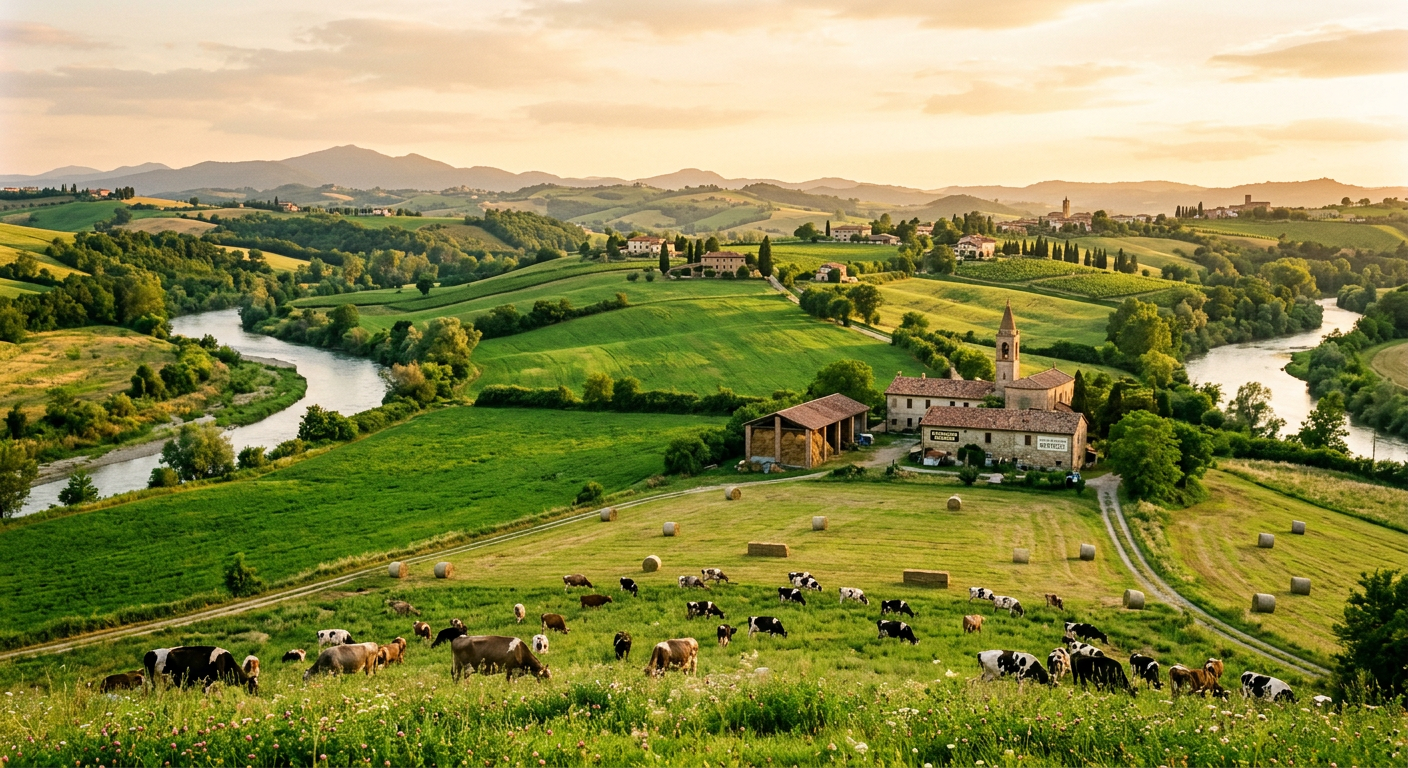
Parmigiano Reggiano isn't just made anywhere in Italy. This Protected Designation of Origin (PDO) cheese can only be produced within the precise boundaries of five provinces: Parma, Reggio Emilia, Modena, and specific areas of Bologna and Mantua. These aren't arbitrary lines on a map. The region between the Po and Reno rivers creates a unique microclimate where humidity, temperature, and soil composition work together to produce exceptional forage for dairy cows.

This terroir concept goes beyond simple geography. The local environment influences everything from the microbial populations in the air to the mineral content of the soil, which ultimately affects the flavor profile of the cheese. It's a direct line from landscape to taste that cannot be replicated elsewhere.
The Anti-Silage Revolution
One of the most stringent requirements for Parmigiano Reggiano production is the complete prohibition of silage (fermented feed) for dairy cattle. This might seem like an arbitrary traditional rule, but there's solid science behind it.
Silage contains heat-resistant, spore-forming bacteria called Clostridia. In long-aged cheeses, these spores can germinate and cause "late gas blowing" – a defect where hydrogen and carbon dioxide production creates internal cracks and off-flavors. By feeding cows only fresh grass and hay, producers eliminate this risk entirely.
The feed requirements are precise:
- At least 50% of forage must be produced on the farm where cows are raised
- 75% of total forage must come from within the production area
- No additives or preservatives are permitted
This direct connection between what cows eat and how the cheese tastes explains why authentic Parmigiano Reggiano has such distinctive aromatic characteristics that reflect the local flora.
The Milk: Where Science Meets Tradition
The journey begins with raw, unpasteurized milk that must be processed within hours of milking. Evening milk undergoes a fascinating natural process called spontaneous creaming, where fat globules rise to the surface in shallow copper or stainless steel tanks over 12 hours.
This separation follows Stokes' Law of physics – larger, lighter fat globules naturally float upward due to density differences. The process reduces fat content to achieve the optimal fat-to-casein ratio of 0.75 or less, while also providing a microbiological cleansing effect as bacteria adhering to fat globule membranes are partially removed.
Pro Pairing Tip: The specific fat-to-casein ratio achieved through spontaneous creaming is why Parmigiano Reggiano has such excellent melting properties. Try grating it over risotto just before serving to experience how the balanced fat content creates that perfect creamy texture.
The Living Starter Culture
Parmigiano Reggiano fermentation relies on Natural Whey Starter (NWS) – essentially yesterday's leftover whey that has spontaneously fermented overnight. This creates a continuous "microbiological link" between daily production cycles, with each batch carrying forward the beneficial bacteria from the previous day.
The high temperatures from the previous day's cooking process (up to 55°C) eliminate most mesophilic bacteria, leaving only robust thermophilic strains like Lactobacillus helveticus and Streptococcus thermophilus. These bacteria work synergistically – for example, S. thermophilus produces formate, which significantly enhances the milk acidification rate of L. delbrueckii.
The Copper Vat Advantage
Traditional bell-shaped copper vats aren't just for show. Each vat holds approximately 1,100-1,200 liters of milk and serves both thermodynamic and chemical functions. Copper's superior thermal conductivity allows for rapid, uniform heat distribution during the crucial "cooking" phase.
Research comparing copper to stainless steel vats shows that copper heats more evenly and cools faster, essential for controlling starter culture activity and curd contraction. Additionally, copper ions (Cu²⁺) leach from the vat walls into the cheese. A typical wheel contains about 5.78 mg/kg of copper compared to just 0.40 mg/kg from stainless steel vats. These ions help inhibit spoilage organisms and catalyze flavor-developing reactions.
The Chemistry of Coagulation
Coagulation begins when calf rennet is added to the milk. The enzyme chymosin specifically targets κ-casein proteins that stabilize casein micelles in milk. These micelles are negatively charged, creating repulsive forces that keep milk liquid.
Chymosin cleaves the peptide bond between specific amino acids (Phenylalanine and Methionine) in the κ-casein chain, removing stabilizing "hairs" and allowing paracasein micelles to aggregate through hydrophobic interactions and calcium bridging. This forms a three-dimensional protein web that traps fat and water, creating the solid gel known as "junket."
Terroir Tales: The traditional tool used to break the coagulated milk is called a "spino" – a large whisk-like instrument that creates rice-grain-sized curd particles. Master cheesemakers can determine the optimal breaking point simply by observing how the curd splits around the spino.
The Long Journey: Salting and Maturation
After molding and marking, wheels are submerged in saturated brine for 20-25 days. This isn't just about flavor – it's a complex process governed by osmosis and diffusion. The high salt concentration draws moisture from the cheese while salt molecules penetrate inward, regulating microbial growth and enzyme activity.
The minimum maturation time is 12 months, but most wheels age for 24, 30, or 36 months. During this time, the cheese undergoes proteolysis (protein breakdown) and lipolysis (fat breakdown) that create its characteristic texture and flavor.
The Crystal Mystery Solved
Those crunchy white crystals in aged Parmigiano Reggiano aren't salt – they're primarily tyrosine crystals. Tyrosine is an amino acid released during advanced proteolysis. Because it has low water solubility, it crystallizes when concentrations exceed certain thresholds, typically appearing around 24 months of aging.
Calcium lactate crystals may also form on the surface from lactic acid metabolism. These crystals are definitive indicators of proper, prolonged ripening.
Quality Control: The Hammer Test
After 12 months, every single wheel undergoes inspection by Consortium experts using a traditional hammer test. This is actually a sophisticated form of Acoustic Resonance Testing (ART). Each wheel has a unique "vibration fingerprint" based on its mass, density, and internal structure.
A clear, clean sound indicates healthy, compact paste, while dull or irregular sounds reveal internal defects like voids or cracks. Wheels are then classified as first grade (eligible for extended aging), medium grade (for younger consumption), or downgraded (rind removed, cannot use the Parmigiano Reggiano name).
Fighting Fraud with Science
Given its high value, Parmigiano Reggiano faces frequent counterfeiting. Scientists have developed sophisticated authentication methods:
Stable Isotope Ratio Analysis (SIRA) measures naturally occurring isotope ratios of carbon, nitrogen, sulfur, and oxygen in the cheese. These ratios reflect the cows' diet, local geology, and water sources, creating a unique regional signature with 95% accuracy.
Cyclopropane Fatty Acid Detection identifies the presence of specific fatty acids that only appear when cows are fed silage. Since authentic Parmigiano Reggiano prohibits silage, these compounds serve as definitive fraud markers.
The Health Connection
Parmigiano Reggiano is naturally lactose-free, as all lactose converts to lactic acid within the first 48 hours of production. Recent research has revealed that consuming this cheese can enrich human gut microbiota with beneficial bacteria through "horizontal passage" from cow to consumer.
The advanced proteolysis during aging breaks proteins into easily digestible peptides and amino acids, making it highly bioavailable. The concentration of free amino acids like glutamic acid provides the intense umami flavors that make this cheese so satisfying.
Pro Pairing Tip: The different aging periods offer distinct experiences. 12-18 month wheels pair beautifully with sparkling wines and fresh fruit, while 30+ month wheels complement aged red wines and can be enjoyed with honey as a dessert cheese.
Ingredients and Allergens
- Milk: Raw cow's milk from specific Italian provinces
- Rennet: Traditional calf rennet
- Salt: Sea salt from brining process
- Allergens: Contains milk; naturally lactose-free due to aging process
Where to Find It: Authentic Parmigiano Reggiano is available at Murray's Cheese inside City Market, where you can explore different aging periods and discover your preferred flavor profile.
The next time you grate Parmigiano Reggiano over your pasta or savor a chunk with wine, remember that you're experiencing centuries of refined dairy science. Every granular bite represents a perfect storm of geography, microbiology, chemistry, and time – a true scientific symphony that transforms simple milk into one of the world's most revered foods.
Sources and Further Reading
- Parmigiano Reggiano Consortium - Official production guidelines and quality standards
- Dr. Monica Gatti, University of Parma - Microbiology and fermentation research
- International Dairy Journal - Peer-reviewed cheese science publications
- Dr. Lorenzo Morelli, Catholic University of Sacred Heart - Probiotic and microbiome studies
- European Food Research and Technology - Authentication and fraud detection methods