The Complete Guide to Zanetti Grana Padano: Italy's Most Beloved Hard Cheese
From the fertile Po Valley to your table, discover why this ancient cheese has captivated palates for nearly a millennium.
Estimated Reading Time: 8 min
When you bite into a piece of Zanetti Grana Padano, you're tasting nearly 900 years of Italian cheesemaking tradition. This isn't just another hard cheese, it's the world's most produced DOP (Protected Designation of Origin) cheese, with over 5 million wheels fire-branded annually. But what makes this particular wheel from Zanetti so special? The answer lies in the unique terroir of Northern Italy's Po Valley, where ancient monastic techniques meet modern precision.

Zanetti, founded in 1900 and still family-run after five generations, has become the top global exporter of Grana Padano, reaching more than 110 countries. Their wheels mature in massive, temperature-controlled warehouses across nine facilities, including their state-of-the-art site at Castelbelforte. Each day, they process approximately 6,100 hectoliters of raw milk from over 250 suppliers, transforming it into wheels that will age for months or even years.
The Sacred Geography of Grana Padano
Grana Padano can only be produced in one place on Earth: the Pianura Padana, or Po River Valley, in Northern Italy. This isn't marketing, it's law. The European Union's PDO status, granted in 1996, mandates that every step of production, from cow to wheel, must occur within thirty-two provinces spanning five Italian regions: Lombardy, Piedmont, Veneto, Emilia-Romagna, and the Autonomous Province of Trento.
The Po Valley's unique climate creates the perfect conditions for this cheese. The abundance of water meadows and irrigated fields produces high-energy forage like waxy corn and specific grasses, which directly influence the milk's composition. Zanetti strategically positions its facilities throughout this region, from their headquarters in Lallio, Bergamo, to operations in Mantua, Brescia, and Reggio Emilia, ensuring they capture the diverse micro-terroirs of the valley.
Terroir Tales: The Monks of Chiaravalle
The story begins in 1135 AD at the Abbey of Chiaravalle near Milan. Cistercian monks had successfully reclaimed and irrigated the marshlands of the Po Valley, creating a massive surplus of milk. Their solution? A revolutionary preservation technique that would become Grana Padano. The monks initially called it "caseus vetus" (old cheese) in Latin, but common people named it "Grana" for its unique grainy texture, a term that eventually became official.

The Raw Milk Foundation
Zanetti Grana Padano is made exclusively from raw bovine milk, no pasteurization, no shortcuts. This isn't just tradition; it's essential for developing the cheese's complex flavor profile over months of aging. The raw milk preserves indigenous microflora and enzymes that create the "biological fingerprint" of the Po Valley terroir.
The milk comes from cows fed according to strict dietary guidelines. At least 75% of their fodder's dry matter must originate from the production area. Unlike Parmigiano Reggiano, Grana Padano allows silage (fermented forage) in the cows' diet, which contributes to its milder, more buttery flavor profile.
The Art of Natural Creaming
Before cheesemaking begins, the milk undergoes "affioramento naturale", natural creaming. Evening milk rests overnight in shallow copper vats, allowing cream to rise naturally to the surface where it's removed. This partially skimmed milk combines with morning milk, creating the precise fat-to-casein ratio (0.7 to 0.9) essential for proper aging.
Pro Pairing Tip: The silage in the cows' diet requires the addition of lysozyme (from egg whites) to prevent "late blowing", a defect where clostridial spores create irregular holes and off-flavors. This makes Grana Padano unsuitable for those with egg allergies.
The Cooked Paste Process
While Grana Padano uses raw milk, the production involves a critical thermal stage called "pasta cotta" (cooked paste). After adding natural whey starter and calf rennet, the curd is broken into rice-sized granules and gradually heated to 53-56°C. This temperature is crucial, high enough to select for beneficial thermophilic bacteria while preserving the raw milk's indigenous enzymes.
The cooking process forces moisture from the curd granules through syneresis, determining the cheese's eventual hardness and low water activity. Traditional copper vats conduct heat evenly, while specialized whisks called "spino" create the characteristic granular structure.
The Long Journey to Maturity
Grana Padano's transformation happens slowly in climate-controlled warehouses where wheels rest on wooden shelves for months or years. Zanetti manages over one million wheels across their facilities, each turned and cleaned every 15 days using automated robotic systems.
The Three Ages of Grana Padano
Standard (9-16 months): At nine months, expert technicians perform the "hammer test," tapping each wheel to assess internal structure. Passing wheels receive the official fire-brand. The flavor is delicate and milky with notes of fresh cream and sweet butter.
Oltre 16 Mesi (16-20 months): The texture becomes more granular, and flavors shift toward savory butter and toasted hay. This tier is highly favored in export markets, offering the perfect balance of complexity and approachability.
Riserva (20+ months): After a second inspection at 20 months, qualifying wheels earn "Riserva" status. These develop intense umami profiles with notes of beef bouillon, dried pineapple, and dark honey. Tyrosine crystals create delightful "flavor bursts" as they dissolve on the tongue.
Understanding Texture and Flavor Evolution
Grana Padano's defining characteristic is its "grana", the fine-grained structure that gives the cheese its name. This granular texture results from centuries-old techniques designed to optimize protein precipitation. As the cheese ages, it becomes increasingly flaky, naturally breaking into irregular wedge-shaped shards rather than slicing cleanly.
The presence of tyrosine crystals in aged wheels creates a delightful textural contrast. These white, crunchy specks are amino acid clusters formed during long-term protein breakdown, a sign of quality, not spoilage.
Flavor Development Timeline
9-16 months: Primary flavors dominate, fresh milk, clotted cream, sweet butter. The finish is clean and slightly sweet.
16-20 months: Secondary complexity emerges with melted butter, toasted hay, and light floral notes. Umami becomes more pronounced with toasted hazelnut undertones.
20+ months: Tertiary flavors reach full intensity, beef bouillon, dried pineapple, dark honey. The finish is exceptionally long and complex with notes of roasted wood and dried fruit.
Spotting Quality vs. Spoilage
As a hard, aged cheese, Grana Padano develops characteristics that might alarm the uninitiated but are actually signs of quality.
Normal and Desirable:
- White crunchy specks (tyrosine crystals)
- White powdery film on surface (calcium lactate)
- Faint ammonia odor when first opened (dissipates after 30 minutes)
Signs of Spoilage:
- Fuzzy or colored mold (black, pink, green)
- Slimy, sticky surface
- Persistent sour or metallic odors
- Large, irregular holes with foul smell
Pro Pairing Tip: Small mold spots on hard blocks can be safely trimmed away, but if mold spreads through grated cheese, discard the entire container.
Perfect Pairings for Every Age
Wine Companions
Young Grana (9-16 months): Pair with crisp, effervescent wines like Prosecco Superiore DOCG or Soave. The bubbles and acidity cut through the milky fat beautifully.
Mature Grana (16-20 months): Medium-bodied wines work best, try Franciacorta Satèn from Lombardy or Dolcetto d'Alba from Piedmont.
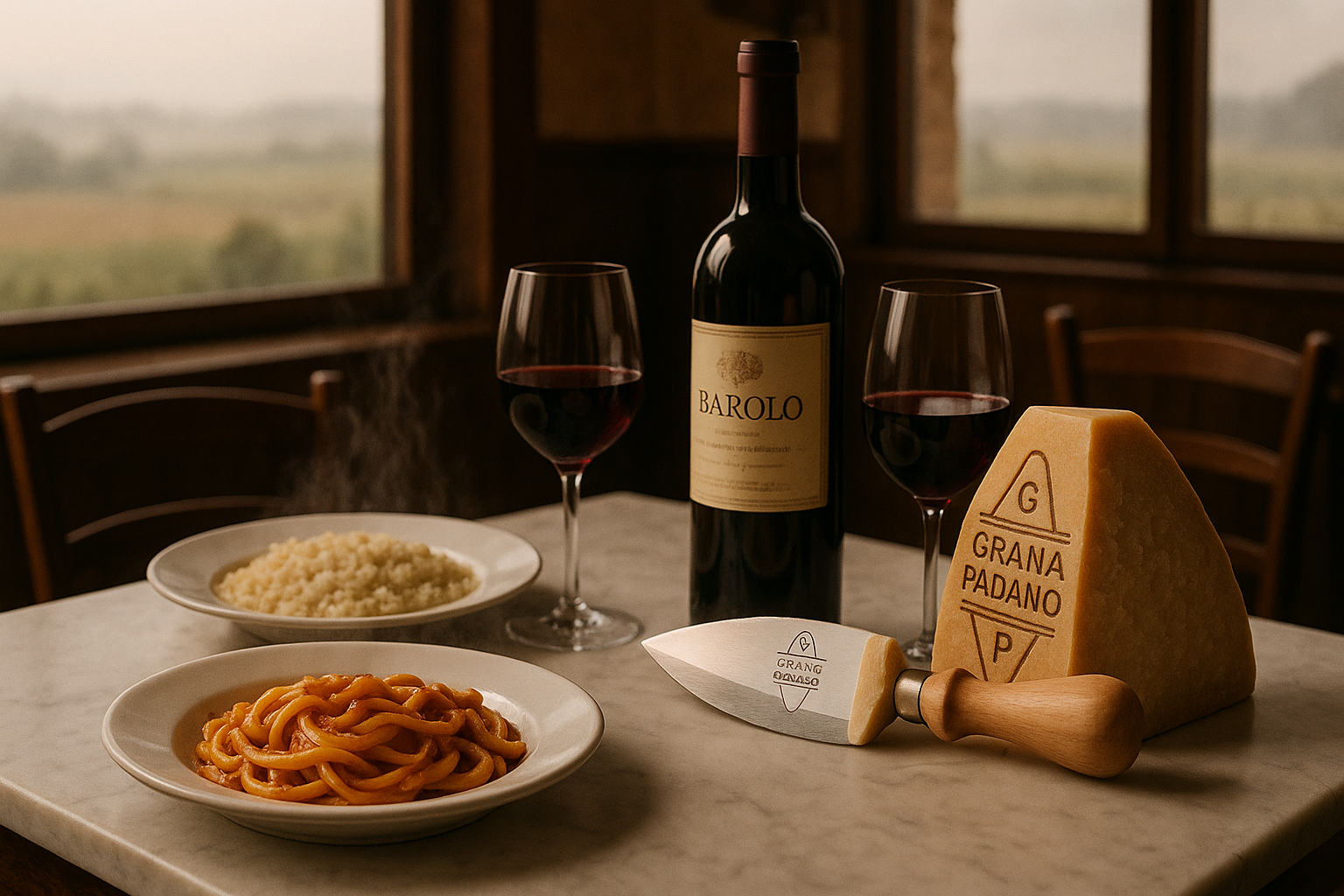
Riserva (20+ months): The intensity demands full-bodied wines like Barolo, Barbaresco, or Amarone della Valpolicella. For contrast, try a sweet Passito or Vin Santo.
Beer Adventures
Beer's carbonation acts as a "scrubbing agent" for the palate, making it excellent with hard cheeses. Try Helles Bock with 16-20 month Grana, its robust, malty body balances the cheese's fats while subtle sweetness counters the saltiness. For younger wheels, Pale Ales work wonderfully, while Riserva pairs beautifully with Trappist Dubbels or Doppelbocks.
Culinary Applications
Table cheese: Serve in irregular shards (scaglie) with fresh pears, grapes, or green apples Grating: Perfect over pasta, risotto, or carpaccio Condiment pairings: Traditional Balsamic Vinegar of Modena DOP or chestnut honey elevate aged wheels
Where to Find Zanetti Grana Padano in Pagosa Springs
Residents and visitors to Pagosa Springs can find authentic Zanetti Grana Padano at Murray's Cheese inside City Market. Their knowledgeable staff can help you select the perfect age for your intended use and provide proper storage guidance.
Fascinating Facts About This Ancient Cheese
- Grana Padano utilizes approximately 22% of Italy's entire national milk production
- In the 15th and 16th centuries, wheels were so valuable they served as diplomatic gifts between noble families
- The "Black Grana of Lodi" was historically colored with earth and oil, the ancestor of modern Italian hard cheeses
- Each wheel requires about 131 gallons of milk to produce
- The natural aging process makes Grana Padano virtually lactose-free (less than 0.1%)
Pronunciation Guide
Grana Padano: GRAH-nah pah-DAH-noh (hard "G" as in "goat," lightly rolled "r") Zanetti: dzah-NET-tee ("Z" sounds like "dz" in "pods," pause at double "tt")
Whether you're grating it over pasta, pairing it with wine, or savoring aged shards with honey, Zanetti Grana Padano connects you to nearly a millennium of Italian cheesemaking mastery. Each bite carries the essence of the Po Valley, from the monks who first created it to the modern artisans who perfect it today.
Sources and Further Reading
- Grana Padano Protection Consortium - Official PDO specifications and production guidelines
- Zanetti SPA - Company history, production methods, and facility information
- European Union Protected Designation of Origin documentation
- Italian Ministry of Agricultural Policies - Cheese classification standards
- Dairy Science and Technology research publications on hard cheese production