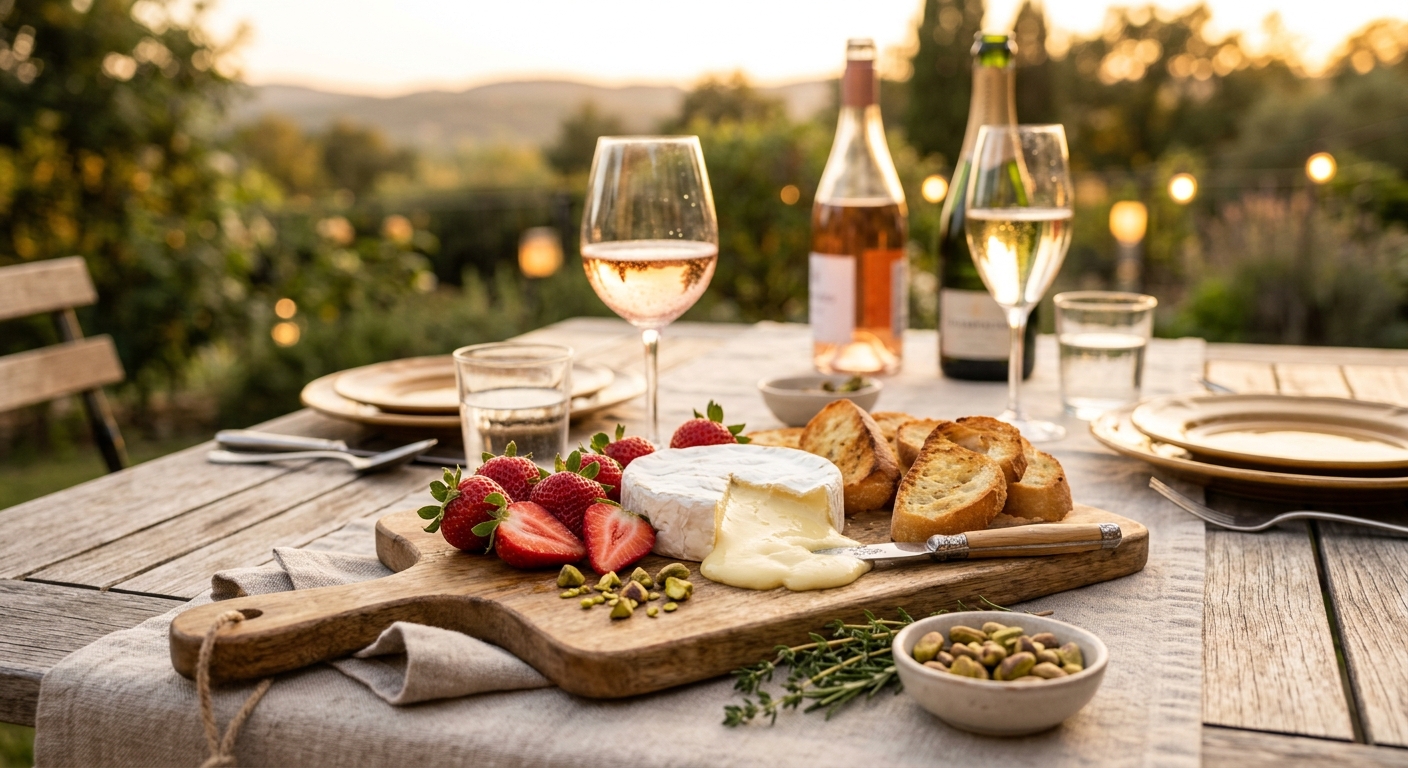
The Perfect Match: Why Strawberries and Brie Create Culinary Magic
Discover the fascinating science and rich history behind one of the world's most beloved flavor pairings.
Estimated Reading Time: 6 min
You've probably experienced it at a summer gathering or elegant dinner party: that moment when a bite of creamy Brie meets the bright sweetness of a fresh strawberry, and something magical happens on your palate. This isn't just a happy accident of seasonal timing. The pairing of strawberries and Brie represents a sophisticated culinary union grounded in molecular chemistry, evolutionary taste preferences, and over five centuries of gastronomic tradition.

What makes this combination so irresistible? The answer lies in the complex interplay between the structural richness of soft-ripened cheese and the volatile, acidic brightness of garden strawberries. Modern food science reveals that up to 80% of what we perceive as "flavor" actually comes from our sense of smell, specifically the detection of volatile organic compounds that reach our olfactory bulb as we eat.
The Science Behind the Magic
The harmony between strawberries and Brie isn't coincidental. It's built on what food scientists call the "Flavor Pairing Hypothesis" - the idea that ingredients sharing key volatile aroma compounds create more pleasurable eating experiences.
Strawberries contain over 360 distinct volatile compounds, including esters, aldehydes, ketones, alcohols, and lactones. Brie, through its ripening process involving Penicillium camemberti (the white mold), develops its own intricate aromatic landscape dominated by methyl ketones and sulfur-containing compounds.
Three specific chemical bridges create the synergy:
Esters and Lactones: Strawberries get their fruity, floral notes from esters like methyl butanoate and ethyl hexanoate. Brie contains similar lactones that contribute creamy, peach-like aromas. This shared "creamy-fruity" profile allows your brain to register the two foods as a harmonious unit.
Methyl Ketones: As Brie matures, enzymes break down milk fats into compounds that create the cheese's signature "cheesy," "musty," and "creamy" character. Strawberries also contain ketones - sometimes up to 35% of their total volatile content depending on the variety.
Mushroom Alcohol: The compound 1-octen-3-ol gives Brie its subtle mushroomy notes. Strawberries possess complementary "green" and "earthy" undertones that align perfectly with this profile, especially in wild varieties like Mara des Bois.
Pro Pairing Tip: The Contrast Factor
Beyond shared aromatics, this pairing thrives on contrast. Brie provides rich fat and subtle saltiness that amplifies the strawberry's perceived sweetness while suppressing any bitterness from the cheese rind. Meanwhile, the strawberry's natural acids - primarily citric and malic acid - cut through the cheese's richness, preventing palate fatigue and keeping each bite as vibrant as the first.
A Royal History: From Tudor Courts to Modern Tables
The marriage of berries and dairy isn't a modern invention. Credit for popularizing strawberries with cream traditionally goes to Cardinal Thomas Wolsey, King Henry VIII's Lord Chancellor. In 1509, at Hampton Court Palace, Wolsey's kitchen staff served wild strawberries with fresh cream to over 600 people daily.
This was revolutionary. In medieval times, dairy products were considered "food for the poor." By serving this combination to royalty, Wolsey elevated humble ingredients to delicacy status. As 16th-century traveler Andrew Boorde noted, "raw cream eaten with strawberries... is a rural man's blanket," acknowledging both its humble origins and growing cultural significance.
The pairing became inextricably linked with summer luxury through British sporting events. At the very first Wimbledon tournament in 1877, strawberries and cream were served to spectators. The fruit was harvested in early morning and transported via railway to ensure freshness - a hallmark of Victorian elegance. King George V further popularized the dish at Wimbledon in the early 1900s, cementing its status as fashionable food for the social elite.
As cultivation techniques improved and strawberries became more accessible, chefs began experimenting beyond simple cream, leading to sophisticated integrations with soft cheeses like Brie.
Choosing Your Brie: A Matter of Fat
Not all Brie is created equal for strawberry pairing. The key factor is butterfat content, adjusted by adding cream during production:
Double Crème (60-75% butterfat): Dense yet spreadable with balanced richness and nutty, buttery notes. Best for raw preparations where you want the cheese's "funk" to shine through.
Triple Crème (75%+ butterfat): Velvety, almost whipped texture with exceptional richness and mild tang. Perfect for dessert-like pairings or when you want the cheese to melt seamlessly with tart fruit.
For peak pairing success, choose Brie at optimal ripeness - soft center without ammonia notes. If you're in Pagosa Springs, Murray's Cheese inside City Market offers excellent selections of both domestic and imported varieties.
Terroir Tales: French AOC Varieties
Two French Bries hold Protected Designation of Origin status:
Brie de Meaux: Known as the "Queen of Cheese," aged at least four weeks with complex, robust, mushroomy flavors.
Brie de Melun: Smaller wheels aged longer, resulting in more pungent aroma and saltier profile than Meaux.
Industrial versions made with pasteurized milk tend to be milder and more uniform - perfectly acceptable for most preparations.
Strawberry Selection: Variety Matters
Different strawberry cultivars possess unique aromatic signatures that favor specific preparation styles:
Gariguette: Early-season French variety with sweet-and-sour profile and high aromaticity. Natural tanginess pairs beautifully with rich triple-cream Brie.
Charlotte: Prized for soft flesh and intense sweetness. High sugar content calls for more savory, aged Brie to provide contrast.
Mara des Bois: Mimics wild forest strawberries with woody, earthy notes that create deep aromatic bridges with Brie's mushroom-like characteristics.
Preparation Methods: From Simple to Sophisticated
Raw and Fresh: The classic approach relies on room-temperature Brie with chilled, sliced strawberries. Macerating strawberries in balsamic vinegar or lemon juice breaks down pectin, softening texture while converting fiber to simple sugars for enhanced sweetness.
Baked Transformation: Bake Brie at 350°F for 10-15 minutes until soft but not burst. Simultaneously roast strawberries with honey and balsamic until they release juices, creating a ruby-red syrup. Heat concentration creates Maillard-like depth that complements melted cheese's buttery richness.
Whipped Innovation: A modern technique popularized by Chef Thomas Keller involves removing the rind from chilled triple-cream Brie and processing the interior for 8-10 minutes. This creates an airy, mousse-like texture perfect for summer entertaining without oven heat.
Pro Pairing Tip: Don't Forget the Crunch
Both Brie and strawberries are relatively soft, so adding textural contrast is vital. Toasted baguette slices provide neutral, crispy bases. Walnuts offer earthy bitterness that complements cheese rind, while pistachios add vibrant color and mild sweetness.
Wine: The Third Pillar
Wine serves as the essential "third pillar," providing acidity, tannins, or effervescence to navigate the fat-fruit dynamic:
Sparkling Wines: Champagne's carbonation acts as a mechanical palate cleanser, scrubbing away butterfat film. Brut's high acidity cuts through Brie's "bloominess," while rosé sparkling offers double synergy by matching strawberry aromatics.
Still Wines: Dry Provence rosé mirrors red berry notes without overpowering mild cheese. Light-bodied Pinot Noir with low tannins provides gentle cherry and raspberry contrast. Off-dry Riesling's balanced sweetness and high acidity excel with spicier preparations.
Modern Innovations: Adding Heat
A notable trend introduces jalapeño peppers to strawberry compotes. Capsaicin stimulates mouth pain receptors, which the brain interprets as heat. Brie's high fat content acts as a natural cooling agent, binding capsaicin molecules and washing them away. This creates a "sensory rollercoaster" from sweet-heat to cooling creaminess.
The Psychology of Pleasure
Our enjoyment extends beyond chemistry to psychology. For many, strawberries and rich dairy evoke childhood memories, summer vacations, or special occasions. This emotional connection enhances perceived quality, transforming simple ingredients into experiences.
The pairing also demonstrates "umami synergy." Aged cheeses contain glutamates from protein breakdown. When combined with strawberries' natural sugars and organic acids, an amplification occurs - the same principle that makes truffle-Parmesan or foie gras-fig combinations so successful.
Sustainable Future
As culinary culture moves toward sustainability, the pairing adapts through heirloom strawberry varieties and regional sourcing. Forgotten green and white berries offer unique, less-sweet profiles perfect for stronger, more pungent cheeses. The "what grows together, goes together" philosophy encourages local grass-fed Bries with seasonally harvested berries.
Nutritionally, this pairing offers more than indulgence. Strawberries provide vitamin C, omega-3 acids, and antioxidants. When paired with Brie's essential fats and proteins, the combination increases satiety levels, aligning with modern gut health trends emphasizing fiber-rich, satisfying foods.
Whether served as elegant carpaccio on summer days or warm, molten centers during winter gatherings, the strawberry-Brie union remains a cornerstone of sophisticated entertaining. Through shared molecular language, historical weight, and technical brilliance, this partnership proves that in flavor's realm, the whole truly exceeds the sum of its parts.
Sources and Further Reading
- Florida Strawberry Growers Association - Recipe development and cultivation insights
- Harper & Erton - Flavor pairing science research
- IntechOpen - Volatile compound analysis in strawberries
- National Center for Biotechnology Information - Strawberry flavor composition studies
- Foodpairing.com - Professional flavor pairing methodology
