Estimated Reading Time: 7 min
Scottish roots, with a name you can say
Somerdale’s 1057 Aged Cheddar comes from Scotland and is made with milk from Scottish herds. Say it “ten-fifty-seven,” like a year. That is exactly what the name represents: 1057 was the year Macbeth, the historical Scottish king, died.
Cheddar itself takes its name from the village in Somerset, England. But Scotland has a strong cheddar tradition of its own, and 1057 is a selected Scottish cheddar rather than the output of one named farm. Cheese graders choose batches for a particular balance of strength, richness and texture.

That distinction matters. Buying this cheese is less like buying wine from a single vineyard and more like choosing a blend selected to deliver a dependable style.
Terroir Tales: Landscape meets judgment
Scotland’s cool, wet climate supports the grasslands that feed its dairy herds. Feed, breed and season can all affect milk, while cheesemaking and aging shape what you eventually taste. That whole relationship is often called terroir: the influence of place on food.
Ayrshire cattle are part of Scotland’s dairy heritage, but 1057 should not be treated as a single-breed cheese. Its identity rests on Scottish milk and careful selection, not a breed claim.
The ingredients: Cow’s milk and vegetarian rennet
1057 is made with pasteurized cow’s milk and vegetarian rennet. Milk supplies the fat that gives richness and the proteins that form the cheese’s structure. Starter cultures develop acidity, and salt contributes flavor while helping control moisture and microbial activity.

Rennet is the enzyme preparation that helps liquid milk set into curd. It acts on casein, the main family of milk proteins, so those proteins can gather into a gel. Vegetarian rennet performs that job without using rennet taken from an animal’s stomach.
The practical takeaway: This is a vegetarian-friendly cheese, but it is not vegan. It contains milk, so it is unsuitable for someone with a milk allergy. Aging reduces lactose in cheddar, but that does not remove milk proteins or make it safe for milk-allergic guests. Check the package for the full ingredient list and any dietary labeling.
What pasteurization does
Pasteurization heats milk to reduce harmful microbes before cheesemaking begins. One common method uses 161 degrees Fahrenheit for at least 15 seconds, though other approved time-and-temperature combinations exist.
It also gives cheesemakers a more controlled starting point for their chosen cultures. Pasteurized does not mean bland. In this case, the cultures, enzymes and long maturation still have plenty of work to do.
Nor does it mean the finished cheese can be left warm indefinitely. Safe storage remains part of the bargain.
How cheddar gets its structure
1057 belongs to the hard, extra-mature cheddar family. Traditional cheddar production follows a sequence that builds its firm body:
- Set and cut the curd. Cultures and rennet help milk form a gel, which is cut to release whey, the watery portion of milk.
- Warm and drain. Gentle heating helps the curds release more whey before draining.
- Cheddar the curd. The curds knit into slabs that are turned and stacked. Their weight encourages drainage as acidity develops.
- Mill and salt. The slabs are broken into smaller pieces and salted. Salt adds flavor and slows culture activity.
- Press and age. The curds are pressed into a solid form, then matured under controlled conditions.
“Cheddaring” is therefore a process, not just a name on the deli label.
At least 14 months, and not just for bragging rights
1057 ages for at least 14 months. Time allows enzymes to break down proteins into smaller pieces, changing both flavor and texture. Cheesemakers call that protein breakdown proteolysis. You can simply think of it as part of the reason mature cheddar tastes deeper and breaks more readily than a young one.
The result is not merely stronger cheese. A good mature cheddar needs balance. Sharpness without richness can feel harsh; richness without tang can seem dull.
Graders David Evans and Kevin Beer are associated with selecting 1057 for that balance. The target is a full, creamy character with a firm body and a bold finish. More months alone would not guarantee a better bite.
Moisture: Why firm can still feel creamy
Under the U.S. standard of identity, cheddar may contain no more than 39% moisture by weight. That is a category limit, not a specific moisture measurement for 1057.
Moisture helps determine whether cheese bends, crumbles or feels soft. But aging texture is not just a story of water drying out. Protein breakdown, acidity, salt and packaging all play roles. Sealed cheddar can mature without the large moisture losses associated with an exposed rind.
That explains an apparent contradiction: 1057 can feel firm under your knife yet creamy as it warms in your mouth. Firmness and richness are not opposites.
What to taste, and what to feel
Expect richness first, followed by a more assertive tang and a lingering savory finish. Nutty notes and a gentle impression of sweetness can round out the sharper edges. That sweetness is a tasting description, not proof that the cheese contains much residual milk sugar.
The savory depth is often called umami, the flavor associated with foods such as broth, mushrooms and aged cheese.
Texture is a big part of the appeal. 1057 is firm and crumbly, with a rugged interior that may break into irregular pieces rather than tidy slices. Small openings in the cheese are different from the round holes in Swiss-style cheeses.
You may also notice a little crunch. Aged cheddar can develop calcium lactate crystals, formed when calcium and lactate combine and crystallize. These hard specks are harmless. Their presence can add interest, but crystals are not a mandatory badge of quality.
Try a three-bite tasting
Set out only what you plan to eat, about 20 to 30 minutes before serving in a cool room. Taste one piece plain. Try the next with an apple slice, then a third with your drink. Notice whether the fruit or drink softens the tang, brings out nuttiness or makes the finish seem sharper.
No tasting notebook required. Unless that is your kind of fun.
Wine pairings: Match strength without making a contest
Syrah or shiraz is a good starting point. Dark fruit and peppery notes suit the cheddar’s savory side. Cabernet sauvignon also works, especially if you enjoy firm tannins alongside rich cheese.
For a fruit-forward alternative, try malbec or zinfandel. Choose a bottle you already like rather than assuming the biggest, most alcoholic red must be best.
Prefer white? An oaked chardonnay with fresh acidity can echo the cheese’s creamy character while keeping the pairing lively. Very heavy oak may obscure the more subtle nutty notes.
Pro Pairing Tip
Taste the cheese and wine together before adding chutney. A sweet condiment can change how dry, tart or bitter the wine seems. Build the pairing one element at a time.
Beer pairings: Give malt a chance
A malty Scottish ale would be my first pour. Its toasted-grain and caramel flavors provide a pleasant contrast to cheddar’s salt and tang. A stronger Scotch ale, often called a wee heavy, offers a richer version of that pairing. Not all Scottish ales are wee heavies.
A pale ale offers a brighter balance. An IPA can work if you enjoy hop bitterness, though an especially bitter example may dominate the cheese. Wheat beer is a lighter option when refreshment matters more than matching intensity.
For a snowy evening back from Wolf Creek, malt and mature cheddar make good company. On a warm afternoon, a lighter beer may be more appealing. Follow your appetite, not a rigid pairing chart.
Food pairings, from snack board to supper
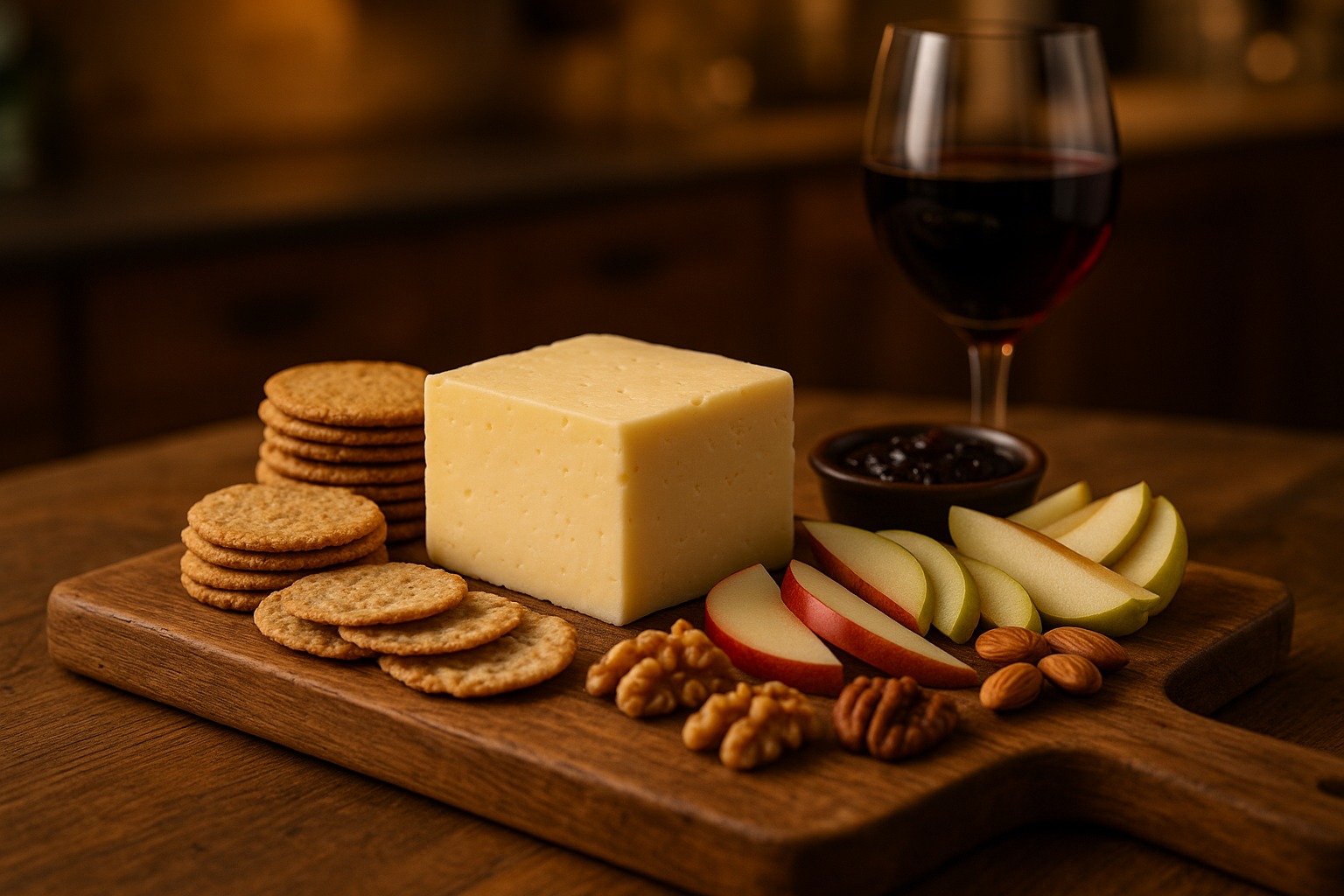
Start with oatcakes or plain sourdough crackers. They provide crunch without competing for attention. Add a crisp apple, a firm pear and a small handful of walnuts or almonds. Onion marmalade or plum chutney can supply a sweet-savory accent; a small spoonful goes a long way.
For a simple board for four, try:
- About 8 ounces of 1057, broken into bite-size pieces.
- One sliced apple or pear.
- A handful of nuts, served separately if allergies are a concern.
- Oatcakes or crackers.
- A small dish of chutney.
1057 also earns its place in dinner. Grate it over a baked potato, add it to a burger or use it to sharpen macaroni and cheese. Mature cheddar brings strong flavor, but it can turn oily or grainy under excessive heat.
For a smoother sauce, grate it finely and stir it in over low heat or off the burner. Blending it with a younger cheddar can improve the melt while preserving that aged-cheese bite.
If you are shopping in Pagosa Springs, ask at Murray’s Cheese inside City Market whether 1057 is currently available. It is worth checking before planning a board around a particular cheese.
Storage and spoilage: Crunch is fine, slime is not
Keep the cheese refrigerated at 40 degrees Fahrenheit or below and follow the package directions. Once opened, protect the cut surfaces with cheese paper or parchment, then place it in a covered container or food-storage bag. Pagosa’s dry air is no friend to an uncovered wedge.
Some presentations use black wax, which helps limit moisture loss. Remove wax before eating. Neither wax nor vacuum packaging gives cheese an unlimited shelf life.
Hard, grainy white crystals can be normal, as can a little surface oil when cheese warms. Fuzzy growth, slime, unusual wet patches or a strong rotten or chemical odor call for caution. Do not taste suspect cheese to test its safety. Appearance and smell cannot detect every foodborne hazard.
USDA guidance allows a small mold spot on a solid block of hard cheese to be removed by cutting at least 1 inch around and below it, keeping the knife out of the mold. Rewrap the remaining cheese in clean material. Discard moldy shredded, sliced or crumbled cheese. Also discard a block with extensive mold or other signs of spoilage.
For a picnic along the San Juan River, carry cheese in an insulated cooler. Keep time out of refrigeration under two hours, or one hour when temperatures exceed 90 degrees.
A historical name, a practical cheese
The Macbeth connection gives 1057 a memorable name, not a claim to an 11th-century recipe. Its more useful story is modern: Scottish milk, skilled selection and enough aging to produce character without sacrificing creaminess.
Try it plain before dressing it up. Then put the rest to work, whether that means a relaxed snack after a soak or a sharper, more satisfying baked potato. A cheese this flavorful does not need a formal occasion.
Sources and Further Reading
- 1057 Scottish Cheddar, Official 1057 brand website.
- 1057 Scottish Extra Mature Cheddar, Millbrook Dairy Company.
- Extra Mature Scottish Cheddar Loaf, Gourmet Foods International.
- 21 CFR 133.113: Cheddar Cheese, U.S. Food and Drug Administration, via eCFR.
- Molds on Food: Are They Dangerous?, USDA Food Safety and Inspection Service.
