Estimated Reading Time: 7 min
Wisconsin Cheese With an Italian Accent
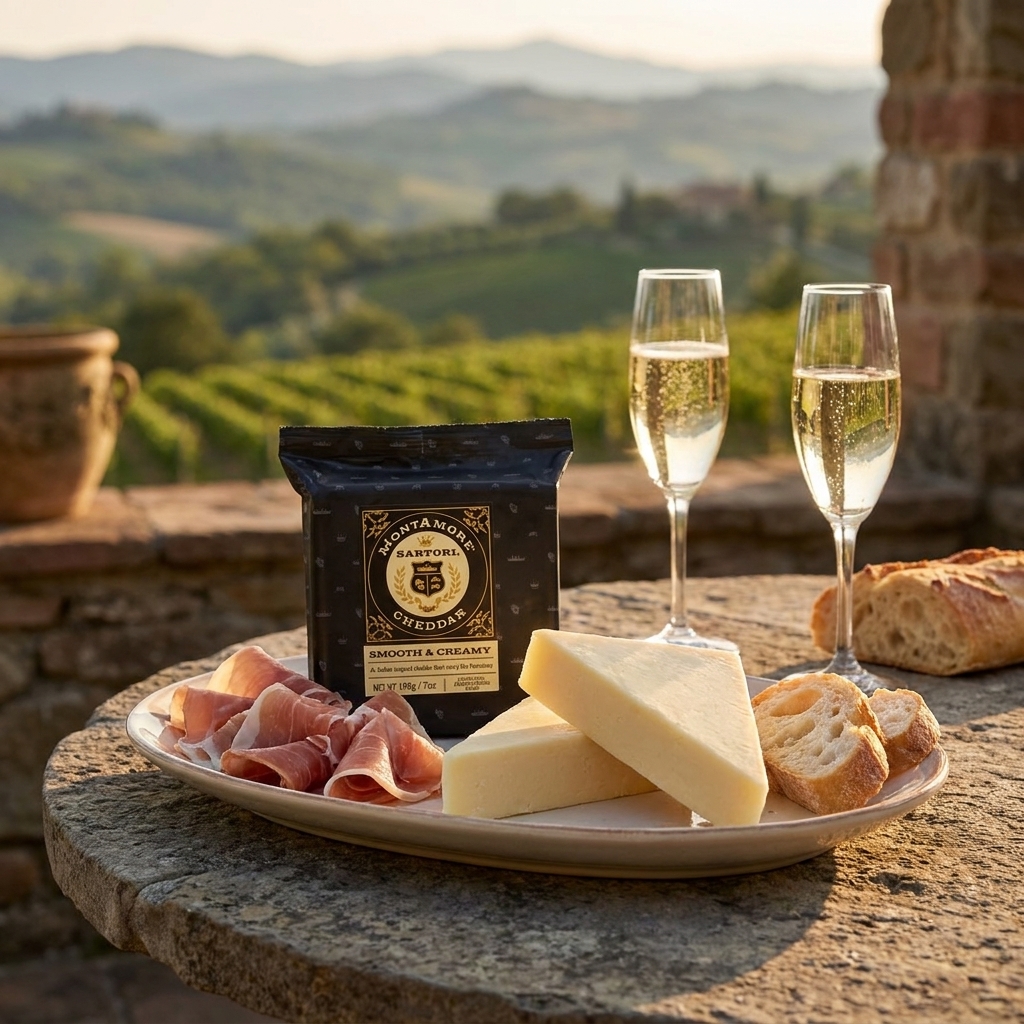
MontAmoré Cheddar comes from Sartori in Plymouth, Wisconsin. Its roots reach across the Atlantic, though. Paolo Sartori founded the company in 1939, and the family's heritage traces to Valdastico in northern Italy. The name MontAmoré draws on that mountain setting and the family's love of cheesemaking.
That background helps explain the cheese's personality. It has the familiar tang and useful melting qualities of cheddar, with the sweet, nutty character you might expect from an aged Italian cheese. Think of it as a Wisconsin original with an Italian accent, not a blend of finished cheddar and Parmesan.

Wisconsin's long dairy tradition matters, too. Local milk suppliers, skilled cheesemakers and a well-established network of dairy expertise give Sartori a strong home base. You can enjoy the result without memorizing a single grading rule.
What's in It? Milk, Cultures and Vegetarian-Friendly Enzymes
MontAmoré is made with pasteurized cow's milk. Sartori works with local, family-owned dairy farms, keeping its milk supply rooted in Wisconsin.
The basic ingredients are familiar cheese essentials: milk, cheese cultures, salt and enzymes. Each has a job. Milk supplies the fat and protein. Cultures are helpful microbes that turn milk sugar into lactic acid and help develop flavor. Salt seasons the cheese and helps control moisture and microbial activity.
The enzymes do another essential job: setting the milk into curd.

Rennet, defined: Rennet is a milk-coagulating preparation that allows milk proteins to gather into a gel. Cheesemakers cut that gel into curds, then separate them from the liquid whey. MontAmoré uses microbial enzymes rather than animal-derived rennet, making it suitable for vegetarians who eat dairy.
It is not vegan, and it contains milk, a major food allergen. Aging does not remove the proteins that cause a milk allergy. If you manage lactose intolerance, don't confuse that condition with an allergy, and check the current package and your own dietary guidance.
For nutrition, use the label on the piece you buy. MontAmoré provides protein and calcium, along with saturated fat and sodium. A 1-ounce portion is a useful starting point for tasting, especially when the board also includes bread, meat and other cheeses.
Pasteurization: Before the Curd Comes the Heat
Pasteurization happens to the milk before cheesemaking. It uses controlled heat to reduce harmful microbes and gives the cheesemaker a more consistent starting point for fermentation.
One common dairy method, high-temperature, short-time pasteurization, heats milk to at least 161 degrees Fahrenheit for 15 seconds. That describes the process generally, rather than a serving or cooking instruction.
Pasteurized does not mean shelf-stable. Once the cheese is made, packaged and opened, clean handling and refrigeration still matter.
What Aging and Moisture Do for Your Bite
MontAmoré belongs in the firm, aged-cheese camp. It's also cheddar, an American original and a useful melting cheese. Those descriptions aren't competing claims. They tell you different things about its make, texture and kitchen role.
During aging, enzymes slowly break milk proteins into smaller pieces. This process, called proteolysis, helps change a young, springy curd into a cheese with a more tender bite and deeper flavor. Some of those smaller compounds contribute savory notes, including the mouth-filling taste known as umami.
Moisture matters just as much. Federal standards limit cheddar to no more than 39% moisture. That is a category standard, not a precise moisture measurement for every wedge of MontAmoré.
For the eater, the important balance is easy to recognize: firm enough to cut or crumble, yet creamy as you chew. Lower moisture helps concentrate flavor, but it does not make cheese immune to spoilage.
Taste It Slowly: Sweet First, Tangy Last
Take a small bite before adding a cracker. MontAmoré often starts sweet and fruity, with a note that can suggest pineapple. Not pineapple-flavored cheese. More like the fleeting impression of ripe fruit tucked into rich dairy flavor.
Next comes nuttiness and a savory, Parmesan-like depth. The finish brings cheddar's tang, which keeps the sweetness from feeling heavy.
The texture follows its own little sequence: firm at first, then creamy and slightly crumbly, with occasional crunchy crystals. Those tiny surprises are part of the appeal.
Crystals in aged cheese can form from mineral salts or amino acids. They are not added sugar, and crunch alone is not evidence of mold. Nor does every excellent aged cheese need to sparkle like a geology exhibit.
Try This Three-Bite Tasting
- Start plain. Let a small serving sit out for about 20 to 30 minutes, then smell and taste it.
- Add a tart apple slice. Notice whether the fruit makes the cheese seem sweeter or more savory.
- Finish with bread and a drink. Compare the aftertaste with your first bite.
Keep the rest refrigerated. You only need to temper the amount you're about to serve.
Wine Pairings: Choose Balance Over Muscle
You don't need an expensive bottle. You need enough freshness to keep each bite interesting.
- Chardonnay: A moderately oaked version can echo the cheese's creamy, nutty side. Avoid a bottle so heavy with oak that the cheese disappears.
- Pinot Noir: Bright red fruit and relatively gentle tannins make this an easy red-wine choice.
- Beaujolais: Fresh, Gamay-based wine suits the tangy finish and works well with an apple-and-cheese board.
- Merlot: A dry, fruit-forward style offers plum notes against the cheese's savory depth.
- Chianti: Its acidity makes sense when MontAmoré joins cured meat, bread or a tomato-based meal.
- Prosecco: Bubbles and freshness offer a lively contrast to the dense, creamy bite.
Pro Pairing Tip
Start with Pinot Noir or Prosecco if you're serving several people with different tastes. Taste the cheese, sip the wine, then try the cheese again. A good match should make you want another bite, not send you searching for water.
Beer Pairings: Malt, Hops or a Clean Finish
MontAmoré is comfortable beside beer, which makes it a useful addition to a casual evening after a day around Pagosa Springs.
Bock or weizenbock brings malty sweetness that echoes the cheese's caramel-like notes. American IPA offers a different approach: citrus or tropical hop aromas can play alongside the fruity flavors, while bitterness contrasts with the richness. Choose a balanced IPA rather than the most bitter can in the cooler.
Porter or stout adds roasted flavors that can work especially well if dark chocolate is on the board. Pale ale or a crisp lager gives the cheese more room to speak.
Carbonation can make a pairing feel refreshing, but bubbles don't erase richness. Flavor balance still does the real work.
For a no-alcohol option, try sparkling water with an apple slice alongside the cheese, or a crisp alcohol-free lager.
Build a Board Without Overcrowding It
A good MontAmoré board needs contrast, not 14 little bowls.
Start with sourdough bread or a baguette. Add Granny Smith apple slices for tartness and crunch, then choose one or two extras:
- Prosciutto di Parma for a savory, salty companion.
- Green olives for briny contrast.
- Dried pineapple to draw attention to the cheese's tropical-fruit notes.
- Dark chocolate for a small, bittersweet finishing bite.
Go lightly with the prosciutto and olives. Cheese already brings salt, and a board can become tiring when every bite asks the same thing of your palate.
For a rental-cabin supper or an easy gathering at home, serve the cheese with bread, apples and a simple green salad. That's a meal with very little washing up. A respectable ambition.
If you're shopping in Pagosa Springs, ask the team at Murray's Cheese inside City Market about current MontAmoré availability and suitable alternatives. Stock can change, so check before planning a whole menu around one wedge.
Put It to Work in the Kitchen
MontAmoré isn't limited to the board. Try it in grilled cheese, folded into scrambled eggs or scattered over roasted potatoes. Its sweet-savory flavor also suits a warm sandwich with apple and mustard.
For smoother melting:
- Grate it yourself. Small pieces melt more evenly than thick chunks.
- Use gentle heat. Aged cheese can release oil when overheated.
- Add it near the end. For a sauce, lower the heat and stir in small handfuls rather than boiling the cheese hard.
It won't behave exactly like young mozzarella or processed cheese. Expect flavor and richness, not an endless stretch. In a large batch of macaroni and cheese, combining it with a younger melting cheese can help balance bold taste with a smoother sauce.
Crystals, Mold and Other Refrigerator Questions
Small, hard white flecks can be normal aging crystals. Fuzzy growth is different. New green, blue, black or pink patches are not an intended feature of MontAmoré.
Discard cheese with a slimy film, unusual package swelling or strong, unexpected yeasty or ammonia-like odors. Don't taste questionable cheese to test its safety.
For a solid block of hard cheese with a small area of surface mold, USDA guidance allows cutting away at least 1 inch around and below the spot, keeping the knife out of the mold. A small wedge may not have enough cheese to spare. Moldy shredded, sliced or crumbled cheese should be discarded.
A little surface oil after warming is not, by itself, proof of spoilage. Heat can cause cheese to sweat. Consider storage history and other warning signs rather than judging one glossy spot.
Keep MontAmoré refrigerated at 40 degrees Fahrenheit or below, wrapped to limit drying and contamination. For a summer picnic along the San Juan River, bring a cooler with ice packs. Refrigerate servings within two hours, or one hour when the temperature is above 90 degrees.
A Name Worth Learning
Say Sartori as sar-TOR-ee and MontAmoré as mohn-tah-MORE-ay. Cheddar remains the friendly CHED-er.
The family-owned company has continued through four generations, and its cheesemaking team has included Wisconsin Master Cheesemaker Pam Hodgson. That title reflects years of experience and advanced training, not simply a flattering description on a label.
MontAmoré has also earned recognition in cheese competitions, including a bronze medal at the 2015 World Cheese Awards. Awards are nice. The better test is whether you enjoy the next bite.
My vote: try it plain before you melt it. A cheese this useful in dinner deserves a minute of your full attention first.
Sources and Further Reading
- MontAmoré Cheddar, Sartori Cheese.
- Frequently Asked Questions, Sartori Cheese.
- MontAmore Cheese, culture: the word on cheese.
- Sartori Plant, Dairy Foods magazine.
- Molds on Food: Are They Dangerous?, USDA Food Safety and Inspection Service.
