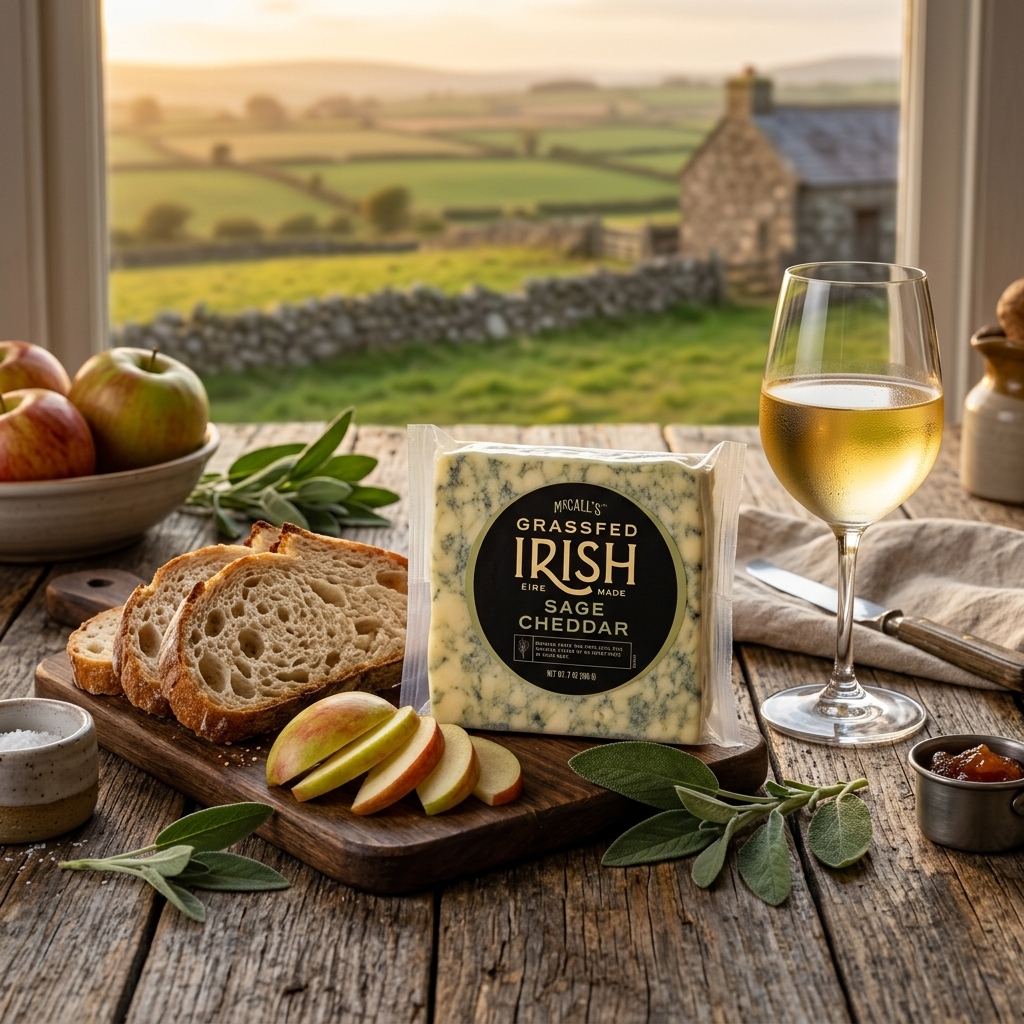
What Makes Irish Grass-Fed Milk So Special?
Ireland's reputation as the "Emerald Isle" isn't just poetic license. The island's unique climate, dominated by the North Atlantic Drift (a continuation of the Gulf Stream), creates nearly perfect conditions for dairy production. With mild winters, cool summers, and consistent rainfall, Irish cows enjoy one of the world's longest grass-growing seasons, up to 300 days per year.
This extended grazing period directly impacts the milk's quality. When cows spend most of their time on pasture rich in clover and native grasses, their milk develops higher levels of beta-carotene, which gives McCall's Sage Irish Cheddar its natural golden-yellow color without artificial additives. The grass-fed diet also increases beneficial compounds like Conjugated Linoleic Acid (CLA) and Omega-3 fatty acids.
Pro Pairing Tip: The natural richness from grass-fed milk means this cheese pairs beautifully with crisp white wines like Chardonnay or Grüner Veltliner, which complement rather than compete with its creamy base.
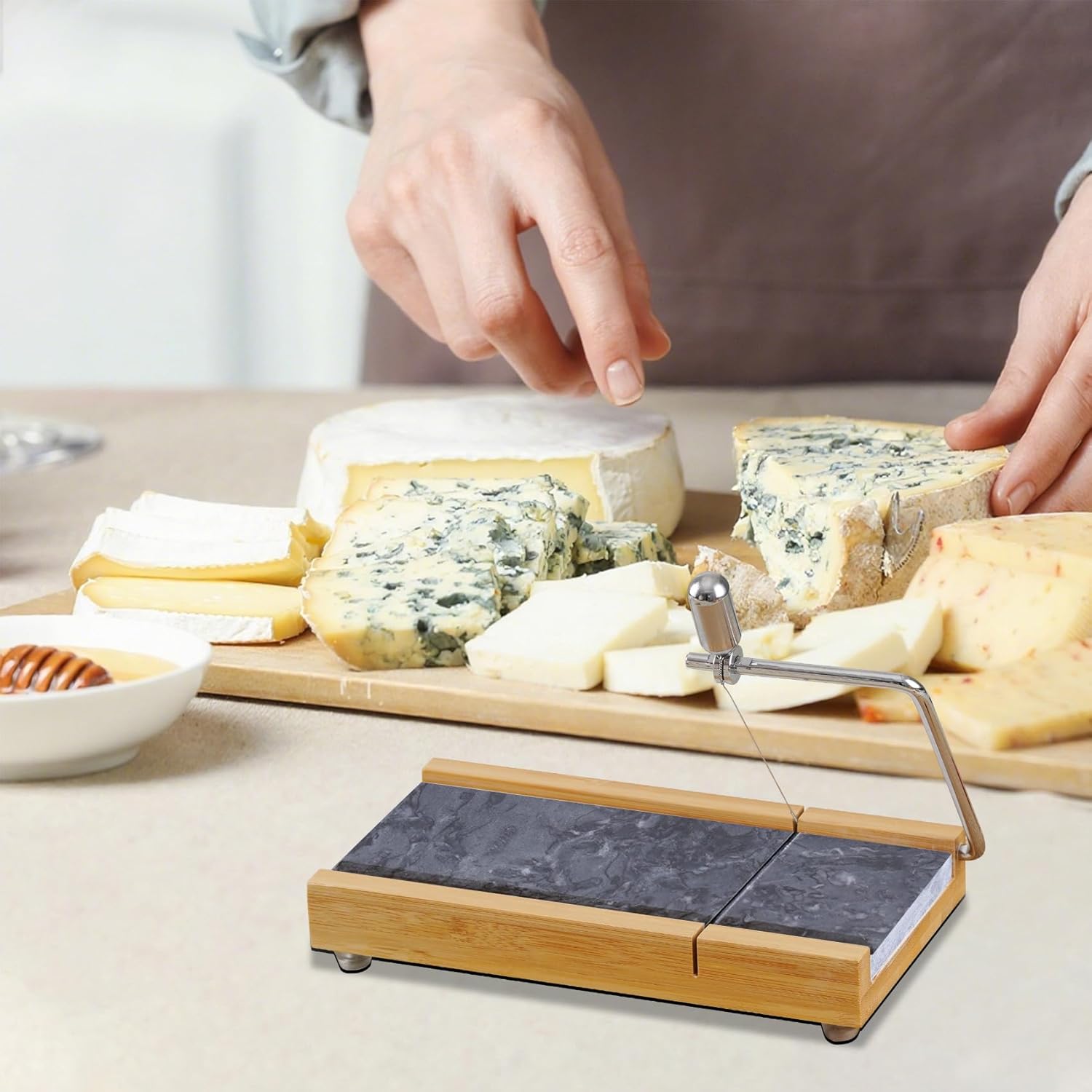
The Art of Sage Infusion
What sets McCall's Sage Irish Cheddar apart from standard varieties is its distinctive green marbling. This isn't just for show, the sage powder is carefully integrated during the milling and salting stage of production, creating veins throughout the cheese that deliver "herby, brothy notes" in every bite.
The sage (Salvia officinalis) contains essential oils like thujone and cineole, which provide warm, slightly peppery, and pine-like aromatics. When combined with the amino acids released during the cheddar's aging process, these compounds create what many describe as a "brothy" finish reminiscent of poultry seasoning or rich vegetable stock.
Terroir Tales: The tradition of blending sage with cheddar dates back centuries in Britain and Ireland. Historically, people believed sage aided digestion, making it the perfect accompaniment to the heavy, protein-rich meals consumed during autumn harvest time.
Understanding the Aging Process
McCall's Sage Irish Cheddar uses a base cheddar aged approximately 8-10 months, long enough to develop complexity but not so long that the herbal infusion gets overwhelmed. During this maturation period, the cheese is held in temperature and humidity-controlled environments (around 54-57°F with 85% humidity).

As the cheese ages, moisture content gradually decreases while enzymes break down fats and proteins into smaller, more flavor-intense molecules. In some batches, you might notice small white specks that provide a satisfying crunch, these are calcium lactate crystals, a hallmark of quality aged cheddar that forms when lactic acid bacteria consume residual lactose.
Ingredients: Pasteurized cow's milk, salt, microbial rennet, cheese cultures, sage powder, spinach extract (for color), potassium sorbate (preservative). Contains milk.
Texture and Mouthfeel
This cheese strikes an impressive balance between firmness and creaminess. The high-solids content from Irish grass-fed milk creates a dense paste that holds up well to slicing and grating, while the substantial butterfat content ensures a smooth, buttery mouthfeel as it melts at body temperature.
The green sage veins are integrated seamlessly into the curd structure. Because the sage is added as a powder rather than whole leaves, the texture remains uniform throughout, though you might notice a slightly more granular sensation in the green sections.
Culinary Applications: From Board to Kitchen
While McCall's Sage Irish Cheddar shines as "the star of the cheese board," its melting properties make it equally valuable in the kitchen. The high fat content and smooth melting characteristics create what professionals call a "luxurious sauce" when heated, perfect for elevating mac and cheese or creating sophisticated cheese sauces for vegetables.
Pro Pairing Tip: For the ultimate grilled cheese sandwich, pair this sage cheddar with crisp apples and sourdough bread. The fruit's natural sweetness and acidity provide a refreshing contrast to the savory sage.
Traditional Irish applications include melting it into colcannon (mashed potatoes with greens) or using it as a bold topping for shepherd's pie. The cheese's "herby, brothy" character makes it particularly suitable for St. Patrick's Day celebrations and autumn comfort foods.
Perfect Pairings for Every Occasion
Wine Companions
The sophisticated flavor profile of this cheese calls for equally thoughtful wine pairings:
- Chardonnay: A classic match where the wine's buttery texture mirrors the richness of grass-fed milk
- Pinot Noir: Light-bodied with red berry and earthy notes that harmonize with the sage
- Sauvignon Blanc: Bright acidity cuts through the creaminess for a refreshing contrast
Beer Partnerships
For beer lovers, Irish varieties create the most authentic experience:
- Irish Red Ale: The malty sweetness complements the cream notes while gentle hop bitterness balances the herbs
- Irish Stout: Roasted, coffee, and chocolate notes provide a deep, savory backdrop
- Pale Ale: Citrusy hop profiles lift the sage notes and prevent the flavor from feeling too heavy
Storage and Freshness
Proper storage is crucial for maintaining this cheese's quality. Once opened, wrap the 7-ounce block in wax paper and store it in the coldest part of your refrigerator, ideally in a dedicated cheese drawer to maintain stable humidity.
Watch for signs of spoilage, though the cheese's natural appearance can sometimes confuse newcomers. Normal characteristics include the pale-to-golden base with green veins and white, sand-like calcium lactate crystals. Concerning signs include fuzzy mold growth in black, grey, or bright white colors, ammonia odors, or slimy texture.
Pro Pairing Tip: Always bring cheese to room temperature before serving, about 30 minutes out of the refrigerator. This allows the fats to soften and the full flavor profile to emerge.
The McCall's Legacy
The story behind this cheese adds another layer to its appeal. Russell McCall began his cheese journey at age 16 in Greenwich, Connecticut, eventually opening "The Cheese Shop" in Atlanta in 1967 with a loan from his grandmother. A pivotal moment came in 1968 when he cracked open a 90-pound wheel of Gruyère on live television, an event often credited with launching "cheese culture" in the American Southeast.
Today, McCall's operates under the philosophy that "Ethical food just tastes better," supporting family farms, clean energy, and sustainable practices. The brand advocates for the family-owned farms that supply their milk, approximately 99% of Irish dairy farms remain family-owned, with many tracing their lineage back generations.
Where to Find It in Pagosa Springs
Residents and visitors to Pagosa Springs can find McCall's Sage Irish Cheddar at Murray's Cheese inside City Market. This specialty cheese counter offers the perfect opportunity to explore this and other artisanal varieties while getting expert advice on pairings and preparation.
Whether you're planning a sophisticated cheese board for guests, looking to elevate your cooking, or simply want to experience the "Iconic Taste of Ireland," McCall's Sage Irish Cheddar delivers centuries of tradition in every distinctive, herb-marbled bite.
