The Raw Milk Cheese Safety Debate: What Recent Outbreaks Mean for Your Cheese Board
Recent E. coli outbreaks linked to aged raw milk cheese have reignited the debate over America's 70-year-old safety rule. Here's what cheese lovers need to know about the risks, regulations, and how to make informed choices.
Estimated Reading Time: 8 min
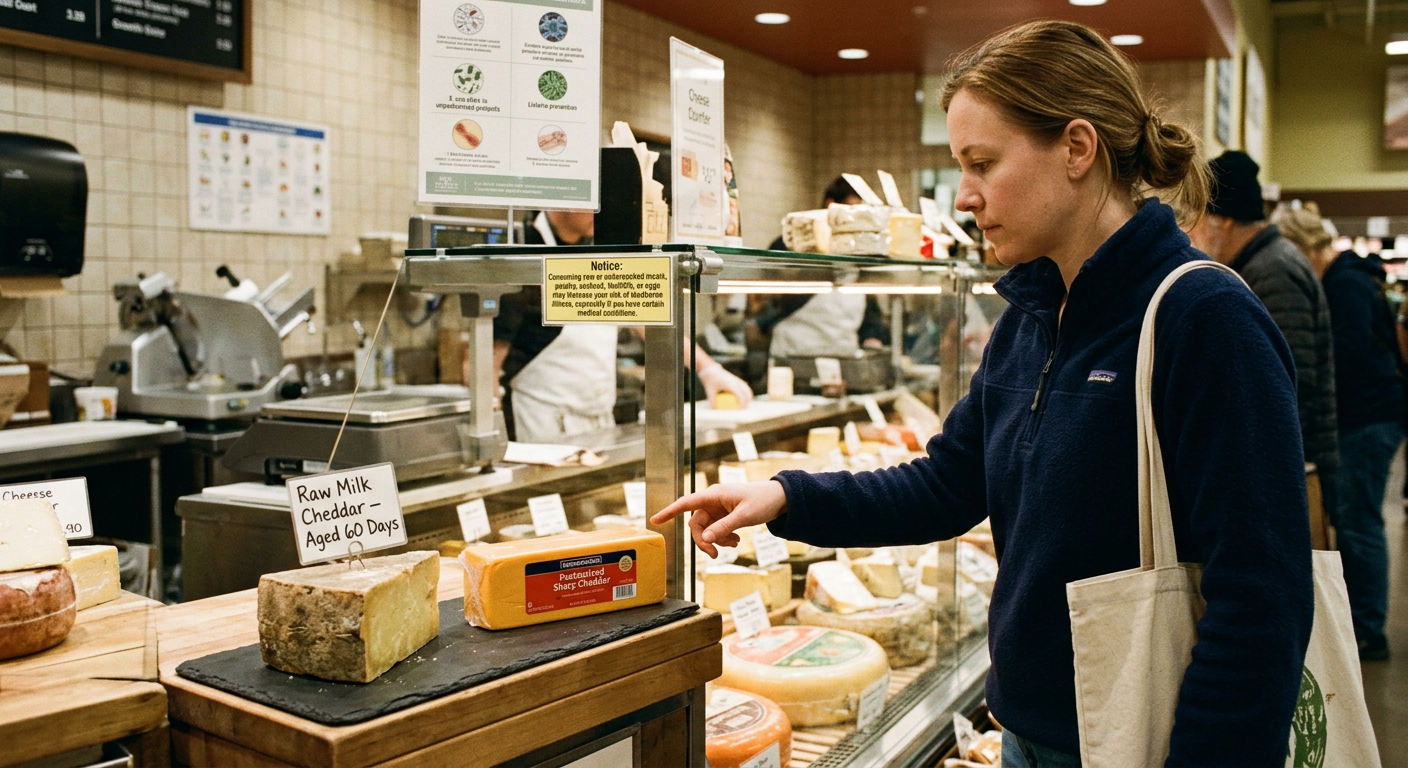
You're standing in the cheese section at City Market, eyeing that beautiful wedge of aged Vermont cheddar made from raw milk. The label says "aged 60 days or more," which means it's legal to sell in the United States. But after hearing about recent E. coli outbreaks linked to raw milk cheese, you're wondering: is it actually safe to eat? The answer, like many things in the world of artisanal food, is more complicated than you might expect. Recent outbreaks have exposed serious flaws in America's decades-old safety framework, while European cheesemakers continue producing raw milk treasures with seemingly fewer problems. Understanding this complex landscape can help you make informed decisions about the cheeses you bring home to Pagosa Springs.

The 60-Day Rule: A 1940s Solution for 2020s Problems
America's approach to raw milk cheese safety centers on one key regulation: the FDA's 60-day aging rule. Established in 1950, this rule requires any cheese made from unpasteurized milk to be aged at temperatures no lower than 41°F for at least 60 days before sale. The theory was simple, aging would kill dangerous bacteria like the typhoid and brucella that plagued dairy products in the 1940s.
But here's the problem: today's pathogens aren't the same as yesterday's threats. Modern research shows that dangerous bacteria like E. coli O157:H7 and Listeria monocytogenes can survive, and sometimes even thrive, during the 60-day aging process.
How the Rule Actually Works
The 60-day rule is woven into the FDA's "Standards of Identity" for specific cheese types. These standards define exactly what can be called cheddar, Swiss, or Colby, including whether raw milk is allowed:
- Allowed with 60-day aging: Cheddar, Colby, Swiss, hard cheeses, semi-soft cheeses
- Pasteurization required: Monterey Jack, fresh cheeses like mozzarella or goat cheese
- Effectively banned: Soft-ripened cheeses like Brie or Camembert made from raw milk
This creates a strange regulatory landscape where you can buy raw milk cheddar aged for two months, but not fresh raw milk feta, regardless of its acidity or salt content.

Pro Pairing Tip: When shopping for raw milk cheese at Murray's Cheese inside City Market, look for the "aged 60 days or more" label. This indicates the cheese meets federal requirements, though it doesn't guarantee pathogen-free status.
When Aging Isn't Enough: Recent Outbreak Investigations
The spring of 2026 delivered a stark reminder that the 60-day rule isn't foolproof. A multistate E. coli outbreak linked to RAW FARM raw cheddar cheese sickened nine people across California, Florida, and Texas, with three requiring hospitalization and one developing life-threatening kidney complications.
What made this outbreak particularly troubling was that the implicated cheese had been properly aged according to federal standards. The outbreak strain was genetically distinct from E. coli found in the facility, suggesting persistent contamination issues that aging alone couldn't solve.
The Vulnerable Population Problem
The 2026 outbreak highlighted a concerning pattern: half of the victims were children under five years old, with the youngest being just one year old. The median age was only two years. This demographic is particularly vulnerable because their immune systems and gut microbiomes are less equipped to handle dangerous bacteria.
Terroir Tales: The RAW FARM investigation revealed something fascinating about modern food safety. Using whole genome sequencing, investigators discovered that while the cheese linked to the 2026 outbreak contained E. coli, it was actually a different strain from a 2025 outbreak, suggesting the facility had multiple contamination issues over time.
The European Alternative: Quality Over Time
Meanwhile, across the Atlantic, European cheesemakers produce beloved raw milk cheeses like Roquefort, Camembert de Normandie, and Comté without relying on a blanket 60-day rule. Instead, the European Union focuses on what food scientists call "farm-to-fork hygiene", stringent cleanliness standards from the moment milk leaves the cow.
Comparing Standards: US vs. EU
The differences in approach are striking:
- Somatic Cell Count: The EU allows maximum 400,000 cells per milliliter in milk, while the US permits 750,000, nearly double. Higher counts indicate infection or poor animal health.
- Philosophy: The US relies on aging as a "kill step," while Europe prevents contamination at the source.
- Soft Cheeses: European producers can make raw milk Camembert aged just 21 days, which would be illegal in the US.
Protected Designation Systems
Europe's PDO (Protected Designation of Origin) and AOP (Appellation d'Origine Protégée) systems add another layer of safety through traditional practices:
- Roquefort: Must use raw sheep's milk from Lacaune sheep grazing on specific pastures, with restrictions on silage feeding
- Comté: Limits stocking density to 1.3 cows per hectare and prohibits silage to prevent Clostridium contamination
- Camembert de Normandie: Requires raw milk from Normande cows in a specific geographic region
These traditional practices often have inherent safety benefits, as they prioritize animal health and milk quality over industrial efficiency.
The Science Behind Pathogen Survival
Recent research has shattered assumptions about how aging affects dangerous bacteria. Studies from the University of Vermont found that E. coli O157:H7 could survive in raw milk Gouda and cheddar for more than 270 days, over four times the legal aging requirement.
Why Some Bacteria Thrive During Aging
The aging environment that's supposed to kill pathogens can actually help some survive:
- Listeria monocytogenes: This psychrotroph (cold-loving bacteria) can grow at refrigeration temperatures. In soft-ripened cheeses, surface molds raise the pH from acidic to neutral, creating ideal conditions for Listeria growth.
- E. coli O157:H7: Surprisingly resilient to the high acid, low moisture environment of aged cheese.
- Salmonella: Historical studies found Salmonella Typhi surviving 150-180 days in cheddar under refrigeration.
Ingredients Alert: Raw milk cheeses contain unpasteurized cow, goat, or sheep milk, plus traditional rennet and salt. Those with compromised immune systems, pregnant women, and children under five should exercise extra caution.
Making Informed Choices: A Consumer's Guide
Despite the risks, many cheese experts argue that high-quality raw milk cheese from reputable producers can be enjoyed safely with proper precautions.
What to Look For
Quality Indicators:
- Clear labeling of raw milk and aging period
- Reputable producer with transparent practices
- Proper storage and handling at retail
- Appropriate rind condition (no excessive moisture, odd discoloration, or deep cracks)
Red Flags:
- Overly wet or slimy rinds
- Off odors beyond normal cheese funk
- Cracked or damaged packaging
- Unclear aging information
Risk Groups Should Avoid Raw Milk Cheese
Medical consensus is clear that certain groups should stick to pasteurized dairy:
- Children under 5: Developing immune systems can't handle STEC and Salmonella as effectively
- Pregnant women: Listeria can cross the placental barrier, causing miscarriage or fetal infection
- Elderly and immunocompromised: Higher risk for invasive infections and complications like sepsis
Pro Pairing Tip: If you're in a high-risk group but love complex cheese flavors, seek out pasteurized versions of traditional styles. Many excellent aged cheddars and Alpine-style cheeses are made with pasteurized milk and develop remarkable complexity.
The Industry Response: Beyond the 60-Day Rule
Recognizing the limitations of aging alone, the artisanal cheese industry has developed comprehensive safety programs that go far beyond federal requirements.
RAWMI Standards and Environmental Monitoring
The Raw Milk Institute (RAWMI) has established standards that exceed government requirements:
- Risk Analysis and Management Plans (RAMP): Farm-specific food safety programs
- Stringent testing: Rolling three-month averages for E. coli and standard plate counts
- Pathogen surveillance: Regular testing for Salmonella, E. coli O157:H7, Campylobacter, and Listeria
- No commingling: Milk must come from a single farm to reduce contamination risk
American Cheese Society Best Practices
The American Cheese Society emphasizes environmental monitoring over product testing:
- Environmental swabbing: Regular testing of non-food contact surfaces like drains and floors
- Brine maintenance: Proper salinity and filtration of aging brines
- Continuous education: Resources and training for small producers
These approaches recognize that cheese safety requires a "hurdle" system, multiple barriers including animal health, milk hygiene, acidification, aging, and environmental controls.
The Path Forward: Balancing Tradition and Safety
The raw milk cheese debate isn't just about food safety, it's about preserving culinary traditions while protecting public health. The 2026 outbreaks have intensified calls for regulatory reform, with several potential approaches emerging:
Possible Regulatory Changes
- Risk-based aging: Adjusting requirements based on cheese moisture and pH rather than arbitrary time periods
- Mandatory environmental monitoring: Requiring facility testing beyond current standards
- Enhanced labeling: Better consumer education about risks and vulnerable populations
Consumer Responsibility
Ultimately, informed consumers must weigh personal risk tolerance against culinary desires. The statistical risk from high-quality raw milk cheese remains relatively low for healthy adults, but the consequences of infection can be severe.
Terroir Tales: Many European cheesemakers argue that raw milk is essential for expressing terroir, the unique characteristics of place that make each cheese distinct. Pasteurization, they contend, creates a "blank slate" that eliminates both harmful and beneficial microbes, reducing complexity and regional character.
Conclusion: Knowledge Is Your Best Defense
The raw milk cheese landscape is evolving rapidly, driven by scientific research, regulatory pressure, and changing consumer awareness. While the 60-day rule remains the law of the land, it's clearly insufficient as a standalone safety measure.
For cheese lovers in Pagosa Springs, the key is making informed decisions based on your personal risk factors, the reputation of producers, and the quality of retailers like Murray's Cheese at City Market. High-quality raw milk cheese from reputable producers can be part of a safe and delicious cheese experience, but only when you understand the risks and take appropriate precautions.
The debate over raw milk cheese safety will likely continue as regulators, producers, and consumers seek the right balance between tradition and protection. In the meantime, knowledge remains your best defense against both unnecessary fear and preventable illness.
Sources and Further Reading
- Dr. Catherine Donnelly - University of Vermont, author of "Ending the War on Artisan Cheese"
- American Cheese Society - Industry best practices and safety guidelines
- Raw Milk Institute (RAWMI) - Common standards for raw dairy production
- Centers for Disease Control and Prevention - Outbreak investigations and epidemiological data
- Food and Drug Administration - Regulatory framework and safety standards