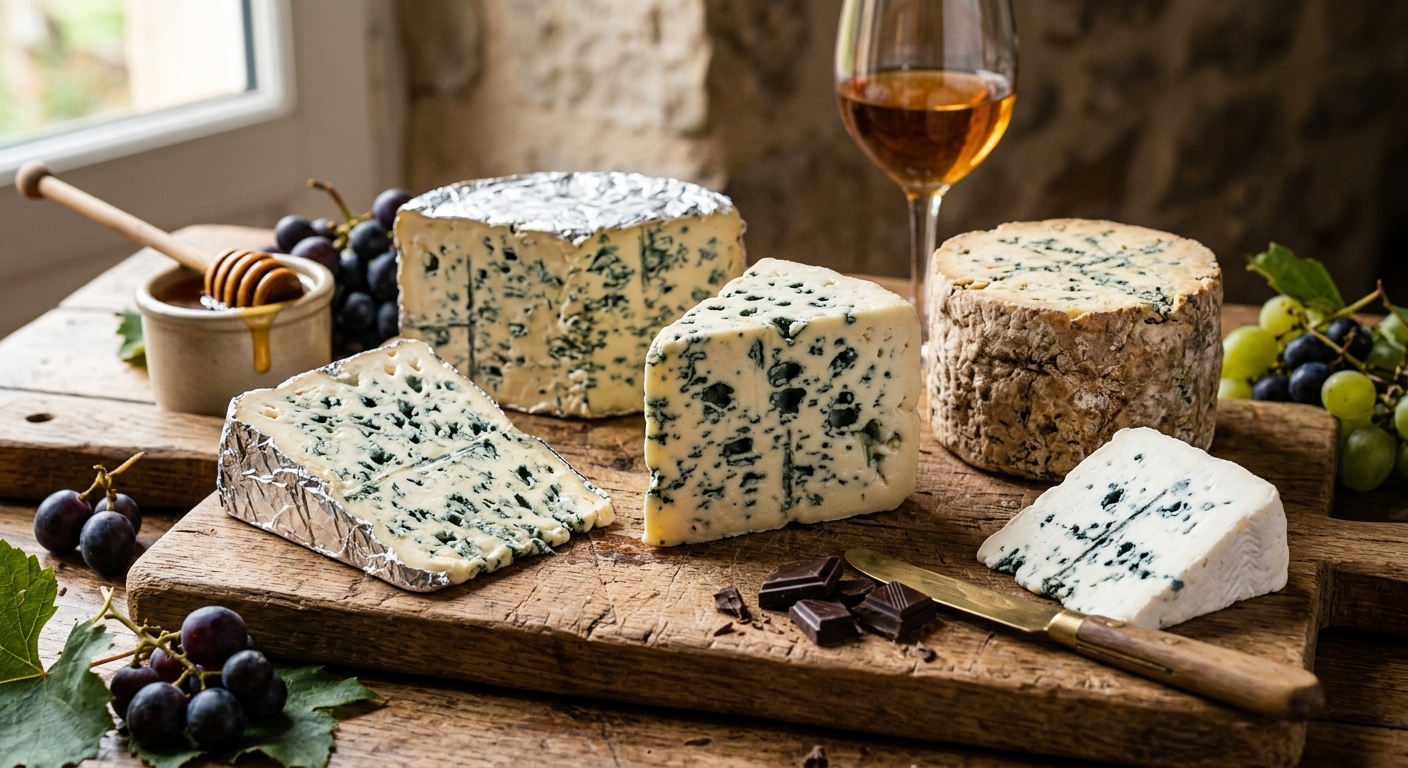
The Science Behind Blue Cheese: From European Legends to American Innovators
Discover how 15 exceptional blue cheeses showcase the fascinating intersection of microbiology, tradition, and modern craft innovation.
Estimated Reading Time: 8 min
Blue cheese might seem like magic, but it's actually a masterclass in controlled microbiology. Those distinctive blue-green veins threading through your favorite wedge? They're the result of carefully introduced Penicillium molds that transform milk into something extraordinary. Whether you're savoring a centuries-old Roquefort or exploring a modern American creation like Bayley Hazen Blue, you're experiencing the delicate balance between science and artistry that defines this remarkable cheese category.

The Science of Blue: How Mold Creates Magic
The creation of blue cheese begins with a fundamental understanding of milk proteins. In fresh milk, casein particles are kept separate by protective protein chains. When cheesemakers add rennet, these chains break down, allowing the proteins to form curds. But here's where blue cheese gets interesting: the curd structure must remain relatively open and porous to allow oxygen to reach the mold spores later introduced into the cheese.
This is where the traditional "needling" process comes in. Cheesemakers pierce the wheels with long needles, creating air channels that allow the aerobic Penicillium molds to thrive throughout the interior. Without these oxygen highways, you'd have a plain white cheese instead of the veined masterpiece we know and love.
Pro Pairing Tip: The piquant, sometimes metallic notes in blue cheese come from the mold's breakdown of fats and proteins. Balance these intense flavors with sweet wines like Sauternes or rich foods like dark chocolate.
Salt plays a crucial role too, acting as a natural regulator for the aggressive mold activity. Without sufficient salt (typically 2-5% by weight), the Penicillium would break down the cheese too rapidly, turning your wheel into an unstable paste.

Category 1: Creamy and Approachable Blues
If you're new to blue cheese or prefer milder flavors, these creamy varieties offer the perfect introduction to the category.
Cambozola Black Label: Germany's Hybrid Marvel
Cambozola represents a brilliant fusion of Camembert-style surface ripening and Gorgonzola-style internal veining. The Black Label variant undergoes a longer, colder maturation that develops a unique powdery gray rind. Inside, you'll find fine blue pockets rather than aggressive veins, with flavors dominated by rich cream, warm butter, and toasted nuts. At just 220mg of sodium per ounce, it's one of the gentler options in the blue family.
Gorgonzola Dolce: Italy's Spoonable Treasure
This PDO-protected Italian classic uses Penicillium glaucum, which creates a milder, sweeter flavor than the sharper P. roqueforti strains. The veining appears light green-blue and sparse, allowing the milky, yeasty character of the paste to shine. Its texture is so creamy you can literally spoon it onto crackers or melt it into risotto.
Saint Agur: France's Double-Cream Delight
Hailing from the Auvergne region, Saint Agur contains 60% butterfat, creating a dense, moist texture punctuated by deep blue-green veins. Despite its richness, it delivers a notable spicy tang that's immediately softened by its buttery finish. It's widely considered an ideal "gateway" blue cheese.
Buttermilk Blue: Wisconsin's Jersey Cow Creation
Crafted from fresh Jersey cow milk and aged for over 60 days, this Wisconsin creation features an ivory paste with blue-gray veins that stop before reaching the natural rind. The signature "buttermilk tang" provides pleasant acidity while the center remains rich and cream-like.
Category 2: Balanced and Complex Blues
These medium-bodied cheeses offer complex, earthy undertones that showcase the artisan's skill in balancing mold activity with milk character.
Bayley Hazen Blue: Vermont's Raw Milk Masterpiece
Jasper Hill Farm's flagship blue uses whole raw milk from morning milkings, which are naturally lower in fat. This creates a drier, fudgy texture reminiscent of chocolate or butter. The mold density is moderate and well-distributed, with primary notes of roasted nuts, toasted bread, and anise. The peppery blue kick takes a backseat to the grassy complexity of the raw milk.
Point Reyes Bay Blue: California's Rustic Innovation
Inspired by English Stilton tradition, Bay Blue develops a crumbly yet creamy texture during its 90-day aging period. The natural rind allows moisture to escape, concentrating flavors into notes of malty toasted grain with a distinct sweet salted caramel finish.
Caveman Blue: Oregon's Underground Aged Wonder
Handcrafted in Southern Oregon and aged in subterranean caves for 6-12 months, Caveman Blue develops a golden paste with a brown textured rind. The extended maturation produces exceptional savory notes of shiitake mushroom, sweet golden beets, and brown butter, with occasional crunchy calcium lactate crystals adding textural interest.
Category 3: Bold and Assertive Blues
For those who love intensity, these cheeses deliver maximum impact with high salt levels, aggressive veining, and sharp, often metallic finishes.
Roquefort: The King of Blues
Made exclusively from Lacaune sheep's milk and aged in the limestone caves of Mount Combalou, Roquefort represents the pinnacle of blue cheese tradition. The wheels are wrapped in foil to prevent rind development, keeping the paste moist and white. With roughly 3.5% salt content, it's bracingly piquant and metallic, with the high fat content of sheep's milk providing necessary richness to balance the intensity.
Terroir Tales: Roquefort's Penicillium roqueforti spores are traditionally harvested from rye bread left in the same caves where the cheese ages, a practice dating back centuries that connects each wheel to its unique terroir.
Stilton: England's Crumbly Crown Jewel
This PDO-protected cow's milk blue features a thick, wrinkly natural rind and dense, crumbly texture that becomes creamier toward the center. The flavor is formidable and spicy, offering deep umami and mineral notes balanced by the lush sweetness of grassy English milk.
Maytag Blue: Iowa's Tangy Pioneer
Developed in 1941, Maytag Blue uses homogenized milk to accelerate fat breakdown, creating a dense, crumbly texture and famously tangy, lemony flavor. Six months of aging in hillside caves develops a profile that's pungent, salty, and sharp, a true American original.
Dansk Blue: Denmark's Stark Beauty
Produced on the Danish island of Bornholm, this stark white, rindless cheese showcases aggressive blue veining against its pale paste. The homogenized milk creates visual contrast while delivering highly piquant, salty flavors with sharp metallic edges and notes of sour cream and onion.
Pro Pairing Tip: Aggressive blues like Dansk and Maytag pair beautifully with sweet dessert wines or high-proof spirits that can match their intensity.
The Point Reyes Trilogy: Technique Transforms Flavor
Point Reyes Farmstead demonstrates how subtle changes in technique can dramatically alter a blue cheese's character. Their three blues, Original, Bay, and Fennel, start with similar milk but diverge through different aging approaches.
Original Blue uses raw milk and remains rindless, retaining moisture for an ultra-creamy texture with "steely" acidity. Bay Blue employs pasteurized milk and develops a natural rind, allowing respiration that concentrates the paste into fudgy density with caramelized notes. Fennel Blue takes the Bay Blue base and adds aromatic fennel seeds, introducing licorice-like botanical notes that harmonize with the cheese's umami backbone.
European Heritage vs. American Innovation
The fundamental difference between Old World and New World blues lies in their regulatory environments and experimental philosophies.
European stalwarts like Roquefort and Stilton operate under strict Protected Designation of Origin (PDO) regulations that mandate everything from animal breeds to aging geography. This ensures historical continuity but limits innovation. Gabriel Coulet, for instance, has produced Roquefort for five generations using procedures largely unchanged since the 11th century.
American craft producers enjoy freedom from these geographical restrictions, enabling unique hybrids and experimental techniques. Jasper Hill specifically breeds Ayrshire cows because their small fat globules break down more efficiently during aging. Rogue Creamery's Caveman Blue deliberately tastes of the Pacific Northwest, earthy and mushroomy, rather than replicating European styles.
Perfect Pairings for Every Blue
The biochemical complexity of blue cheese requires thoughtful pairings that either complement richness or contrast salt and acidity.
For creamy blues like Cambozola, try honeydew or dried cranberries, the fruit's sweetness highlights subtle blue pockets while mitigating the triple-cream fat. Gorgonzola Dolce melts beautifully into polenta or risotto, providing savory creaminess to warm starches.
Balanced blues like Bayley Hazen pair wonderfully with toasty imperial stouts, where roasted malt and coffee notes mirror the cheese's chocolate and anise flavors. Bay Blue's malty, salted caramel finish finds perfect companionship in barrel-aged Scotch or port.
Aggressive blues demand equally bold partners. Roquefort's quintessential pairing with Sauternes creates the classic salt-and-sweet combination, while Stilton requires vintage port or barleywine with sufficient weight to match its savory depth.
Pro Pairing Tip: When serving blue cheese, remember that the rind often concentrates salt, while the center remains milder. Taste different parts of the wedge to understand the full flavor spectrum.
Finding Your Blue at Murray's
Whether you're drawn to the approachable creaminess of Cambozola Black Label or ready to tackle the intensity of authentic Roquefort, these exceptional blues represent centuries of cheesemaking evolution. Each wheel tells a story of terroir, technique, and tradition, from the limestone caves of France to the innovative cellars of Vermont.
The next time you're exploring the cheese selection at Murray's Cheese inside City Market, remember that every blue cheese represents a delicate balance between controlled chaos and artisanal precision. The molds that create those beautiful veins are living organisms, transforming simple milk into complex, flavorful treasures that have captivated cheese lovers for generations.
Sources and Further Reading
- Wisconsin Cheese Organization - Comprehensive blue cheese production guides
- Culture: The Word on Cheese Magazine - Blue cheese style analysis
- Jasper Hill Farm - Technical specifications and aging research
- Point Reyes Farmstead Cheese Company - Innovation in American blue cheese production
- European PDO Documentation - Traditional blue cheese regulations and standards
