Have you ever wondered what makes a truly exceptional Gouda? The answer lies in the rolling hills of Thorp, Wisconsin, where Dutch tradition meets American innovation to create something extraordinary. Marieke Honey Clover Gouda isn't just another cheese, it's a masterpiece of farmstead dairy science that brings together centuries-old techniques with the pristine milk of Wisconsin's dairy heartland.
This isn't your typical grocery store Gouda. When Marieke Penterman emigrated from the Netherlands to Wisconsin in 2002, she brought with her the sacred knowledge of Boerenkaas (traditional farmhouse cheesemaking). Her skill was so exceptional that she earned a U.S. green card under the "extraordinary ability" category, a designation usually reserved for Nobel laureates and world-class athletes. Today, as a Wisconsin Master Cheesemaker, she continues to craft cheeses that regularly outcompete thousands of entries from 25 countries at international competitions.
The Foundation: Raw Milk Excellence
What sets Marieke Honey Clover Gouda apart starts with its foundation: raw cow's milk from the Penterman family's own Holstein herd. This farmstead model represents the pinnacle of quality control in cheesemaking. While industrial operations collect milk from dozens of farms, subjecting it to transportation stress and temperature fluctuations, Marieke's milk travels directly from the milking parlor to the cheese vat through a pipeline system.

This direct-link approach is crucial for maintaining the integrity of milk's fat globules. When milk is pumped extensively, the protective membranes can rupture, exposing lipids to oxygen and enzymes that cause off-flavors. By processing milk within hours, often minutes, of milking, Marieke preserves the freshness and sweetness that characterizes the Honey Clover variety.
Pro Pairing Tip: The superior milk quality means this cheese pairs beautifully with wines that echo its floral notes. Try it with a Finger Lakes Riesling, the wine's honeyed aroma and high acidity perfectly complement the clover infusion while cleansing your palate between bites.
The Dutch Difference: Traditional Techniques
The magic of Gouda lies in a specific technique called "washing the curd." After the milk coagulates and the curd is cut, the first portion of whey is drained. Then comes the crucial step: warm water is added to the vat. This process serves two vital functions.
First, the water washes away lactose (milk sugar), which limits acid production during fermentation. This results in a cheese with higher pH and characteristic sweetness rather than the sharp acidity found in Cheddar. Second, the warm water slowly raises the curd temperature, helping it contract and expel whey efficiently, defining the final moisture level of this semi-hard cheese.

The coagulation process uses traditional animal rennet derived from young calves. While microbial alternatives exist, animal rennet contains chymosin and pepsin enzymes that continue breaking down proteins throughout aging. This specific proteolysis contributes to smoother texture and more nuanced, savory flavors over time.
Terroir Tales: The cheese wheels age on authentic Dutch pine planks imported directly from the Netherlands. These planks aren't just for show, they're porous regulators that absorb excess surface moisture while slowly releasing it back if the environment becomes too dry, preventing rind cracking. Over time, they develop a "house" microflora that contributes to rind development and flavor.
The 60-Day Journey
Marieke Honey Clover Gouda ages for a minimum of 60 days, categorizing it as a "Young" or Jonge Gouda in Dutch tradition. This duration isn't arbitrary, it's governed by both biological requirements and federal regulations. U.S. law requires any raw milk cheese to age at least 60 days at temperatures not less than 35°F (2°C) as a primary safety standard.
During these 60 days, the cheese undergoes initial proteolysis and glycolysis. Starter cultures consume remaining lactose, converting it to lactic acid. The Honey Clover variety is specifically designed for enjoyment at this younger stage to preserve the floral and creamy notes of the herb infusion, which might be overshadowed by the intense nutty and caramel notes that develop in Goudas aged 6 to 24 months.
The moisture content typically resides between 40% and 44%, characteristic of semi-hard cheese. This high moisture creates the "smooth and rich" texture that makes the cheese easy to slice and melt consistently. The relationship between moisture and fat is defined by Fat in Dry Matter (FDM) percentage, for Gouda to meet traditional standards, it must have a minimum FDM of 46%.
A Symphony of Flavors
The flavor profile of Honey Clover Gouda is a carefully orchestrated balance of "sweet yet earthy" notes. The journey begins with foundational creamy and buttery sweetness, followed by mid-palate fresh floral notes, and ending with a gentle herbal finish.
The sweetness is two-fold: the inherent sweetness of Gouda curd from the washed-curd process, and the delicate, nectar-like sweetness from honey clover herbs. This isn't cloying sugar sweetness, but sophisticated floral flavor reminiscent of a blooming clover field.
The earthiness comes directly from raw milk and farmstead production. Raw milk contains complex proteins and fats that, even at 60 days, begin developing umami and soil-like undertones. This earthiness provides necessary counterpoint to floral sweetness, giving the cheese depth and preventing it from tasting like dessert.
Ingredients: Raw cow's milk, salt, honey clover herbs, animal rennet, cheese cultures. Contains: Milk. Processed in a facility that also processes tree nuts.
Perfect Pairings for Every Occasion
The versatility of Honey Clover Gouda shines in both sweet and savory contexts. For wine pairings, Riesling remains the gold standard, its honeyed aroma and floral notes mirror the clover infusion while high acidity cuts through the cheese's richness. Sauvignon Blanc offers herbaceous notes that highlight the fresh clover aspects, while light-bodied Pinot Noir provides pleasant red fruit contrast.
Beer enthusiasts should try light Belgian ales or witbiers, often brewed with orange peel and coriander that harmonize with the floral clover. The high carbonation acts as palate-cleansing "scrubbing bubbles" between bites.
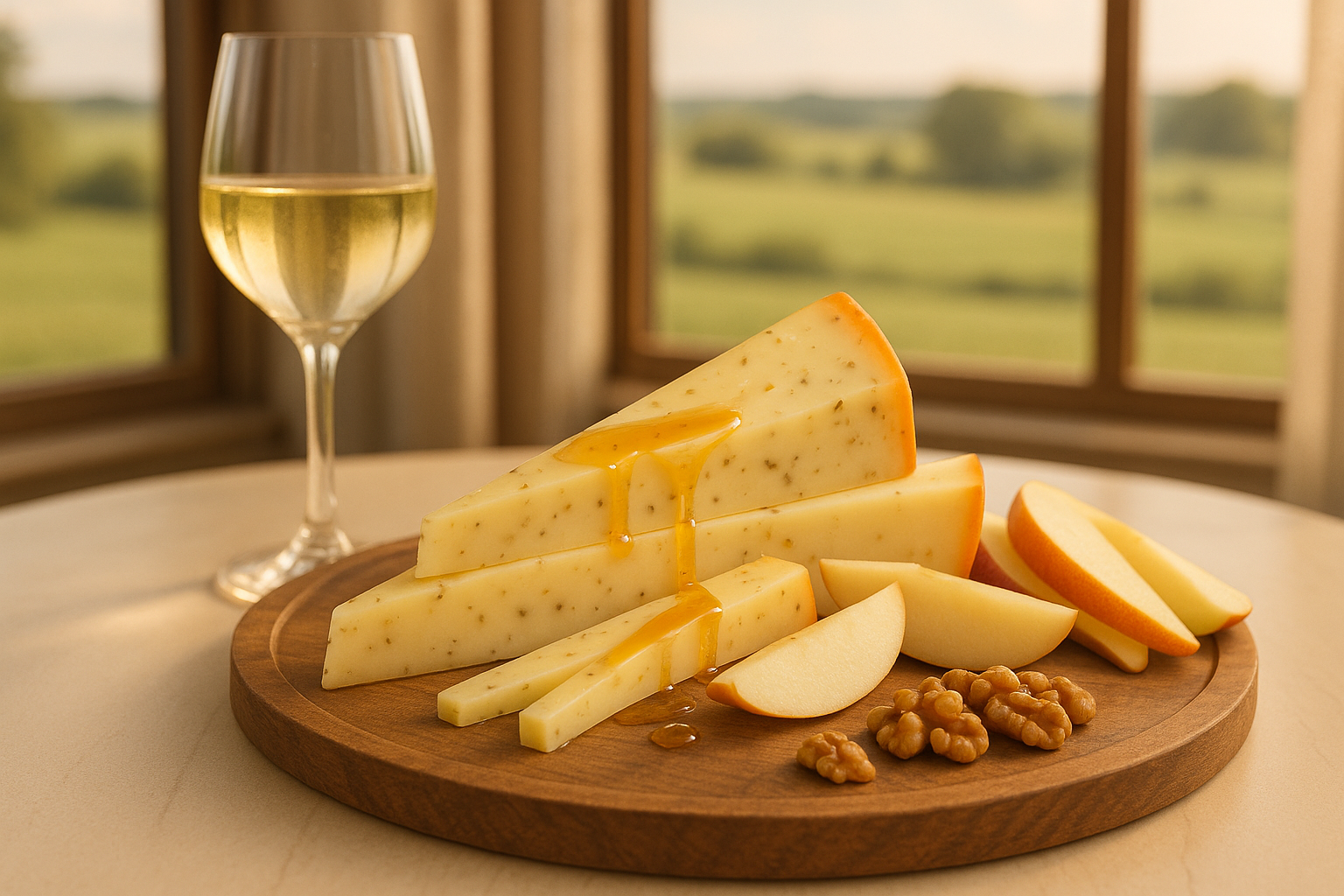
On the cheese board, classic pairings include crisp apples and walnuts, the tart crunch provides refreshing contrast while walnut bitterness balances clover sweetness. Drizzle with additional clover honey or serve alongside apricot preserves to intensify the floral theme.
Pro Pairing Tip: For culinary applications, this cheese's superior melting properties make it ideal for luxurious fondue, elevated grilled cheese, or as a sophisticated addition to vegetable tarts.
Storage and Quality Signs
Because this is a living, microbial product, distinguishing natural characteristics from spoilage is important. The dark caramelized rind is intentional from wood aging and perfectly safe to consume or trim. If stored in plastic wrap, unwanted mold may develop from trapped moisture, store in parchment or cheese paper to allow breathing.
Actual spoilage signs include strong ammonia odor (indicating protein breakdown from poor storage), yeasty or "blown" texture with irregular holes, or neon-colored molds and slimy surface films.
A Living Legacy
Marieke Gouda represents more than exceptional cheese, it's a bridge between Old World craftsmanship and New World innovation. The combination of Dutch technical expertise and Wisconsin's superior milk quality creates a hybrid product that respects European heritage while utilizing American agricultural resources.
The geographic location of Thorp provides unique environmental influence. Regional soil composition, dominated by silt loams, supports high-quality forage including alfalfa, clover, and diverse grasses. This diet directly impacts the fatty acid profile and aromatic precursors in the raw milk, creating terroir as distinctive as any wine region.
Pronunciation Note: While Americans typically say "GOO-duh," the authentic Dutch pronunciation is closer to "HOW-dah," with a guttural "G" sound. Marieke's name is pronounced "mah-REE-kah."
Whether you're a cheese novice or seasoned fromage enthusiast, Marieke Honey Clover Gouda offers an accessible entry point into artisanal cheese appreciation. Its balance of familiar comfort and sophisticated complexity makes it perfect for everything from casual snacking to elegant entertaining.
Next time you're at Murray's Cheese inside City Market, ask to sample this award-winning creation. You'll taste not just exceptional cheese, but the passion and expertise of a master cheesemaker who brought Dutch tradition to the American heartland, and made it sing with Wisconsin terroir.