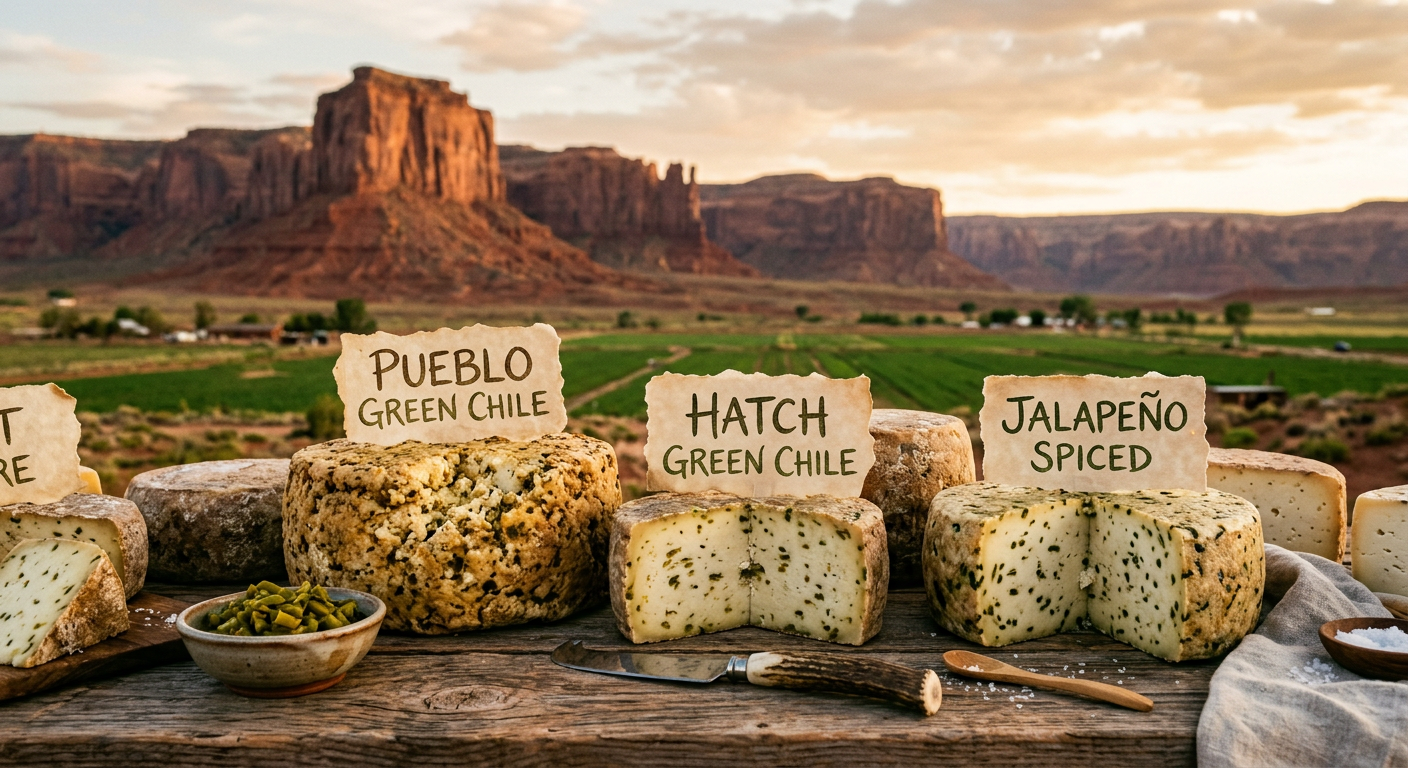
The American Southwest is experiencing a cheese revolution, and it's not just about adding a little heat to your cheddar. From the Arkansas River Valley of Colorado to the high desert of Arizona, artisan creameries are transforming regional peppers and botanicals into premium dairy products that tell the story of place through flavor.
This isn't a passing trend. The specialty cheese market is projected to reach $219.30 billion globally by 2032, with flavored cheeses leading the charge at a 6.7% annual growth rate. In the U.S., premium cheese varieties priced above $12 per pound now account for 28.4% of retail cheese sales, up from 21.7% in 2020.
The Science Behind Southwestern Cheese Innovation
Not all peppers are created equal when it comes to cheese making. The thick-walled Pueblo green chile of Colorado and the earthy Hatch chile of New Mexico each bring distinct characteristics to dairy products.

The Pueblo green chile, specifically the Mosco variety developed by Dr. Michael Bartolo at Colorado State University, features meaty walls that maintain their integrity during the cheese-making process. At 5,000 to 6,000 Scoville Heat Units, these peppers deliver a robust, fruity heat that stands up to rich dairy without disintegrating into pulp.
Hatch chiles from New Mexico's famous valley offer a different profile entirely. With thinner walls and heat levels ranging from 500 to 3,000 SHU, they provide an earthy, smoky flavor that integrates more subtly into cheese matrices.
Pro Pairing Tip: When selecting chile-infused cheeses, consider the pepper's wall thickness. Thick-walled varieties like Pueblo chiles create distinct flavor bursts, while thin-walled peppers like Hatch provide more integrated heat throughout the cheese.
Colorado's Artisan Pioneers
Springside Cheese: The Pueblo Chile Specialists
In Pueblo, Colorado, Springside Cheese has made the local Mosco chile their signature ingredient. Their Pueblo Jack and Pueblo Chile Cheese Spread showcase how regional ingredients can elevate traditional cheese styles. The creamery partners directly with local growers like Musso Farms, ensuring consistent quality and supporting the local agricultural economy.

Their Pueblo Chile Cheddar Cheese Curds have earned perfect 5.0-star consumer ratings, proving that regional flavors can compete with traditional favorites. These curds combine Wisconsin-style "squeak" with the fiery, fruity profile of Arkansas Valley peppers.
Rocking W Cheese: Six Generations of Innovation
On Colorado's Western Slope, Rocking W Cheese operates as a true farmstead dairy, processing milk into cheese within 24 hours of milking. This freshness provides the perfect canvas for their extensive pepper portfolio:
- Green Chili Jack: Features Anaheim chiles for tangy, earthy heat
- Jalapeno Jack: Incorporates fresh jalapeños added at the optimal production moment
- Chipotle Jack: Delivers smooth, smoky flavor ideal for melting
- Habanero Jack: Targets heat seekers with intense pepper fire balanced by garlic
- Smoked Ghost Pepper: Their hottest variety, combining ghost pepper flakes with natural smoke
Terroir Tales: The Rocking W family has been farming in the same valley for six generations. Their deep understanding of local growing conditions allows them to select peppers at peak flavor for cheese inclusion.
Haystack Mountain Creamery: Award-Winning Artistry
Founded in 1989, Haystack Mountain Creamery in Longmont has earned international recognition for their goat and cow milk cheeses. Their Green Chile Chèvre, made with roasted Hatch chiles, won first place at the prestigious American Cheese Society competition in 2002.
The creamery's Vaquero Jack combines organic grass-fed cow's milk with roasted Hatch chiles, creating a semi-soft cheese that balances creamy richness with mild heat. Their commitment to organic, responsibly sourced ingredients reflects the growing consumer demand for transparency in food production.
MouCo Cheese Company: European Tradition Meets Southwestern Flavor
Fort Collins-based MouCo specializes in soft-ripened, European-style cheeses but has embraced regional flavors through seasonal offerings. Their PepBert features green peppercorns in a soft-ripened base, providing citrusy botanical notes that appeal to the same palate seeking chile-infused varieties.
The Cultural Fusion Behind the Flavor
The story of Southwestern chile cheeses begins in the late 1800s when Italian immigrants arrived in Pueblo to work in coal mines and steel mills. These farming families brought mirasol chile seeds and learned roasting techniques from Hispanic field workers, creating a unique cultural fusion.
Dr. Michael Bartolo's development of the Mosco variety in the 1990s represents the culmination of this heritage. Using seeds inherited from his uncle Harry Mosco, Bartolo selectively bred peppers for thick walls, consistent heat, and resilience in Colorado's high-altitude climate.
Ingredients: Most chile-infused cheeses use cow's milk, vegetable rennet, and salt as base ingredients. Peppers are typically roasted and added during curd formation. Always check labels for specific allergen information.
Market Recognition and Awards
Colorado's flavored cheeses consistently earn top honors at national competitions. At the 2017 American Cheese Society competition alone, Colorado producers secured multiple first-place awards:
- Haystack Mountain: Gold Hill and Queso de Mano
- Fruition Farms Creamery: Sheep's milk ricotta
- Avalanche Cheese Company: Hand Bandaged Goat Cheddar
The Governor's Plate competition, launched in 2021 at the Colorado State Fair, specifically celebrates dishes incorporating Colorado Proud ingredients. Winners have consistently featured local cheeses paired with Pueblo chiles, from grilled cheese sandwiches to innovative apple pie combinations.
Beyond Colorado: Regional Variations
New Mexico's Tucumcari Mountain Cheese Factory
Tucumcari Mountain Cheese produces world-class feta (second-best globally at the World Championship Cheese Contest) alongside Southwestern specialties like Green Chile Cheddar and Chimayo Cheddar. Their vertically integrated operation sources 90% of milk from family dairies, creating a sustainable model that appeals to environmentally conscious consumers.
Arizona's Artisan Scene
Crow's Dairy in Arizona's Valley of the Sun has operated since 1919, producing farmstead goat cheeses from Nubian goats prized for high butterfat content. Their Peppercorn Chèvre and Natural Peppercorn Feta showcase how regional botanicals enhance traditional styles.
Black Mesa Ranch in Arizona's White Mountains operates as a "micro-dairy," producing just 200 pounds of cheese weekly in 15-gallon batches. Their off-grid aging cave allows for subtle infusion of native desert herbs and peppers.
The Economics of Regional Flavor
Colorado's agricultural sector contributes $1.4 billion annually through dairy products alone, while the Pueblo green chile industry adds another $10 million to Pueblo County's economy. The natural and organic food sector, which includes artisan cheese, contributed $2.1 billion to Colorado's economy in 2019, supporting over 22,000 jobs.
Legislative protection through HB26-1031 prevents out-of-state producers from using labels like "Pueblo Green Chile," ensuring that premium pricing reflects authentic regional sourcing. This protection maintains consumer trust and supports local agricultural communities.
Shopping and Pairing Guide
When selecting chile-infused cheeses, consider these factors:
Heat Level: Start with milder varieties like Hatch chile cheeses before progressing to Pueblo or habanero versions Texture Preference: Soft cheeses like chèvre provide creamy contrast to pepper heat, while aged cheddars intensify the experience Intended Use: Melting cheeses work well for cooking, while firmer varieties excel on cheese boards
Pro Pairing Tip: Pair chile cheeses with sweet elements like honey, fruit preserves, or crisp apples to balance heat. Local Colorado wines, particularly Rieslings from the Grand Valley, complement the fruity notes in Pueblo chiles.
For Pagosa Springs residents and visitors, many of these artisan cheeses are available at Murray's Cheese inside City Market, bringing world-class regional flavors to your local grocery experience.
The Future of Regional Cheese
The 6.7% annual growth rate for flavored cheeses suggests continued innovation ahead. Expect to see experimentation with indigenous herbs like epazote, native desert peppers beyond traditional varieties, and sweet-savory fusions that leverage the fruity notes of high-altitude chiles.
As legislative protections expand and consumer awareness grows, the Southwest is establishing itself as a world-class dairy region based on unique agricultural terroir. The synthesis of immigrant traditions, modern horticultural science, and artisan craftsmanship has created a distinctly American cheese category that celebrates place through flavor.
Whether you're a longtime resident or visiting the stunning landscapes of southwestern Colorado, exploring these regional cheese varieties offers a delicious way to taste the terroir that makes this region unique. From the Arkansas River Valley to the high desert, every bite tells the story of the land, the people, and the peppers that define Southwestern flavor.
Sources and Further Reading
- Dr. Michael Bartolo, Colorado State University Extension
- Specialty Food Association Market Research
- American Cheese Society Competition Records
- Colorado Department of Agriculture
- Dairy Business Innovation Alliance