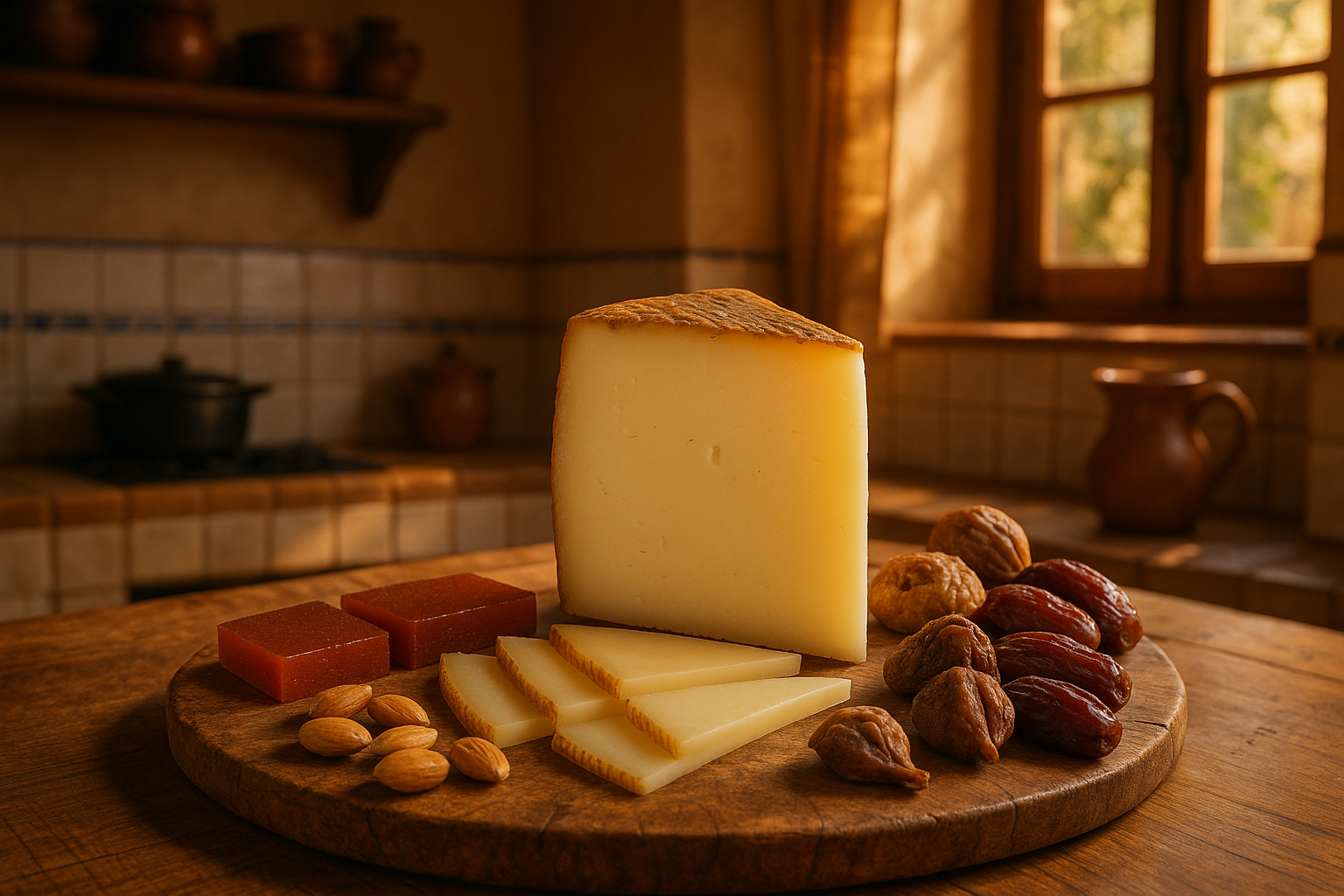
What Makes Murray's Young Manchego Special
Murray's Young Manchego isn't just another cheese on the shelf, it's a carefully crafted expression of Spain's La Mancha plateau, where harsh continental climate and ancient traditions create something truly remarkable. This semicurado (semi-cured) cheese represents the sweet spot in Manchego's aging journey: old enough to develop character, young enough to remain approachable.
The cheese comes from Castilla-La Mancha, a vast region in central Spain where temperatures swing from freezing winters to scorching summers exceeding 100°F. This extreme climate shapes everything about the cheese, from the hardy Manchega sheep that produce the milk to the concentrated flavors that develop during aging.
The Foundation: 100% Manchega Sheep's Milk
What sets authentic Manchego apart is its exclusive use of milk from Manchega sheep, a breed that has thrived in La Mancha's unforgiving landscape for millennia. These sheep produce remarkably rich milk, containing at least 6.5% fat and 4.5% protein, significantly higher than cow's milk. This concentration comes from the sheep's adaptation to sparse, drought-resistant vegetation, which forces them to extract maximum nutrition from minimal forage.

Murray's Young Manchego uses pasteurized milk, which creates a more consistent, mellow flavor profile compared to the raw-milk artisan versions. The pasteurization process eliminates potential pathogens while preserving the milk's essential character. To ensure proper curd formation after heat treatment, calcium chloride is added to restore the ionic balance, while lysozyme (from egg whites) prevents unwanted bacterial growth that could cause defects during aging.
Ingredients:
- Pasteurized sheep's milk (Manchega breed)
- Traditional animal rennet
- Salt
- Calcium chloride
- Lysozyme
- Lactic ferments
Allergens: Contains milk and egg (lysozyme)
The Three-Month Sweet Spot
At approximately three months of aging, Murray's Young Manchego hits what cheese professionals call the semicurado stage. This timing is crucial, the cheese has lost enough moisture to develop a firm structure (around 42% moisture content) while retaining the creamy, elastic texture that makes it so versatile.
During these three months, the cheese undergoes primary proteolysis, where larger protein molecules break down into smaller, more flavorful compounds. The wheels age in controlled environments with 75-90% humidity and temperatures between 50-60°F, allowing natural enzymes to work their magic slowly and steadily.
Flavor Profile: Sweet, Nutty, and Approachable
The first bite of Murray's Young Manchego delivers a wave of sweet cream and fresh milk, a result of residual lactose and the specific lactic acids produced during fermentation. As the cheese warms in your mouth, nutty undertones emerge, often described as toasted almonds or hazelnuts. This nuttiness is a signature of the high-fat Manchega milk.
The finish is clean and slightly tart, with a mild piquant "zip" that hints at the sharper flavors that develop in older wheels. There's also a characteristic "sheepy" aftertaste, a pleasant, savory animal note unique to sheep's milk that shouldn't be confused with spoilage.
Texture: Buttery and Supple
Unlike the crumbly, brittle texture of aged Manchego, the Young selection is remarkably supple. It's firm to the touch but retains enough moisture to be slightly elastic, slicing easily without shattering. Upon chewing, the cheese exhibits a buttery, creamy mouthfeel as the high triglyceride content melts at body temperature, coating your palate.
The interior paste is compact and dense, with small, scattered "eyes" (gas pockets) that indicate a slow, controlled fermentation. At three months, you won't find the crunchy tyrosine crystals that characterize much older Manchego, the paste remains homogeneous and smooth.
Recognizing Quality vs. Spoilage
Knowing what's normal versus what's problematic is essential for enjoying Manchego safely:
Normal characteristics (not spoilage):
- Small spots of white or light blue mold on the rind (can be wiped off)
- Oil droplets on the surface at room temperature (natural fat release)
- Musky, "sheepy" aroma (inherent to sheep's milk)
Actual spoilage signs:
- Strong ammonia smell
- Black, pink, or bright orange mold
- Slimy, tacky rind
- Sharp, soap-like or metallic taste (rancidity)
Pro Pairing Tip: The Membrillo Magic
The most iconic pairing for Young Manchego is quince paste (membrillo). The sweet, floral tartness creates a perfect contrast to the cheese's salty, savory nature. Spread a thin layer on crackers with a slice of cheese, or serve both on a wooden board for an authentic Spanish experience.
Wine and Beer Companions
Young Manchego's high fat content calls for beverages with good acidity or carbonation to cleanse the palate:
White wines:
- Verdejo from nearby Rueda (the classic regional pairing)
- Sauvignon Blanc (herbaceous notes complement the grassy milk)
- Cava (Spanish sparkling wine acts as a palate cleanser)
Red wines:
- Young Tempranillo from Rioja (fruit-forward styles work best)
- Fino or Amontillado Sherry (saline, nutty qualities echo the cheese)
Beer styles:
- Kölsch or Blonde Ale (light, clean finish)
- American Brown Ale (toasted malt complements nutty flavors)
- English IPA (hop bitterness cuts through the fat)
Traditional Accompaniments
Beyond membrillo, consider these classic Spanish pairings:
- Marcona almonds (reinforce the nutty profile)
- Dried figs and dates (concentrated sweetness balances acidity)
- Lavender or thyme honey (emphasizes floral aromatics)
- Jamón Ibérico (cured ham fat complements sheep fat beautifully)
Terroir Tales: The Don Quixote Connection
Manchego appears in Miguel de Cervantes's Don Quixote, where it's presented as a staple of the Spanish diet. This literary connection underscores the cheese's cultural importance, it's been nourishing people in La Mancha for centuries, long before it gained international recognition.
The Authentic Difference
To carry the Protected Designation of Origin (PDO) label, Manchego must be produced within specific areas of four provinces: Albacete, Ciudad Real, Cuenca, and Toledo. This geographic restriction isn't just bureaucracy, it's about preserving the unique terroir that makes authentic Manchego impossible to replicate elsewhere.
The characteristic zigzag pattern on the rind (called the pleita) comes from traditional production methods, when curds were pressed in belts woven from local esparto grass. Today, this pattern is embossed into modern molds to preserve the cheese's traditional appearance.
Storage and Serving
Store your Manchego wrapped in cheese paper or parchment in the refrigerator's cheese drawer. Remove it 30-60 minutes before serving to allow it to come to room temperature, which enhances both flavor and texture. The cheese will keep for several weeks when properly stored.
For serving, cut into triangular wedges or thin slices. The rind is technically edible but often removed due to its tough texture and sometimes bitter flavor.
Pro Pairing Tip: Temperature Matters
Serve Young Manchego at room temperature for the best experience. Cold cheese mutes flavors and creates a firmer, less pleasant texture. If you're short on time, cut the cheese into smaller pieces to speed up the warming process.
Finding Murray's Young Manchego in Pagosa Springs
Residents and visitors to Pagosa Springs can find Murray's Young Manchego at Murray's Cheese inside City Market. This convenient location makes it easy to pick up this Spanish treasure along with your regular groceries, perfect for impromptu cheese boards or planned entertaining.
The Bottom Line
Murray's Young Manchego offers an ideal introduction to Spanish sheep's milk cheese. Its three-month aging strikes the perfect balance between developed flavor and approachable mildness, making it versatile enough for everything from casual snacking to elegant entertaining. Whether you're building a cheese board, looking for a wine pairing, or simply want to experience authentic Spanish terroir, this semicurado Manchego delivers centuries of tradition in every bite.
The next time you're at City Market, consider adding this Spanish classic to your cart. Your taste buds, and your dinner guests, will thank you for the authentic taste of La Mancha's ancient pastoral heritage.