The Norwegian Marvel That Conquered the World
Jarlsberg isn't just another Swiss-style cheese. This Norwegian creation represents one of the most successful examples of scientific innovation meeting traditional cheesemaking. Born in a university laboratory in 1956, Jarlsberg has become Norway's third-largest export product and a global dairy phenomenon.
Unlike many European heritage cheeses protected by strict regional designations, Jarlsberg operates under trademark protection. This allows TINE SA, Norway's largest dairy cooperative, to license production internationally while maintaining absolute control over the "secret" bacterial culture that defines the cheese's identity. That proprietary culture travels from Norway to licensed facilities in Ireland and Ohio, ensuring consistency across continents.
Terroir Tales: The University Cheese Professor Ole Martin Ystgaard at the Agricultural University of Norway (now NMBU) didn't just stumble upon Jarlsberg's recipe. His team spent years perfecting the balance between Dutch Gouda techniques and Swiss Emmental fermentation. The result was a "Goutaler" - a portmanteau describing this unique hybrid that combines the best of both cheese worlds.

From Norwegian Red Cows to Your Table
Jarlsberg begins with milk from Norwegian Red cows, a breed specifically developed to thrive in Nordic conditions. These cows produce exceptionally pure milk, thanks to Norway's pristine environment and some of the world's lowest antibiotic usage rates in livestock.
The milk undergoes careful standardization to achieve the precise protein-to-fat ratio necessary for proper eye formation. For Jarlsberg Original, this means approximately 27-28% fat content and 27-28 grams of protein per 100 grams of finished cheese. The Lite version reduces fat to 13-16% while maintaining protein levels.
Ingredients:
- Cow's milk (pasteurized)
- Microbial rennet (vegetarian-friendly)
- Proprietary bacterial cultures
- Salt
- Naturally lactose-free (less than 0.01g per 100g)
The Science Behind Those Perfect Eyes
What makes Jarlsberg's holes so distinctive? The answer lies in secondary fermentation driven by Propionibacterium freudenreichii subsp. shermanii. This specialized bacteria consumes lactic acid produced by primary starter cultures and converts it into propionate, acetate, and carbon dioxide.

The process requires precise temperature control. After initial formation, wheels move to a "warm room" at 19-22°C for 12-26 days. During this critical phase, the propionic bacteria become metabolically active, releasing CO2 gas that creates those smooth-walled, glossy eyes ranging from 10-25mm in diameter.
Pro Pairing Tip: The washed curd technique used in production removes some whey and replaces it with warm water. This dilutes lactose content and creates Jarlsberg's characteristic sweet, mild flavor profile.
Aging: From Bland to Brilliant
Jarlsberg Original ages for a minimum of three months, but the transformation happens in distinct phases. Cold ripening stabilizes the cheese after brining, followed by the crucial warm phase for eye development, then final cold storage to harmonize flavors.
Special Reserve varieties age 12-15 months, developing deeper proteolysis where enzymes break down proteins into smaller peptides and amino acids. This creates a firmer, drier texture and significantly more robust, tangy flavor.
The 45% moisture content places Jarlsberg firmly in the semi-hard category. This level provides the perfect balance for the cheese's signature elastic texture while supporting the internal pressure of gas eyes.
A Flavor Profile Like No Other
Jarlsberg's taste profile centers on three key characteristics: sweetness, nuttiness, and a buttery finish. The sweetness isn't sugary but rather a delicate lactic sweetness from the washed curd process. The nuttiness, often compared to hazelnuts or almonds, develops from propionic acid fermentation. High-quality cow's milk and controlled lipolysis create that rich, lingering buttery mouthfeel.
The cheese's exceptional melting properties make it ideal for gratins, fondues, and Norway's iconic Grandiosa Pizza. When heated, it becomes gooey and smooth without excessive oiliness.
Perfect Pairings for Every Occasion
Jarlsberg's mild, nutty sweetness makes it remarkably versatile for pairing. For wine lovers, semi-dry Riesling is considered the gold standard pairing, with the wine's floral notes harmonizing perfectly with the cheese's sweet undertones. Unoaked Chardonnay and Pinot Noir also work beautifully.
Beer enthusiasts should reach for crisp Pilsners or malty Brown Ales. The carbonation in lagers helps cleanse the palate of the cheese's creamy richness, while the earthy notes in brown ales complement Jarlsberg's nuttiness.
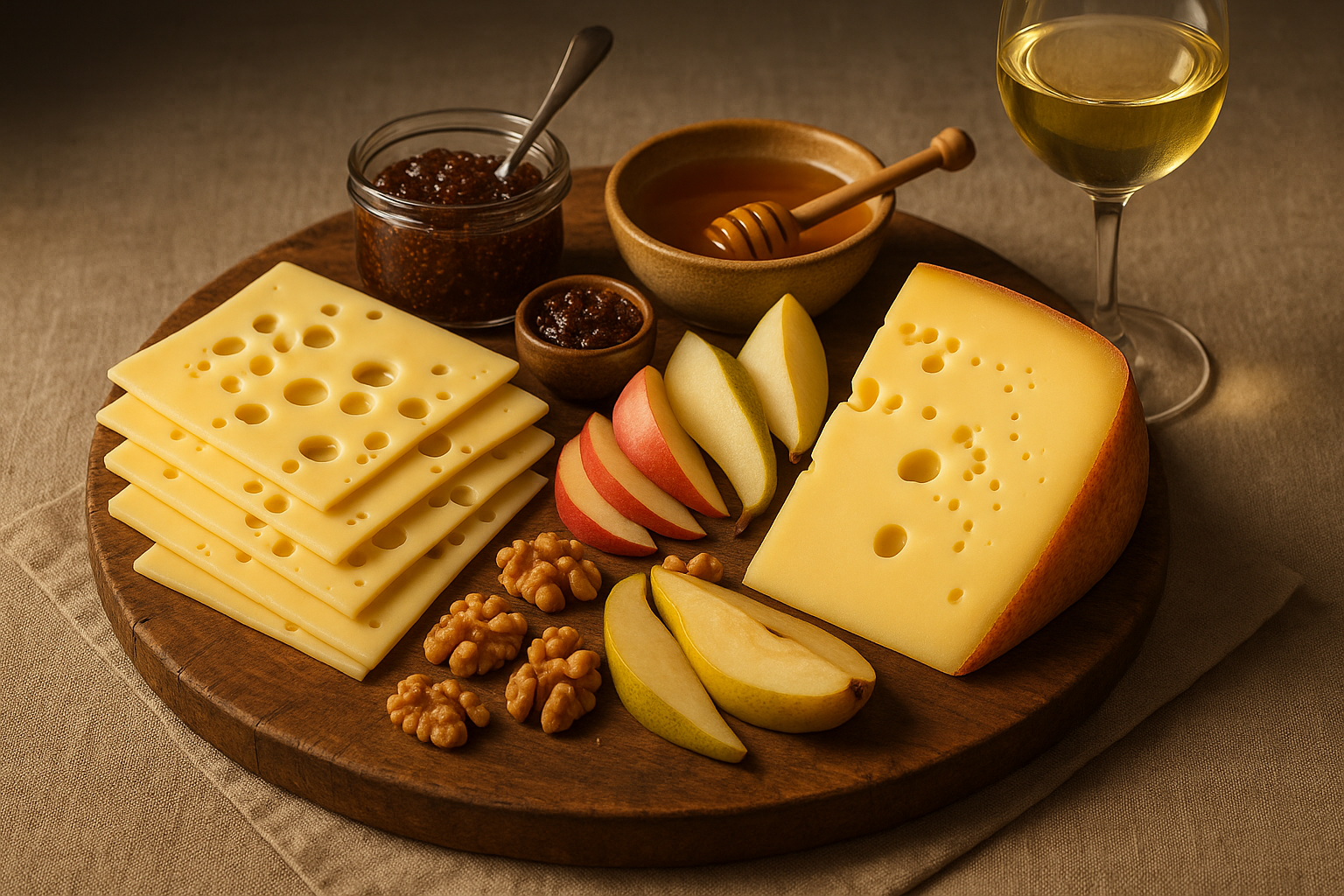
On the cheese board, pair with tart apples, sweet pears, walnuts, and hazelnuts. Honey and fig jam provide excellent flavor bridges, while savory meats like prosciutto offer delightful contrast.
Pro Pairing Tip: For the simplest enjoyment, serve thin slices on crusty bread or crackers. This allows Jarlsberg's nuanced flavor to shine without distraction.
Storage and Quality Signs
Proper storage at 0-4°C maintains Jarlsberg's quality. Watch for spoilage signs: any blue, green, or fuzzy surface mold should be trimmed away (at least one inch around and below). However, black, pink, or orange mold requires immediate disposal.
A mild ammonia scent may develop if cheese is trapped in plastic too long - simply let it breathe for 30 minutes. Rancid, sour, or "off" odors indicate spoilage. White, gritty spots are often harmless calcium lactate crystals, not mold.
The Health Connection
Recent clinical research suggests Jarlsberg may offer unique health benefits. The cheese is exceptionally rich in Vitamin K2 variants (MK-9 and MK-9(4H)), produced by the specialized bacterial culture during maturation. Studies indicate a daily 57g portion may significantly increase serum osteocalcin levels, potentially benefiting bone health.
Pronunciation and Fun Facts
Many struggle with pronunciation, but it's simpler than it looks. The Norwegian "J" sounds like "Y," making it YAHRLS-berg or YARLZ-burg. "Jarl" means "Earl" in Norwegian, so the name literally translates to "Earl's mountain."
The recipe remains one of the food industry's best-kept secrets. Reportedly, the few individuals who know the complete formula never travel together, ensuring the secret survives any single accident. This university-developed cheese has become a rare example of academic research creating a global commercial powerhouse.
For Pagosa Springs residents and visitors, you can find authentic Jarlsberg at Murray's Cheese inside City Market, bringing a taste of Norwegian innovation to the Colorado Rockies.
Sources and Further Reading
- TINE SA (Norwegian Dairy Cooperative)
- Norwegian University of Life Sciences (NMBU)
- International Journal of Clinical Trials
- Wisconsin Center for Dairy Research
- Culture: The Word on Cheese Magazine