America's Cheese Trail Goes National: How a California Success Story Is Transforming Rural Economies Coast to Coast
The 15-year-old California Cheese Trail is expanding nationwide, creating a digital lifeline for small-scale cheesemakers while driving measurable economic growth in rural communities.
Estimated Reading Time: 6 min
You might not think of cheese as a catalyst for economic development, but tell that to the thousands of visitors who've discovered hidden gems through the California Cheese Trail over the past 15 years. What started as a simple map featuring 49 cheesemakers has evolved into a sophisticated national platform that's about to change how Americans discover artisanal cheese. And if you're planning your next culinary adventure from Pagosa Springs, this expansion could put some remarkable producers on your radar.

The Cheese Trail's national rollout represents more than just better marketing for small farms. It's a carefully designed infrastructure that bridges the gap between rural producers and curious consumers, using technology to solve real economic challenges facing America's artisanal dairy sector.
The Technology Behind Discovery
The heart of the national expansion lies in CheeseTrail.org, an interactive platform that functions as four directories in one: cheesemakers, specific cheese varieties, retail shops, and educational events. Think of it as a GPS for cheese lovers, but with the depth to satisfy serious turophiles (that's cheese enthusiasts, for the uninitiated).
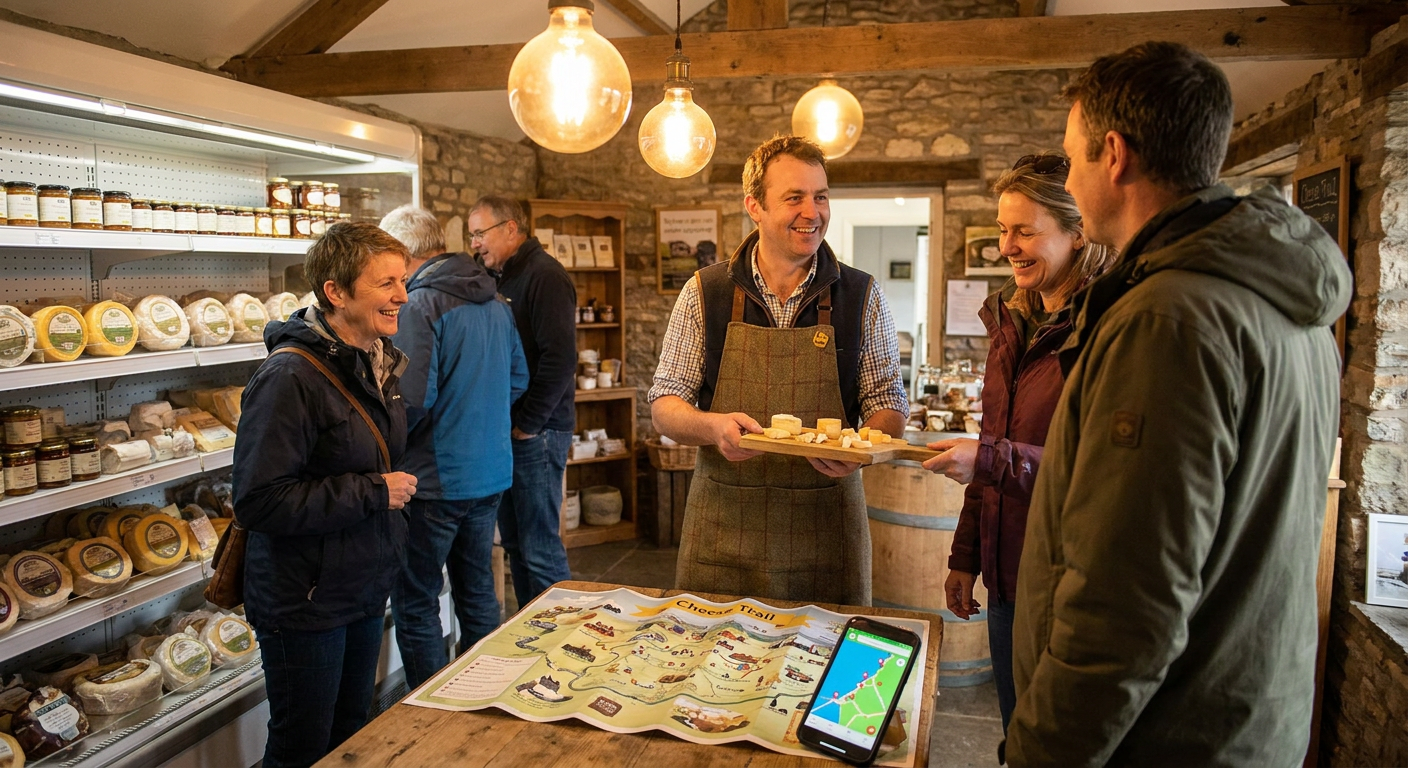
The "Trail Map" feature uses geolocation to guide visitors through regional itineraries, which is crucial when you're dealing with farmstead operations tucked away in remote valleys. In California, this digital tool works alongside 80,000 physical maps distributed annually across 150 locations, including wineries and visitor centers. You'll find them at places where food-focused travelers naturally gather.
What makes this particularly smart is how the platform handles cross-state collaborations. Take the Route 66 Cheese Trail, developed with the New Mexico Cheese Guild and timed for the Route 66 Centennial in 2026. By anchoring individual cheesemakers to a 2,400-mile historic drive, the platform transforms scattered farm visits into a cohesive national narrative.

Pro Pairing Tip: When using the interactive map, filter by "farm tours" and "tastings" to find experiences that go beyond simple retail. These visits typically offer higher-quality interactions and often better prices than you'll find in stores.
A Business Model That Actually Works
The Cheese Trail operates on a hybrid model that keeps discovery free for consumers while offering tiered memberships for businesses. The public interface costs nothing to use, removing friction for anyone looking to support local producers. Meanwhile, the "Members Area" gives businesses a dashboard to manage listings, upload photos, and promote time-sensitive events.
For cheesemakers, the entry point is remarkably accessible. First-year memberships cost just $60, specifically designed to encourage participation as the directory expands nationally. Premium memberships run $199 annually, providing enhanced profiles and access to the B2B directory.
The real revenue comes from "Brand Alignment Partnerships" that range from $500 for basic digital presence to $9,500 for maximum visibility across both digital and print assets. This tiered structure allows the organization to remain lean while funding significant costs like those 80,000 annual map printings.
Terroir Tales: Mountain Priory in Tehachapi features cloistered nuns crafting traditional European cheeses, while Carmel Valley Creamery showcases French-influenced, small-batch production. The platform accommodates vastly different business models, from monastic traditions to modern urban-fringe operations.
The Adopt-a-Cheesemaker Community Fund
Perhaps the most innovative aspect of the national expansion is the Adopt-a-Cheesemaker Community Fund, which addresses a harsh reality: many of the most innovative small producers can't afford even modest membership fees.
The fund operates as a sponsorship program where larger businesses, organizations, or individuals can "adopt" a cheesemaker, covering the annual cost of a premium business profile. Sponsorship tiers range from $199 to adopt one cheesemaker to $2,985 to adopt fifteen.
This isn't just charity. It's a strategic tool for maintaining what economists call "industrial agglomeration" effects. When many small makers appear in a single directory, the region becomes a destination. This collective visibility creates a virtuous cycle where established brands support the industry's foundation, ensuring a diverse and vibrant market.
Donors receive recognition as "champions of sustainable food systems," providing high-value marketing as ethical actors in the agricultural economy. For a place like Pagosa Springs, where visitors appreciate authentic local experiences, this kind of community support resonates strongly.
Proven Results from the California Model
The potential for national impact becomes clear when you examine the California trail's 15-year track record. Most cheesemakers experience a 25% average increase in sales after joining, with some seeing jumps as high as 80%. The trail has attracted over 2 million visitors since 2012, with 25,000+ monthly website visitors providing a consistent stream of potential customers.
Donna Pacheco of Achadinha Cheese reported that her farm tours and classes doubled in enrollment due to trail visibility. Rick LaFranchi of Nicasio Valley Cheese Company noted the trail has made a "huge difference in the future" of the North Bay artisan cheese industry.
However, the California experience also reveals the sector's fragility. The year 2024 saw closures of several beloved creameries, including Bohemian Creamery and Joe Matos Cheese. These closures underscore that even with quality marketing, small-scale producers face immense pressures from land access, regulatory costs, and labor shortages.
Pro Pairing Tip: When visiting featured cheesemakers, ask about their direct-to-consumer options. The margin difference between wholesale and on-farm retail can be the difference between a farm's survival and closure.
Learning from International Models
To understand the full potential of the US national model, it's worth comparing it to established international structures. In France, cheese trails like the Route des Fromages de Savoie are characterized by deep institutional integration and government support. The Savoie route includes 74 member sites and emphasizes "valorization of intangible cultural heritage."
The UK takes an event-driven approach. The Artisan Cheese Fair at Melton Mowbray exclusively showcases smaller producers and attracts 30,000 visitors to the town center annually. This model demonstrates the power of a "unique cultural draw" to revitalize rural economies.
The US model sits between these approaches, more entrepreneurial than the French system but more coordinated than purely event-driven strategies. This positioning allows for rapid scaling while maintaining the flexibility to adapt to different regional needs.
Market Dynamics and Growth Potential
The timing for national expansion couldn't be better. The global artisan cheese market is projected to grow from $17.8 billion in 2024 to $30.9 billion by 2033. In the US specifically, the cheese market is expected to reach $87.49 billion by 2034.
Several trends favor small-scale makers: health consciousness driving demand for minimally processed foods, gourmet culture prioritizing authenticity and story, rising interest in regenerative agriculture, and growth in direct-to-consumer sales channels.
For a small cheesemaker in a state without a strong cheese reputation, joining a national trail creates what economists call a "siphon effect." The national platform's high traffic and brand equity funnel down to individual members, providing access to markets that would be impossible to reach independently.
What This Means for Pagosa Springs
As the Cheese Trail expands nationally, residents and visitors to Pagosa Springs will gain access to a curated network of artisanal producers across the country. Whether you're planning a road trip or looking for unique gifts, the platform provides a reliable way to find quality makers who prioritize traditional techniques and sustainable practices.
For those interested in supporting this movement locally, many of the featured cheeses become available through specialty retailers. Murray's Cheese inside City Market often carries selections from Cheese Trail members, allowing you to taste these artisanal products without traveling to the source.
Pro Pairing Tip: Use the platform's search filters to find makers who specialize in specific practices like grass-fed dairy, A2 milk, or organic certification. These details matter for both flavor and supporting farming methods that align with your values.
The Road Ahead
The national expansion of the Cheese Trail represents more than a marketing exercise. It's the construction of a digital and social safety net for the American artisanal dairy sector. By integrating lessons from the 15-year California pilot with international best practices, the initiative offers a framework for economic resilience in rural communities.
As the 2026 milestones approach, including the Route 66 Centennial collaboration, the platform is positioned to demonstrate that thoughtful technology can drive measurable economic impact for small-scale food producers. For cheese lovers, this means better access to remarkable products. For rural communities, it means a fighting chance to preserve traditional foodways in an increasingly consolidated agricultural landscape.
The success of this expansion will ultimately be measured by its ability to keep small cheesemakers in business while connecting them to consumers who value quality, authenticity, and the stories behind their food. In a world where industrial agriculture dominates, that's a goal worth supporting.
Sources and Further Reading
- Cheese Trail Organization (CheeseTrail.org)
- California Milk Advisory Board
- New Mexico Cheese Guild
- AFTALP (Association of Traditional Cheese of the Savoyard Alps)
- Fortune Business Insights Cheese Market Analysis