Five Perfect Mexican Cheese and Drink Pairings for Your Cinco de Mayo Celebration
Discover how to match Mexico's finest artisanal cheeses with the perfect spirits and cocktails for an unforgettable fiesta.
Estimated Reading Time: 8 min
You've probably grabbed a bag of shredded "Mexican blend" cheese at the grocery store without giving it much thought. But Mexico's cheese tradition runs far deeper than that yellow-orange mix. From the fresh, crumbly queso fresco that tops your street tacos to the stretchy, golden queso Oaxaca that makes quesadillas sing, Mexican cheeses offer a world of flavor that deserves better than being buried under hot sauce.

This Cinco de Mayo, why not explore the real thing? These five strategic pairings will transform your celebration from predictable to memorable, matching Mexico's most beloved cheeses with the spirits and cocktails that bring out their best qualities. Whether you're hosting a backyard party in Pagosa Springs or just want to elevate your weeknight dinner, these combinations work because they follow the fundamental principles of Mexican cuisine: balance, freshness, and bold flavors that complement rather than compete.
The Fresh Start: Queso Fresco and Blanco Tequila
Queso fresco is Mexico's everyday cheese, the reliable friend that shows up in everything from breakfast eggs to late-night tacos. This soft, white cheese has a mild, slightly tangy flavor that comes from short-term fermentation. Its high moisture content and crumbly texture make it the perfect palate cleanser, especially when you're sipping something as clean and bright as blanco tequila.
The pairing works because of what cheese scientists call "freshness symmetry." Both the cheese and the spirit showcase their raw, unadulterated essence. Blanco tequila, with its lack of oak aging and high concentration of agave terpenes, delivers herbaceous and citrus notes that dance beautifully with the cheese's subtle tang. The tequila's alcohol content acts as a natural lipid solvent, preventing that coating feeling you sometimes get from fatty dairy and keeping your palate fresh for the next bite.
Pro Pairing Tip: Enhance this combination with jicama or cucumber sticks seasoned with lime and Tajín. The lime echoes the citrus notes in the tequila, while the chili and salt in Tajín highlight the cheese's natural tang.

For a more casual approach, try this pairing with a light Mexican lager served with a lime wedge. The beer's carbonation provides a gentle scrubbing action on your palate, while its low bitterness and bright acidity mirror the refreshing quality of queso fresco. This works especially well when the cheese garnishes spicy dishes like enchiladas, where the dairy acts as a cooling buffer against capsaicin heat.
Ingredients: Queso fresco is made from cow's milk, salt, and rennet. It's naturally gluten-free but contains dairy.
The Smoky Symphony: Queso Oaxaca and Mezcal
Queso Oaxaca, locally known as quesillo, represents Mexican cheesemaking at its most sophisticated. This stretched-curd cheese gets its distinctive texture from a process where curds are heated and pulled, aligning the proteins into long, elastic strands. The result is a cheese that melts beautifully while maintaining a pleasantly chewy texture.
Pairing Oaxaca with mezcal follows the principle of "complementary intensity." The cheese's buttery, savory notes provide a rich, fatty foundation that can absorb and carry the volatile smoke compounds found in mezcal. Made from over 30 different agave species and often roasted in underground pits, mezcal brings complexity that includes notes of leather, earth, and roasted fruit.
The modern quesabirria trend perfectly illustrates this pairing's effectiveness. When Oaxaca cheese is pan-seared alongside spiced beef, it creates a golden crust called a costra. The Maillard reaction on the cheese's exterior develops toasted, nutty notes that directly correspond to the caramelized sugars in cooked agave. Pair this with a smoky mezcal cocktail like a Mezcal Mule, and you've got layers of flavor that build on each other rather than compete.
Terroir Tales: Queso Oaxaca originated in the valleys of Oaxaca, where Dominican friars adapted European cheesemaking techniques to local conditions. The stretching technique, borrowed from Italian pasta filata methods, proved perfect for Mexico's warm climate.
For your cheese board, present Oaxaca in its traditional ball or rope form, allowing guests to interact with its unique fibrous structure. Include smoked nuts or chorizo to bridge the gap to mezcal, and add pickled red onions or jalapeños for the acetic acid needed to refresh the palate between bites of this rich dairy.
Ingredients: Made from cow's milk, salt, and rennet using traditional stretching techniques. Contains dairy.
The Umami Powerhouse: Cotija and Micheladas
Cotija, often called the "Mexican Parmesan," brings serious flavor intensity to any pairing. This aged cow's milk cheese from Michoacán develops its firm, dry texture through an aging process that removes moisture and concentrates flavors, resulting in a robust, salty profile rich in natural glutamates.
Unlike melting cheeses, Cotija functions as a "finishing cheese," providing a granular, savory punch to dishes like elote (Mexican street corn) and refried beans. Its pairing with the Michelada follows the principle of "saline synergy," where the salt in both the cheese and the drink amplify underlying flavors rather than overwhelming them.
The Michelada, that brilliant Mexican cocktail of beer, lime, hot sauce, and often tomato juice or Clamato, is essentially umami in liquid form. The salted rim serves as a direct aromatic bridge to the Cotija, while the lime juice and hot sauce provide sharp contrast to the cheese's creamy-but-dry mouthfeel. When you add sweet corn to the equation, as in elote, you create a perfect triangle of salt, acid, and sweetness.
Pro Pairing Tip: Different regional styles of Cotija call for different drink pairings. Jalisco-style Cotija, which is more supple and moist, works beautifully with delicate cocktails like a Cantarito (grapefruit, orange, and lime juice with tequila). The firmer Chiapas-style Cotija can stand up to aged Añejo tequila.
For your Cinco de Mayo spread, crumble Cotija over everything. Its granular texture and intense flavor make it the perfect finishing touch for guacamole, salsa, and grilled vegetables.
Ingredients: Aged cow's milk, salt, and rennet. The aging process concentrates flavors and reduces moisture. Contains dairy.
The Tropical Contrast: Panela and Fruity Margaritas
Queso Panela, also called queso de canasta because it's molded in baskets, offers something unique in the Mexican cheese world: it doesn't melt. Instead, when heated, it becomes chewy and pillowy, similar to Mediterranean Halloumi. This structural integrity makes it perfect for grilling, where the Maillard reaction develops toasted, nutty flavors on the surface while the interior stays moist and milky.
This pairing strategy focuses on "textural play and contrast," matching Panela's squeaky freshness with fruity, spicy cocktails and tropical accompaniments. The cheese's mild flavor makes it an excellent canvas for bold additions.
Grilled Panela shines when served with mango, watermelon, or pineapple drizzled with lime and sprinkled with Tajín. The tropical sweetness of the fruit, the acid from the lime, and the chili heat from Tajín create a vibrant flavor profile that pairs beautifully with a Mango Margarita or Prickly Pear Margarita. The fruit in the cocktail softens the chili heat while complementing the grilled notes of the cheese.
Pro Pairing Tip: Try serving grilled Panela with raspberry and chipotle jam. This unexpected combination bridges the dairy's freshness with deep, smoky fruit notes that work surprisingly well with aged tequilas.
For non-cocktail options, a Tequila Blanco highlights the "youthful" flavors of Panela, while a hard cider or fruit beer provides a crisp finish that cleanses the palate after the dense, grilled exterior of the cheese.
Ingredients: Fresh cow's milk, salt, and rennet. The basket-molding process gives it its distinctive texture. Contains dairy.
The Melting Marvel: Queso Chihuahua and Palomas
Queso Chihuahua, also known as queso menonita after the Mennonite communities that developed it, is Northern Mexico's answer to the perfect melting cheese. With a flavor profile similar to mild white cheddar or Monterey Jack, it offers a pleasant tang and high fat content that melts into a smooth, flowing consistency.
This pairing utilizes the "acid-fat dynamic," matching the rich, sharp, and creamy profile of melted Chihuahua with brightly acidic drinks like the Paloma. When you're eating something as rich as queso fundido (Mexican cheese fondue) with chorizo, your palate can quickly become overwhelmed by fats. That's where the Paloma comes in.
Mexico's most popular tequila drink, made with grapefruit soda and lime, acts as a scientific palate scrubber. The grapefruit's natural bitterness and acidity lift heavy cheese fats from your tongue, while the carbonation provides mechanical agitation that refreshes your mouth. This ensures that every bite of melted Chihuahua cheese tastes as impactful as the first.
Terroir Tales: Mennonite communities in Chihuahua brought European cheesemaking traditions to Mexico in the 1920s, adapting their techniques to local milk and climate conditions. The result became the gold standard for Mexican melting cheese.
In social settings, Chihuahua cheese often appears in chorizo flatbreads or nachos. The savory chorizo and sharp, tangy melted cheese find perfect balance with a Beer Margarita, which combines the crispness of lager with the citrus and salt of a classic margarita. Add pickled jalapeños or roasted tomatoes to provide additional acidic points that harmonize with the cheese's sharpness.
Ingredients: Cow's milk, salt, and rennet, aged to develop its characteristic tang. Contains dairy.
Building Your Mexican Cheese Board
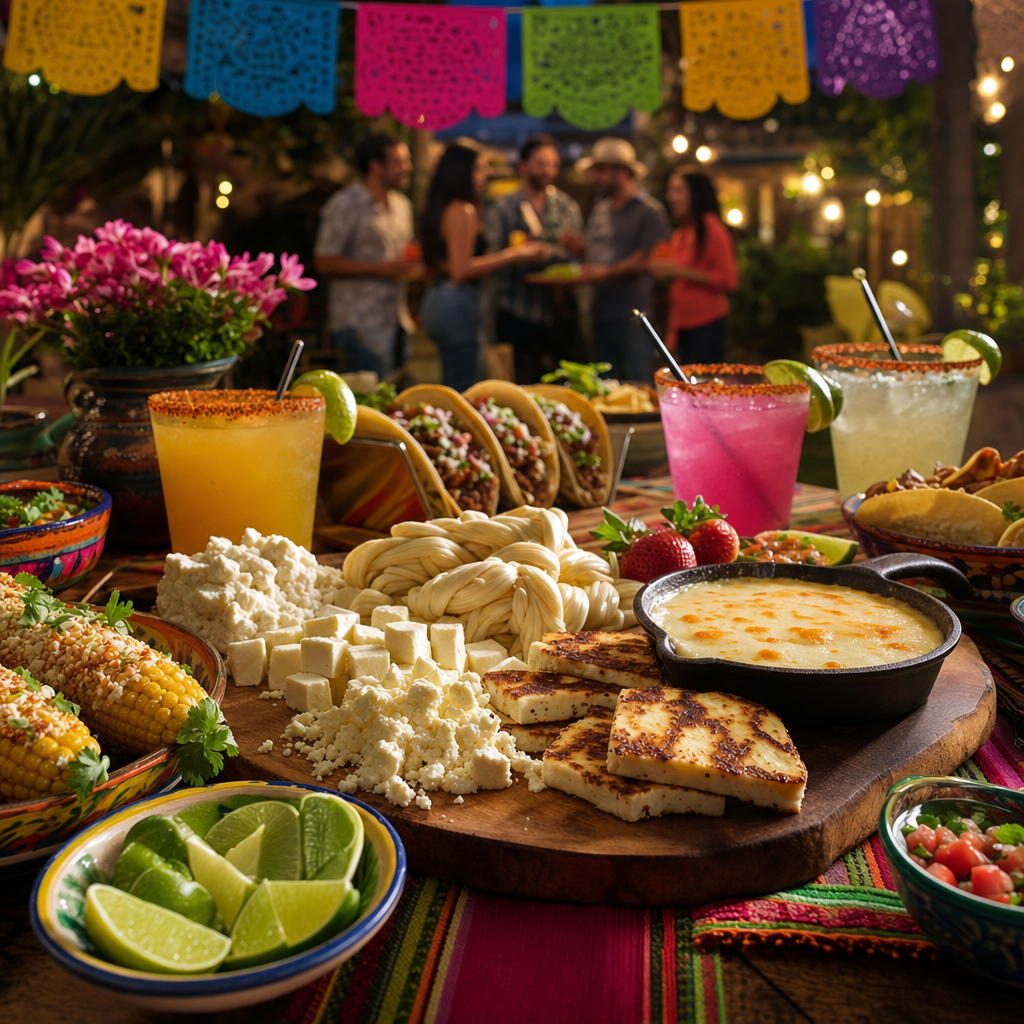
A proper Cinco de Mayo cheese board is more than just an arrangement of dairy and crackers. It's an ecosystem designed to facilitate flavor exploration and social interaction. Unlike European-style boards that focus on cured meats and aged cheeses, the Mexican-inspired board celebrates fresh produce, vibrant salsas, and varied dairy formats.
Start by anchoring your board with multiple dipping stations. Place guacamole, salsa roja, and salsa verde in the center to provide acid bridges for both fatty meats and mild cheeses. Replace traditional prosciutto with spicy salami, dry chorizo, and cooked carne asada. These proteins offer bold seasoning profiles that require the cooling properties of fresh Mexican cheeses.
For crunch elements, include tortilla chips in both blue and yellow corn varieties, chicharrones, and chili-lime peanuts. These provide necessary textural contrast to soft and melted cheeses. The visual appeal matters too: the reds of tomatoes and chorizo, the greens of cilantro and lime, and the creamy whites of queso fresco and Panela create an enticing spread.
Add hydrating elements like jicama slices, radishes, and cucumber. These are essential when serving high-proof agave spirits, providing palate relief between intense flavors. Finish with a dusting of crumbled Cotija and fresh cilantro over the entire board, tying various elements together with a unified savory finish.
Pro Pairing Tip: Include lime wedges throughout your board. They provide immediate acid adjustment for any pairing that needs brightening.
Beyond the Basics: Sweet Applications
Mexican cheese versatility extends into dessert territory, where cheeses like Requesón play starring roles in traditional and modern sweets. Requesón, a fresh spreadable cheese made from whey similar to Italian ricotta, offers a mild, milky flavor that serves as an excellent canvas for high-sugar accompaniments.
Try grilled peaches topped with Requesón, honey, and almond slivers. This sophisticated dessert pairs elegantly with Tequila Reposado or Añejo, whose oak-derived vanilla and caramel notes mirror the honey and toasted nuts. For a more traditional approach, consider Capirotada, Mexican bread pudding that includes aged cheese as a deliberate counterpoint to prevent the spiced syrup, raisins, and nuts from becoming cloying.
The Science of Success
These pairings work because they follow three fundamental principles: intensity matching, acidic scrubbing, and saline amplification. Bold, smoky spirits like mezcal require bold, elastic cheeses like Oaxaca. Rich, melted cheeses like Chihuahua need the acidic scrubbing of grapefruit or lime. Aged, salty cheeses like Cotija are best complemented by umami-rich flavors or the sweetness of grilled corn.
By understanding these relationships, you can create combinations that are both culturally authentic and scientifically balanced. Whether you're shopping at Murray's Cheese inside City Market here in Pagosa Springs or exploring Mexican markets elsewhere, these principles will guide you toward pairings that celebrate Mexico's rich dairy heritage.
This Cinco de Mayo, skip the predictable and embrace the authentic. Your taste buds will thank you, and your guests will remember the celebration long after the last margarita is poured.
Sources and Further Reading
- Benito's Mexican Restaurant: A Guide to Regional Mexican Cheeses
- The Cheese Professor: The Rise of Mexican Cheese
- Rosita's Mexican Grill: Cinco de Mayo Food & Drink Pairings
- Wisconsin Cheese: Mexican Cheese Types
- Boarderie: Mexican Charcuterie Board Guide