Estimated Reading Time: 8 min
A Vermont Cheese With a French Accent
Bijou comes from Vermont Creamery in Websterville, a village within Barre, Vermont. Its name means “jewel” in French, and each little cheese weighs about 2 ounces. They usually come two to a 4-ounce package. Convenient for sharing, though no rule requires it.
The cheese belongs to the French-inspired crottin family: small goat cheeses shaped into squat cylinders and ripened to develop a rind. Crottin de Chavignol, from France’s Loire Valley, is a famous example of the style. Bijou takes that idea and gives it a Vermont address.

Vermont Creamery began in 1984, when Allison Hooper and Bob Reese joined forces after making goat cheese for a dinner in Stowe. Hooper had learned cheesemaking on a farm in Brittany, France. That experience helped shape the creamery’s approach: French techniques, adapted to an American dairy landscape.
The company opened its Websterville facility in 1988, became a Certified B Corporation in 2014 and was acquired by Land O’Lakes in 2017. B Corp certification addresses social and environmental performance, transparency and accountability. It is a business credential, not a flavor grade. The cheese still has to earn its place on your plate.
Terroir Tales: More Than Mountain Scenery
Terroir means the influence of place on a food, including climate, farming and local practices. With Bijou, the useful story is not that you can somehow taste a particular Vermont hillside. It is the network of dairy farms and cheesemaking skills behind each button.
Ayers Brook Goat Dairy in Randolph, established by Vermont Creamery in 2012, helped develop the regional goat dairy industry. Its herd has a strong Saanen breeding focus. Other suppliers, including Joneslan Farm and Tup’s Crossing, have moved from cow dairying into goats. Those changes show how a specialty cheese can help create a market for a different kind of farming.

What Goes Into Bijou?
Bijou is made with pasteurized goat’s milk, cheese cultures, salt and microbial enzymes used as rennet.
Rennet helps milk set into curd. Microbial rennet comes from microorganisms rather than an animal’s stomach, making Bijou suitable for vegetarians who eat dairy. It is not vegan.
Starter cultures also play a central role. They turn milk sugar into lactic acid, which helps form the curd and gives the cheese its bright acidity. Goat milk’s fatty acids contribute characteristic goat-cheese aromas, especially as the cheese ripens. That distinction matters: tang comes largely from acid, not simply from being goat milk.
You might notice how white the interior is. Goats convert much of the beta-carotene in their feed into vitamin A, leaving less of the yellow pigment that can color cow’s milk cheeses.
Allergen note: Bijou contains milk. Goat cheese is not a safe substitute for someone with a cow’s milk protein allergy, and it should not be assumed to be lactose-free. Check the current package for ingredients and dietary information.
A listed 1-ounce serving provides about 90 calories, 7 grams of fat, 5 grams of protein and 150 milligrams of sodium. That serving is roughly half a button. Small cheese, fairly substantial bite.
Pasteurization: A Safety Step, Not a Flavor Verdict
Bijou’s milk is pasteurized before cheesemaking. This heat treatment kills disease-causing microbes in milk and helps cheesemakers guide fermentation with selected cultures.
Standard pasteurization methods include heating milk to 145 F for 30 minutes or 161 F for 15 seconds. Those are general examples, not a claim about the creamery’s specific equipment.
Pasteurized does not mean sterile, and finished cheese still needs proper refrigeration and clean handling. Nor does it mean bland. Much of Bijou’s flavor develops later, through fermentation and rind growth.
How a Little Button Develops Those Wrinkles
Bijou is an aged, soft-ripened goat cheese, commonly described as maturing for about 30 days. Unlike fresh chèvre, it spends time developing an active surface rind.
The key player is Geotrichum candidum, a yeast-like fungus used in cheesemaking. It creates the pale, wrinkled coat that makes Bijou look a bit like a tiny brain. This is intentional. No need to summon the refrigerator police.
Bijou is often grouped with bloomy-rind cheeses, but its finely wrinkled surface differs from the fluffy white coat associated with many Bries and Camemberts. Its small crottin shape is another useful clue to its identity.
As the rind develops, enzymes break down proteins beneath it. The technical term is proteolysis. The practical result is a softening layer between the rind and the denser center, often called the cream line.
Ripening is gradual, not a calendar alarm. Temperature, storage and the cheese’s condition all affect how quickly its flavor and texture change.
Moisture and Texture: Dense Inside, Creamy at the Edge
For shopping and serving, “soft-ripened” is the most useful label for Bijou. A firm center does not turn it into a hard cheese.
Its texture depends on both moisture and protein breakdown. During production and aging, curds drain and the cheese loses some water. At the same time, rind activity softens the interior from the outside inward. That is why a cheese can have a dense core and a loose, creamy edge at once.
Expect three distinct parts:
- The rind: Thin, tender, pale and wrinkled. It is edible.
- The cream line: A softer layer just under the rind that becomes more pronounced with ripeness.
- The center: White, compact and smooth, sometimes with a claylike firmness in a younger button.
Not every Bijou will run across the plate. A younger one may hold a neat wedge, while a riper button may slump. Both can be worth eating.
What Bijou Tastes Like
A younger Bijou leans toward fresh milk, gentle lemony acidity and sweet cream. As it matures, it develops more savory depth, with impressions of yeast, butter, nuts and mushrooms.
The rind brings much of that earthy character. Taste a small piece of the center by itself, then take another bite with the rind attached. The difference is an easy lesson in how surface-ripened cheese works.
Some tasters find a honeylike sweetness, but there is no need to chase every possible flavor note. Start with three questions: Is it tangy? Is it creamy? Does the rind remind you more of bread dough or mushrooms?
That is a better tasting exercise than trying to detect an entire forest in one mouthful.
How to Serve Bijou in Pagosa Springs
For a quiet evening after skiing or a small appetizer before dinner with visiting friends, one package makes a manageable centerpiece. You do not need a sprawling board.
- Shop for the texture you want. Ask for a firmer button if you prefer bright, fresh flavors, or a softer one for a fuller, earthier taste. At Murray’s Cheese inside City Market in Pagosa Springs, ask whether Bijou is in stock and what is tasting ripe.
- Keep it cold on the trip home. Use an insulated bag for a longer drive or extra errands. A warm car is not a ripening room.
- Temper only what you will serve. Take the cheese out of the refrigerator about 30 to 60 minutes before eating. Keep it lightly covered, especially in Pagosa’s dry air.
- Cut through the whole button. Small wedges give each person rind, cream line and center.
- Refrigerate leftovers promptly. Keep total time out of refrigeration under two hours, or one hour when the temperature is above 90 F.
Use the original packaging as directed. Bijou’s protective package helps shelter its delicate rind, but it does not replace refrigeration. Store at 40 F or below and follow the package’s storage guidance.
Wine Pairings: Start Bright, Then Get Adventurous
Sauvignon blanc is the straightforward choice. Its citrus and herbal notes suit the cheese’s acidity, while its freshness balances the creamy texture.
Sparkling wine, including Champagne or a dry Prosecco, adds bubbles and a crisp contrast. Dry rosé works well when you want fruit without much tannin.
For a riper button, try gewürztraminer. Its floral, spice and lychee aromas can complement Bijou’s savory rind and subtle sweetness. Styles vary, so choose the sweetness level you enjoy.
Light reds such as pinot noir and Gamay are sensible options, too. Keep them fruit-driven and low in tannin. Skin-contact orange wines and pét-nats, naturally sparkling wines, can be interesting with the rind, though bold tannins or strong funky flavors may dominate.
Pro Pairing Tip
Taste the cheese before pouring a full glass. A firm, tangy Bijou and a soft, mushroomy one may favor different bottles. Match the cheese on your plate, not just the name on its label.
Beer Pairings: Give the Yeast Some Company
My first beer choice would be a Belgian tripel. Its lively carbonation, gentle malt sweetness and yeast-derived spice make sense beside Bijou’s creamy, breadlike flavors. Tripels can be strong, so a small pour is plenty.
A saison offers a drier, peppery route. A Belgian golden ale can echo the cheese’s bready notes, while a hefeweizen brings clove and banana aromas for a more playful contrast.
With a very ripe button, a Flemish red sour ale is worth a small test pour. Its tartness can stand up to a stronger cheese, but the pairing can become busy. There is no prize for choosing the most challenging beer.
Build a Board With Contrast, Not Clutter
Start with bread, fruit and one crunchy thing. Add more only if you want it.
- Bread: Baguette, seeded bread or plain sourdough crackers support the cheese without burying it.
- Nuts: Roasted hazelnuts echo its nutty side and add welcome crunch.
- Sweet accents: A little fig, blueberry or black cherry jam balances tang. A split date makes a chewy base for a small piece of cheese.
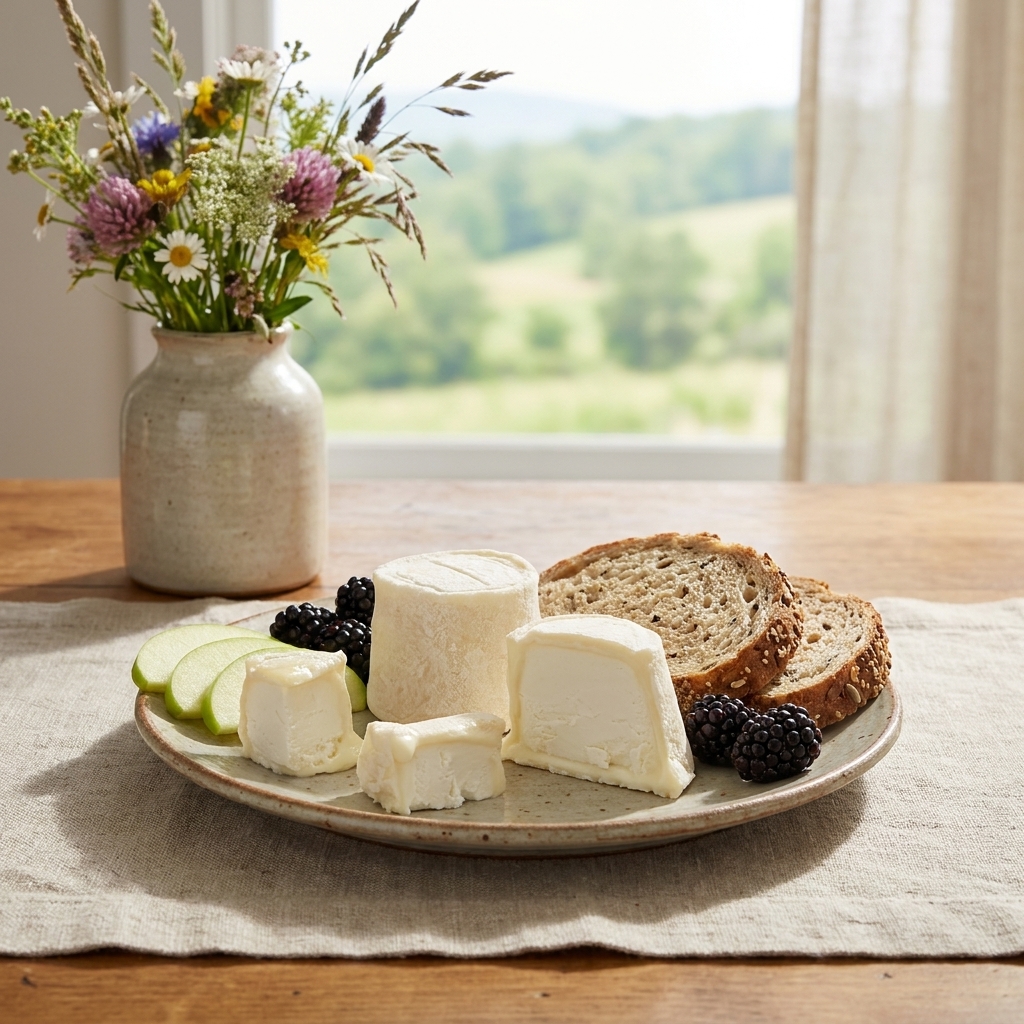
- Fresh fruit: Granny Smith apple slices bring crispness; blackberries add juicy tartness.
- Savory extras: Olives, prosciutto or speck, a smoked cured ham, add salt and depth. Keep the meats separate for vegetarian guests.
- A casual option: Plain potato chips. Their salt and crunch work surprisingly well with a soft, ripe button.
Pro Pairing Tip
Put jam beside the cheese, not over it. Try Bijou plain first, then add a small dab. You want a conversation between flavors, not a fruit takeover.
Ripe or Spoiled? Know the Difference
Normal Bijou features include a white-to-ivory wrinkled rind, earthy or yeasty aromas and a soft layer under the surface. A faint ammonia note can develop during ripening and may fade after unwrapping. A strong, persistent ammonia odor is a reason to pass.
Discard the cheese if you see unexpected pink or red staining, fuzzy blue or black growth, or slime accompanied by an unpleasant odor. Do not cut unwanted mold off a soft cheese and eat the rest. Contamination can extend beyond what you see.
A dried-out, hard button may simply be past its best in quality; dryness alone does not prove it is unsafe. Equally, a normal smell does not prove safety. Respect refrigeration limits and any recall notices. Never taste a suspect cheese to check it.
A Few Good Details to Share at the Table
Bijou won a Good Food Award in 2022 and earned first place in its category at the 2025 American Cheese Society competition.
Its development also connects to Adeline Druart, who joined Vermont Creamery as an intern in 2003. Her graduate work helped shape the creamery’s aged goat cheese facility, and she later became company president. A fairly productive internship.
And the name? Say BEE-zhoo. The “zh” sounds like the “s” in “measure,” followed by “oo” as in “moon.”
Pick up a pair when available, bring home a baguette and choose one drink you already like. Give the cheese a little time to warm, then taste the center and rind together. That small step tells you more about Bijou than an elaborate board ever could.
Sources and Further Reading
- Bijou, Vermont Creamery. Product details, ingredients and serving ideas.
- Our Story, Vermont Creamery. The creamery’s history and people.
- Our Farms, Vermont Creamery. Dairy partners and regional farming.
- What to Drink With Our Aged Cheeses, Vermont Creamery. Wine and beer pairing guidance.
- Molds on Food: Are They Dangerous?, USDA Food Safety and Inspection Service. Safe handling of moldy foods, including soft cheese.
