Estimated Reading Time: 7 min
A French goat cheese with a modern streak
Florette comes from France’s Auvergne-Rhône-Alpes region, where Fromagerie Guilloteau makes the Fromager d’Affinois family of cheeses. Founded by Jean-Claude Guilloteau in 1981, the dairy built its reputation on a method that sounds more at home in a laboratory than a farmhouse: ultrafiltration.
Don’t let the name put you off. The result is a soft, white-rinded goat cheese with a silky center and a gentle tang. Its distinctive six-sided shape also makes it easy to spot among the rounds and wedges at a cheese counter.

Florette is not an AOP cheese, a designation that protects a named food’s geographic origin and production rules. That does not make it second-rate. It makes it a different proposition: a modern French specialty rather than a cheese bound to a protected regional recipe.
Terroir Tales: Tradition meets the membrane
French researchers developed the influential MMV ultrafiltration cheesemaking process in 1969. Guilloteau later helped bring that approach to commercial soft-cheese production. Florette’s appeal rests on both sides of that story: French dairy know-how and a willingness to change how milk becomes cheese.
What’s in Florette?
Florette is made from pasteurized goat’s milk and uses microbial enzymes to set the curd. Those enzymes replace animal-derived rennet, making the cheese suitable for lacto-vegetarians, people who eat dairy but avoid ingredients obtained through animal slaughter.
A few useful details before you buy:

- Milk: Goat’s milk, not a blend with cow’s milk.
- Heat treatment: Pasteurized, meaning the milk receives a controlled heat treatment to reduce harmful microbes.
- Coagulant: Microbial enzymes. A coagulant turns liquid milk into a gel that can become cheese.
- Allergen: Milk. Goat cheese is not a safe substitute for someone with a cow’s milk protein allergy unless their clinician specifically advises it.
- Lactose: Do not assume it is lactose-free. Check the current label if that matters to your diet.
Saanen and Alpine goats are important breeds in French dairy farming, but Florette’s identity is not a breed-specific guarantee. Its defining features are goat’s milk, a bloomy rind and its production method.
Goat and cow milk differ in their fat and protein makeup. Still, Florette’s smoothness is not simply a matter of smaller fat droplets, nor does a creamy texture prove easier digestion. The way the milk is processed and the cheese ripens matters greatly.
Why it feels so creamy
In conventional cheesemaking, curds separate from liquid whey, which carries away water and some milk components. Ultrafiltration changes that sequence.
Here is the simplified version:
- Concentrate the milk. A fine membrane lets water and some small dissolved components pass through while retaining fat and proteins, including whey proteins.
- Set the concentrated milk. Cultures and a coagulant help create the curd.
- Develop the rind. Surface cultures grow into the pale, velvety coating associated with bloomy-rind cheeses.
- Allow it to ripen. Enzymes gradually change the proteins and fats, shaping the texture and flavor.
The concentrated milk retained by the membrane is called the retentate. Think of it as milk with less water, not milk with its character filtered out.
Florette has a short ripening period, commonly described as roughly two to three weeks before distribution. It continues to change afterward. A younger piece may hold its shape neatly; a riper one may slump across your plate.
Pasteurization and ultrafiltration do different jobs. Heat treatment helps control microbes. Filtration concentrates milk components. Neither makes the finished cheese shelf-stable, and pasteurized cheese still needs careful refrigeration and handling.
Soft-ripened, bloomy-rinded and ready to spread
Cheese labels can pile up quickly. Florette is a goat’s milk cheese, or chèvre; a soft-ripened cheese; a bloomy-rind cheese; and an ultrafiltered cheese. These terms describe different things: the milk, the ripening style, the surface and the process.
Its white rind is edible. Inside, the paste, cheesemonger shorthand for the body of the cheese, is pale and smooth. Once the chill eases, it becomes easy to spread and may grow quite fluid as it matures.
This is a high-moisture cheese, which helps explain its tenderness. You may also see it sold as double-cream. For actual fat, protein, calcium and sodium amounts, use the package in your hand rather than treating that description as a nutrition panel.
It is worth knowing that fat in dry matter and total fat are different measurements. The first calculates fat after excluding water. The second includes the cheese’s full weight. A high dry-matter percentage does not mean that the same percentage of your slice is fat.
Ultrafiltration retains whey proteins that traditional draining would otherwise remove. That is an interesting production advantage, not a reason to treat Florette as a health supplement. Buy it because you enjoy it.
What you’ll taste
Florette’s first impression is usually buttery and mild, followed by a clean goat-milk tang. Look for sweet-cream notes, a little lemon-yogurt brightness and a faint earthy or mushroom aroma from the rind.
You might notice hints of green apple or fresh grass, too. Tasting language is an invitation to pay attention, not a test you can fail.
The texture is the stronger argument. It feels dense and velvety when cool, then softer and more yielding as it warms. Unlike a crumbly fresh chèvre, it spreads in a smooth layer rather than breaking into little white pebbles.
If you usually avoid goat cheese because you expect a sharp, barnyard flavor, Florette is worth a small taste. If you love assertive aged goat cheeses, you may find it rather restrained. That restraint is useful when you want the rest of the board to have a voice.
Serve it well, without making a project of it
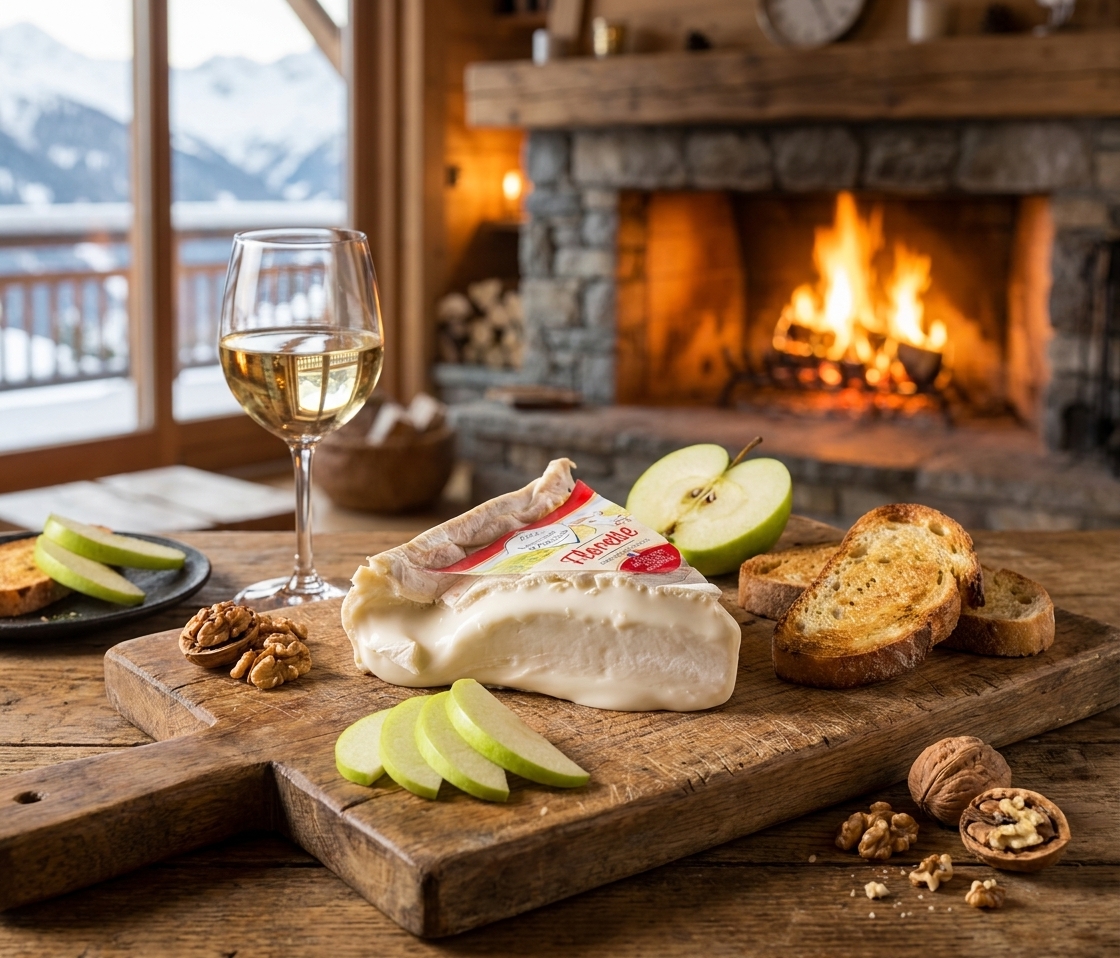
For a quiet evening after skiing at Wolf Creek or a snack before dinner in town, Florette needs little more than bread and something crisp.
- Start with a modest portion. Put out what you expect to eat and leave the rest refrigerated.
- Let the chill ease. About 30 minutes often helps, though a warm room or small slice may need less time.
- Taste it plain. Include a little rind so you can compare the earthy surface with the milky center.
- Add contrast. Try apple, toast or nuts before reaching for jam.
- Keep track of time. Refrigerate perishable food within two hours, or one hour when temperatures exceed 90 F. That includes the time spent serving and transporting it without refrigeration.
Ask at Murray’s Cheese inside City Market in Pagosa Springs about Florette and current availability. A cheesemonger can also help you choose a firmer piece for later in the week or a softer one for tonight.
For a summer picnic, use an insulated cooler with ice packs. A warm car is not an aging room.
Food pairings: Crunch first, sweetness second
My first choice is a tart apple and toasted sourdough. The apple supplies a crisp snap; the toast gives the cheese something sturdy to sit on. Neither hides its flavor.
Other good companions include grapes, blueberries, toasted walnuts, Marcona almonds and roasted pumpkin seeds. Dates offer a sweeter, chewier contrast. Fig jam, strawberry preserves, apricot spread and honey also work, but start with a small dab.
Pro Pairing Tip: Build one balanced bite
Spread Florette on a plain cracker, add a thin apple slice and finish with a few walnut crumbs. Taste that before adding honey. You may find the fruit provides all the sweetness you want.
For savory company, try roasted red peppers, basil or a few olives served alongside rather than piled on top. Strong brines can overwhelm the cheese’s mild center.
Florette also works in the kitchen. Fold small pieces into warm polenta off the heat, or tuck it into zucchini-and-basil pastry parcels. Use gentle heat when stirring it into a dish. Soft cheese can still separate if boiled hard, and the rind may leave small visible pieces.
Wine pairings: Keep the finish fresh
Florette rewards wines with enough acidity to balance its rich mouthfeel.
- Sauvignon Blanc: A Sancerre or a bright New Zealand bottling echoes the cheese’s citrus and grassy side.
- Chardonnay: Choose a fresh, lightly oaked example. Chablis offers a leaner route; heavily buttery styles can make the combination feel heavy.
- Riesling: An off-dry bottle adds a little sweetness while lively acidity keeps each bite interesting.
- Champagne or Crémant: Dry sparkling wine brings a refreshing contrast, while bready notes can complement the rind.
- Dry rosé: A crisp Provençal style is an easy choice for a warm evening on the patio.
Pro Pairing Tip: Match the whole bite
If you add honey or a generous spoonful of jam, try an off-dry Riesling. With plain bread and cheese, start with dry sparkling wine or Sauvignon Blanc. The accompaniment can change the pairing as much as the cheese does.
Beer pairings: Give the hops a little restraint
A Belgian witbier makes a friendly starting point. Its orange-peel and coriander notes bring brightness without much bitterness. German hefeweizen offers a softer match, with fruity banana and spicy clove notes from fermentation.
Saison is especially appealing with the rind. Its dry finish, lively carbonation and peppery character provide contrast without burying the cheese.
A Belgian tripel can work if you enjoy a stronger beer, though its alcohol and intensity may take the lead. Citrus-forward IPA is the riskier choice. Try a moderately bitter version rather than the most forceful can in the cooler.
Not drinking alcohol? Sparkling water with a strip of lemon peel keeps things simple and fresh.
Ripe or past its best?
Softness alone is not spoilage. Florette can become quite runny, and a mild mushroom scent belongs to the style. A slight ammonia smell on opening may fade after a few minutes in the air.
Persistent, sharp ammonia is a reason to pass on the cheese. So are unexpected colored mold patches, marked sliminess, a rotten odor or a watery breakdown unlike its usual creamy texture. Do not taste a questionable piece to test it.
If unwanted mold develops on a soft cheese, discard the whole piece. Unlike a hard cheese, it should not be salvaged by cutting away the visible spot.
Just as important: Harmful bacteria may produce no obvious smell or visible change. Appearance cannot confirm safety. Keep Florette at 40 F or below, follow package storage directions and use-by guidance, and use clean utensils. People who are pregnant, older or immunocompromised should follow current public health advice on soft cheeses.
Buy an amount you can finish while it is enjoyable. Preventing waste is a practical way to respect the milk, energy and work that went into it.
How to ask for it
Florette: flaw-REHT.
Fromager d’Affinois: fro-mah-ZHAY dah-fee-NWAH.
No need to rehearse in the parking lot. Ask for Florette, the soft French goat cheese, and then ask how ripe it is. That second question will do more for your evening than a perfect French accent.
Sources and Further Reading
- Florette 2.2 pounds, Fromager d’Affinois.
- Florette Guilloteau, Gourmet Foods International.
- Fromager d’Affinois Chèvre Cheese: Florette, iGourmet.
- Zucchini Basil Samosas With Fromager d’Affinois Florette, Fromager d’Affinois.
- Molds on Food: Are They Dangerous?, U.S. Department of Agriculture, Food Safety and Inspection Service.