Estimated Reading Time: 7 min
Meet Robusto: Dutch Roots, Italian-Style Depth
Robusto, pronounced roh-BOOS-toh, is an aged cow's milk cheese made in the Netherlands by Uniekaas. Think of it as a meeting between Gouda's buttery sweetness and the nutty, savory character you expect from a hard Italian cheese.
It belongs to a Dutch hybrid style called Proosdij. The name sounds more complicated than the idea: Start with Gouda-style cheesemaking, then use cultures that help develop a deeper savory flavor and a firm, crystalline texture. Robusto isn't Parmigiano-Reggiano, and it isn't simply young Gouda left on a shelf longer. Its recipe aims for that sweet-savory balance from the start.

Uniekaas traces its roots to a union of Dutch cheesemakers formed in 1956. The brand took shape in the 1960s and became part of DMK Group in 2017. Its history brings together two sides of Dutch cheese: a long trading tradition and modern production and ripening facilities, including those in Kaatsheuvel.
Terroir Tales: A Cheese Named for a Trading Town
Gouda's fame grew through trade as well as cheesemaking. Its historic weigh house, De Goudse Waag, dates to 1668, when wheels were weighed as part of the town's commercial life. That's a useful reminder: A cheese's geographic identity can reflect where people sold it, not just where cows grazed.
Milk, Rennet and the Ingredient Check
Robusto is made with pasteurized cow's milk and marketed with the Dutch Weidemelk, or meadow milk, designation. That label sets requirements for seasonal outdoor grazing. It does not mean the cows eat only grass or live outdoors year-round.
Cow's milk gives Robusto a rich base for aging. Beta carotene, a pigment found in plants and carried into milk fat, contributes to the golden color of many cow's milk cheeses. Feed and season can affect that color, so a yellow wedge alone isn't proof of a particular farming system.

Robusto uses microbial rennet, a vegetarian-friendly alternative to rennet taken from calves. Rennet is the enzyme preparation that helps milk set into curds. Microbial versions get their clotting enzymes from microorganisms rather than animal stomachs.
For shopping purposes, keep these distinctions clear:
- Milk type: Cow's milk, pasteurized.
- Rennet: Microbial. Check the current package if vegetarian suitability is essential.
- Allergen: Contains milk. It is not suitable for someone with a milk allergy.
- Lactose: Long-aged cheeses are typically very low in lactose. Check the label for a specific lactose-free claim, and account for your own tolerance.
- Religious certification: Vegetarian rennet alone does not establish kosher or halal certification. Look for the relevant mark.
Pasteurization deserves a quick clarification. It reduces harmful microbes; it does not sterilize milk. A common method heats milk to at least 161 degrees Fahrenheit for 15 seconds, followed by cooling. Cheesemakers then add selected cultures that guide acid and flavor development.
How Robusto Gets Its Sweetness and Crunch
Robusto is generally aged for about nine to 12 months, with 38 weeks often cited as a starting point. That gives it time to become firm and flavorful without reaching the much drier texture of some multiyear Goudas.
The process makes more sense in four steps:
- Set and cut the curd. Rennet forms a gel from milk proteins. Cutting it helps release whey, the liquid portion of milk.
- Wash the curd. Some whey is removed and replaced with water. This reduces lactose, the milk sugar that bacteria turn into lactic acid. Less available lactose helps keep the cheese's flavor less acidic.
- Press, salt and age. The curds become a wheel, and moisture gradually declines during ripening.
- Let cultures and enzymes work. Proteins break into smaller pieces, including amino acids. Fat breakdown also contributes to aroma development.
One culture associated with this style is Lactobacillus helveticus, a bacterium also used in Swiss and Italian cheesemaking. It helps break down proteins during aging, building savory flavor and supporting crystal formation. Cultures added to shape ripening rather than simply make acid are called adjunct cultures.
Sweetness here is a tasting impression, not evidence of added sugar. Butterscotch aromas and relatively low acidity can make a cheese taste sweet even when its nutrition label lists no sugar.
A Hard Cheese With a Creamy Finish
Robusto is a hard, aged, washed-curd cheese. Its interior is dense and firm, with a tendency to flake when cut thinly. Take a bite, though, and that firmness gives way to a rich, creamy finish.
Hardness reflects both moisture loss and changes to the protein structure. Aged Gouda-style cheeses often contain roughly 30% to 35% moisture, though that range is not a guaranteed specification for every Robusto wheel.
You may also see the term fat in dry matter on European cheese labels. It means the percentage of fat in the cheese after water is excluded. A figure near 48% does not mean that nearly half the wedge's total weight is fat.
A 1-ounce serving of Robusto is commonly listed at about 120 calories, with roughly 9 grams each of fat and protein and 240 milligrams of sodium. Use your package label for exact figures. It is a concentrated food, so small pieces deliver plenty of flavor.
What to Taste For
Try your first bite without a cracker or condiment. Robusto has enough going on by itself.
Look for buttery caramel or butterscotch notes first, followed by toasted almond or hazelnut. Then comes the savory finish, sometimes described as brothy. That quality is umami, the mouth-filling savoriness also found in mushrooms, tomatoes and aged Parmesan. You might notice a faint fruity lift, too.
Those nutty notes do not mean the cheese contains nuts. They describe aromas produced as the cheese ripens.
Now pay attention to the little crunches. The hard white specks embedded in Robusto are associated with tyrosine, an amino acid released as milk proteins break down. When enough accumulates and conditions are right, it forms crystals.
They aren't grains of table salt. Nor are they mold. They're an enjoyable feature of this style, although crystal count alone isn't a scorecard for cheese quality.
Serve It Without Overthinking It
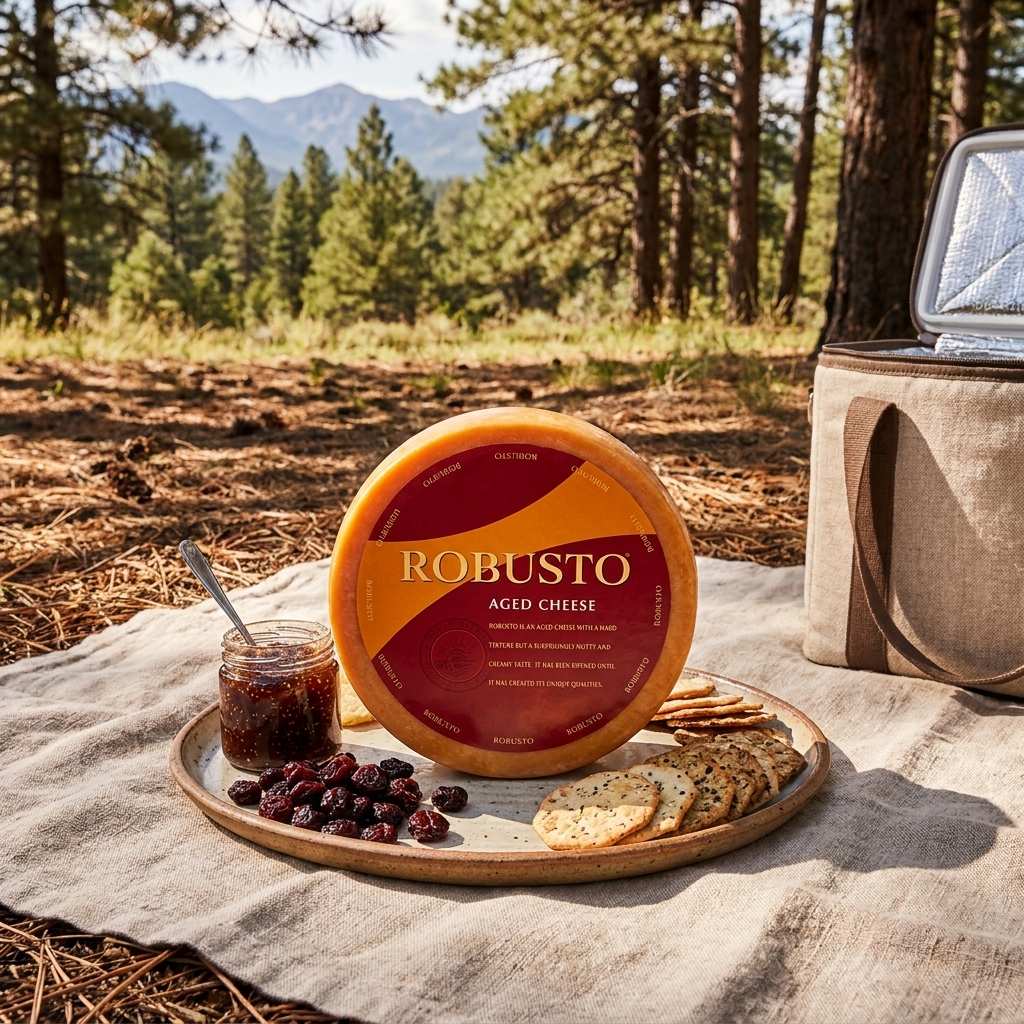
For a winter evening after skiing at Wolf Creek, Robusto needs little more than a pear, bread and a drink you like. For a summer picnic near Pagosa Springs, add an insulated cooler to that list.
- Cut only what you plan to serve. Start with about 1 ounce per person if other snacks are on the table.
- Let that portion lose its refrigerator chill. Around 30 minutes usually helps the aroma open up. Keep it shaded and covered.
- Break it into small chunks or use a sturdy knife. Shavings work well, too. Don't fight the flakes.
- Remove any wax or nonedible coating. Check the wedge before serving.
- Taste it plain, then build a pairing. You will learn more from a few deliberate bites than from loading everything onto one cracker.
At Murray's Cheese inside City Market, ask whether Robusto is in stock and request a piece sized for your plans. Visitors stocking a rental kitchen rarely need a heroic wedge on the first shopping trip.
Wine Pairings: Match the Weight, Then Choose a Direction
Robusto can handle full-flavored wines, but bigger isn't automatically better.
- Malbec or Syrah/Shiraz: Dark fruit works well against the cheese's salt and savory depth. Choose a balanced bottle rather than the most alcoholic one available.
- Cabernet Sauvignon: Black fruit, oak and a firm structure can complement Robusto. Very tannic wines may feel stern, so taste before committing to the pairing.
- Oaked Chardonnay: Butter and toast notes echo the cheese's richness. Enough acidity keeps the combination from feeling heavy.
- Off-dry Riesling: A particularly useful contrast. Bright acidity refreshes the palate, while a little sweetness suits the salty, caramel-like cheese.
Pro Pairing Tip
Serve the wine and cheese separately before tasting them together. If the wine suddenly seems bitter or flat, change the pairing rather than assuming your palate needs training.
Beer Pairings: Give Brown Ale a Chance
My first pick would be a nut brown ale. Its toasted malt character complements Robusto without turning the pairing into a contest.
A porter brings darker notes of coffee and chocolate. A Belgian dubbel adds dried-fruit flavors, such as raisin and plum. Both make appealing cold-weather partners for a cheese plate.
An IPA takes the contrasting route. Citrus, pine and bitterness can brighten the cheese's rich flavor, though a very bitter beer may dominate. Try a small pour first.
Beer doesn't chemically scrub your tongue clean. Still, its carbonation and contrasting flavors can make the next bite feel fresh.
Food Pairings: Keep the Board Focused
Pick two or three accompaniments with different jobs:
- Sliced pears: Juicy, crisp relief from the dense cheese.
- Dried cherries: Tartness and a chewy contrast.
- Fig jam or honey: A small dab emphasizes the sweet side. A puddle hides the cheese.
- Prosciutto or cured ham: More savory depth, though also more salt.
- Coarse-grain mustard: Tang and gentle heat for a less sweet pairing.
- Marcona almonds: A second kind of crunch that echoes the cheese's nutty flavor. Keep them separate for anyone with a nut allergy.
Robusto also earns space beyond the board. Shave it over roasted vegetables, a pear salad or warm potatoes. Grate a little onto pasta as a finishing cheese. Its lower moisture means it won't behave like young Gouda in a smooth sauce, so use gentle heat if you're melting it.
Crystals, Spoilage and Smart Storage
Hard cheese keeps well when handled properly, but it isn't spoilage-proof. Wrap the cut wedge in cheese paper or parchment, place it in a container, and refrigerate at 40 degrees Fahrenheit or below. Follow any package instructions.
Hard white crystals within the cheese are normal. A pale surface deposit can also be harmless calcium lactate, another type of cheese crystal. But not every white patch is a crystal. If you cannot tell what you're seeing, don't taste it to find out.
Discard cheese with slime, unusual pink or blue discoloration, putrid odors, or extensive mold. Unexplained package swelling is another reason to stop and seek a refund or discard it.
One production fault, called late blowing, occurs when gas-forming bacteria cause internal splits and rancid odors. An ordinary crack in a crumbly wedge is not enough to diagnose that problem. Cracks paired with strong off odors are a different matter.
For a small patch of mold on an otherwise sound, solid block of hard cheese, USDA guidance allows cutting away at least 1 inch around and below the spot. Keep the knife out of the mold. Discard moldy shredded, sliced or crumbled cheese. If a small wedge cannot spare that margin, let it go.
Finally, refrigerate served portions within two hours, or one hour when temperatures exceed 90 degrees. A summer picnic deserves good cheese, not a gamble.
Sources and Further Reading
- Uniekaas Robusto, Pagosa Cheesemongers.
- Brand history and Dutch cheesemaking, Uniekaas.
- Lactobacillus helveticus: The proteolytic system, Frontiers in Microbiology.
- Cheese Crystals, Cheese Science Toolkit.
- Molds on Food: Are They Dangerous?, USDA Food Safety and Inspection Service.
