Estimated Reading Time: 8 min
Meet Norway’s brown cheese
Ski Queen Gjetost comes from Norway, where brown cheese is an everyday food rather than a special-occasion curiosity. It belongs on breakfast bread, waffles and the table at kveldsmat, a light evening meal. Think pantry habit, not velvet-rope cheese board.
The name takes a little practice: YET-oost, with the emphasis on the first syllable. The opening sounds like “yet,” and the ending rhymes with “roost.” Gjetost means goat cheese, while brunost means brown cheese. But names can mislead: Ski Queen Classic contains both cow’s and goat’s milk ingredients, not goat’s milk alone.

Made by the Norwegian dairy cooperative TINE, Classic is the export version of Gudbrandsdalsost, a style rooted in Norway’s Gudbrandsdalen valley. That regional history matters, though the name should not be treated as a protected-origin guarantee that every block was made within the valley.
Terroir Tales: A mountain-farm tradition
Norwegian dairy farming has long involved moving livestock to summer mountain pastures. These seasonal farms, called seter, make use of a short growing season and land that is not well suited to crops.
For anyone familiar with the mountain seasons around Pagosa Springs, the underlying logic feels familiar: Use the good weather while you have it.
Brown cheese also reflects a practical approach to milk. Making conventional cheese leaves behind whey, a liquid that still holds milk sugar, protein and minerals. Rather than discard it, Norwegian dairy makers cooked it down into food that could be kept and eaten later.

The modern, cream-enriched style is associated with Anne Hov, who added cow’s cream to boiling whey in 1863. The richer result became a commercial success. Hov later received Norway’s King’s Medal of Merit for her contribution to agriculture. A useful reminder that a kitchen adjustment can have a long life.
Ingredients, milk sources and rennet
Ski Queen Classic’s core ingredients are whey, goat’s milk, cow’s cream and cow’s milk. The added milk and cream are pasteurized. Cow’s cream supplies richness, while goat’s milk contributes part of the distinctive tang.
Ski Queen Goat is a separate, all-goat variation. Expect a more pronounced goat-milk character, and check the package so you know which version you are buying.
Norwegian Red cattle and Norwegian dairy goats are important breeds in Norway’s dairy industry. Ski Queen, however, is not defined by a breed-specific designation. Its identity rests more on its ingredients and cooking method than on a named herd.
What about rennet, the enzyme used to set milk into curds? Gjetost does not need a separate rennet-setting step during its own production. Its whey comes from earlier cheesemaking. Product specifications for Ski Queen identify microbial rennet, generally suitable for vegetarians. If that distinction matters to you, confirm it on the current package or with the manufacturer.
Allergen note: This cheese contains milk. Goat’s milk does not make it a safe substitute for someone with a cow’s milk allergy. It is also rich in lactose, unlike many aged hard cheeses. Anyone managing lactose intolerance should not assume that a firm block means low lactose.
How a pale liquid becomes a brown block
The process starts with sweet whey. Here, “sweet” distinguishes whey from rennet-set cheese from the more acidic whey produced by foods such as yogurt.
The basic method is easy to follow, even if controlling it takes skill:
- Combine the dairy ingredients. Whey is enriched with milk and cream.
- Remove water through heating. The mixture grows thicker as its milk solids become concentrated.
- Develop the brown color and cooked flavor. Continued heating creates the familiar roasted, toffee-like character.
- Cool and shape it carefully. Controlled cooling helps produce a smooth block instead of a gritty one.
Traditional makers used large kettles and hours of stirring. Modern production uses equipment such as vacuum evaporators, which remove water efficiently, and scraped heating surfaces that help prevent scorching.
The important bit of kitchen science is the Maillard reaction: Milk sugars react with proteins during heating, producing brown color and roasted flavors. People often call this caramelization, but the terms are not interchangeable. Maillard browning is central to brown cheese’s character.
Pasteurization and this later cooking stage serve different purposes. Pasteurization reduces harmful microbes in the milk ingredients. Prolonged cooking transforms the finished product’s flavor and texture. Neither makes an opened package immune to spoilage.
Cheese type, moisture and aging
Ski Queen is a concentrated whey cheese, a brown cheese and an unripened cheese. It is firm and sliceable, though its structure is quite different from cheddar’s.
Ricotta also belongs to the whey-cheese family, but the resemblance largely stops there. Ricotta is made by gathering heat-coagulated proteins into moist curds. Brown cheese is made by concentrating the whey itself, retaining much more of its lactose.
Sliceable brown cheeses generally contain roughly one-quarter water or less, though moisture varies by formula. That concentrated mix of sugar, fat and protein helps explain why the block is so dense.
There is no traditional aging period. Ski Queen does not spend months developing a rind or becoming sharper in a cellar. Once cooled and set, it is ready to eat. A retailer’s storage window is not an aging requirement, and keeping it longer will not turn it into a more complex cheese.
What you will taste and feel
Start with a very thin slice. Really thin.
The first impression is usually caramel or butterscotch, followed by cooked milk, toasted nuts and a mild, savory saltiness. The goat’s milk adds a tangy, earthy note that keeps the experience from being simply candy-like. Dulce de leche is a useful comparison, but it does not tell the whole story.
The texture is firm, smooth and slightly waxy when cool. In your mouth, it can feel sticky at first, then soften into a creamy coating. There is no rind to remove.
A thick cube can be a lot of sweet, dense dairy at once. That is why a Norwegian cheese plane, or ostehøvel, is such a good tool. Invented by Thor Bjørklund in 1925, it makes broad, thin shavings. A sharp knife can work, too; aim for slivers rather than snack-sized bricks.
Build your first tasting in four steps
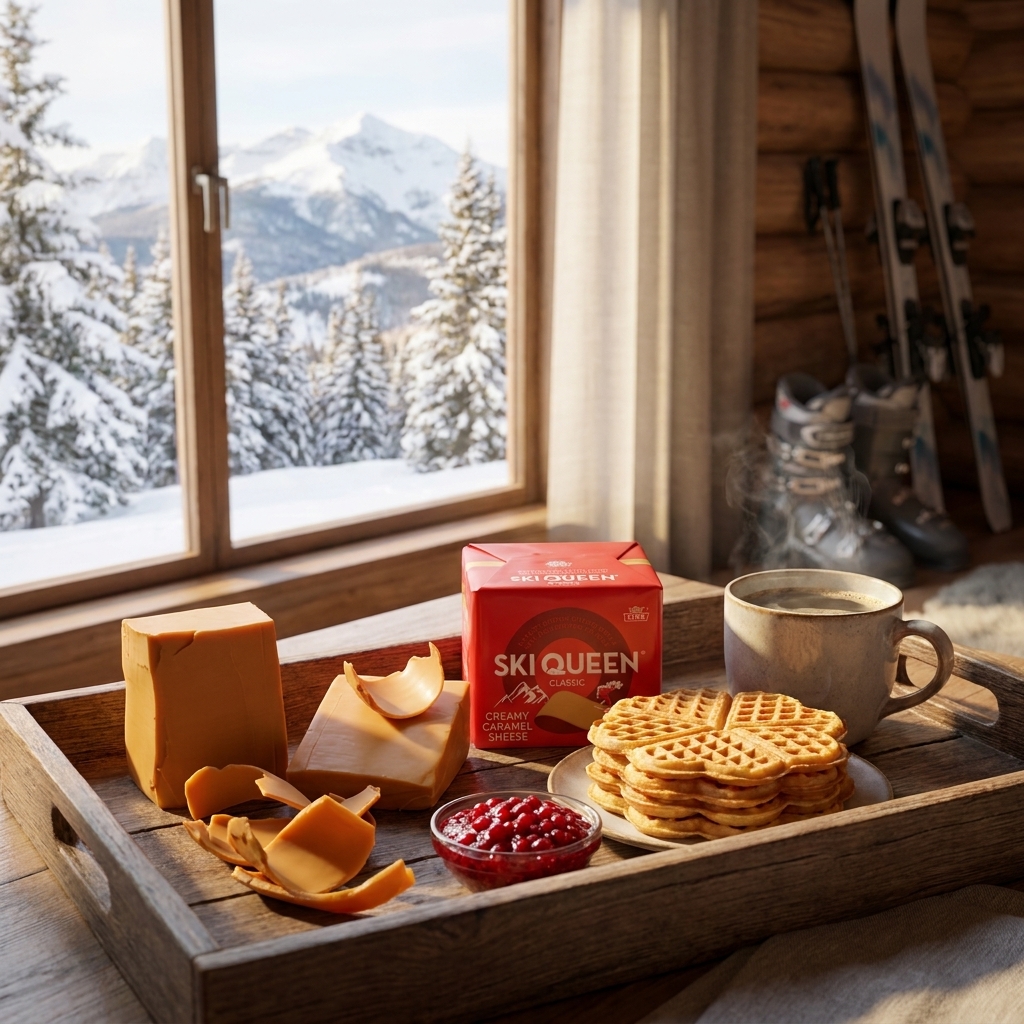
You do not need a full cheese board to understand Ski Queen. A breakfast plate is a better introduction.
- Shave a small slice and taste it plain. Notice the sweetness, then the tang and salt.
- Put another slice on crispbread or toast. The crunch gives the dense cheese some contrast.
- Add a little tart jam. Raspberry or lingonberry works well. Use a dab, not a blanket.
- Take a sip of black coffee. Its roasted bitterness offers a pleasing counterpoint.
Warm waffles are another classic choice. For a snowy morning in a Pagosa vacation rental, that is an easy breakfast upgrade without much extra work.
Pro Pairing Tip: Keep the first tasting simple. A sweet cracker, honey and a thick slice of brown cheese can pile sweetness on sweetness. Plain bread and tart fruit let you taste more of the cheese.
When shopping locally, ask the staff at Murray’s Cheese inside City Market in Pagosa Springs whether Ski Queen is in stock. Availability can vary, so check before building a menu around it.
Wine: Give sweetness some respect
Brown cheese can make a dry wine seem sharper or less fruity than it tastes on its own. Start with wines that have some sweetness and enough acidity to keep the pairing lively.
- Off-dry or sweet Riesling: Peach, citrus and honey notes suit the cheese, while acidity refreshes the palate. Spätlese and Auslese can work, but those terms describe grape ripeness, not a guaranteed sweetness level. Ask for a bottle with residual sugar.
- 10-year tawny port: Nutty, dried-fruit and caramel flavors make this an appealing after-dinner match. Pour small servings.
- Pinot noir: A fruit-forward, lightly tannic example is worth trying if you prefer reds. Treat it as an experiment, not the safest default. The cheese’s sweetness can make even a good Pinot taste austere.
Oloroso sherry has complementary walnut-like flavors, but most oloroso is dry. For a sweeter match, consider a sweetened oloroso-style cream sherry.
Beer: Look toward malt
Porter and oatmeal stout are strong starting points. Their coffee, chocolate and toasted-grain flavors echo the cheese’s cooked notes. Choose a balanced beer rather than one dominated by harsh roast or aggressive bitterness.
A doppelbock offers toasted bread, toffee and dark-fruit flavors. A Belgian dubbel brings raisin, plum and gentle spice, shifting the pairing toward fruitcake rather than fudge.
Carbonation provides a welcome contrast to the cheese’s dense mouthfeel. Still, beer does not need to be the answer. Coffee may be the most useful pairing of all, especially before a day at Wolf Creek.
Beyond breakfast: Cook with a light hand
Brown cheese has a place in savory cooking, particularly cream-based sauces for game. A little can add sweetness, body and a rounded dairy flavor to venison or elk gravy.
To try it, finely shave a small amount into a warm sauce over low heat. Stir until incorporated, taste, then decide whether to add more. Do this before making your final salt adjustment. You want depth, not caramel pudding beside the roast.
For dessert, try small shavings with warm apples or finely grate a little into an apple-pie filling. It can also flavor ice cream or cookies, though those uses work best with recipes developed for brown cheese’s sugar and moisture content.
Pro Pairing Tip: Start with tart apples and restrained added sugar. The cheese brings plenty of sweetness of its own.
Storage: Smooth and brown is normal; fuzz is not
Keep Ski Queen refrigerated at 40 F or below, wrapped closely and protected from drying out. Follow the package’s date and storage directions. Use clean utensils, and return the block to the refrigerator after serving.
Know the difference between a texture problem and spoilage:
- Gritty or sandy texture: Lactose crystals can grow during processing or storage. Grittiness alone is a quality defect, not proof of microbial spoilage.
- Dry edges: Exposure to air can cause moisture loss. Better wrapping helps prevent it.
- Rancid, soapy or stale-cardboard odors: These suggest deteriorating fat. Discard the cheese.
- Fuzzy mold, slime or an unexpected fermented smell: These are not desirable features of brown cheese. Discard the block rather than trying to rescue it by trimming.
Its low moisture and concentrated sugar help with keeping quality, but they are not permission to ignore refrigeration.
A cheese with an unusual public life
Brown cheese has traveled well beyond the breakfast table. In 2022, Norway’s delegation used Ski Queen and Norwegian cheese slicers as diplomatic gifts during the country’s presidency of the U.N. Security Council.
It also made less cheerful headlines in 2013, when a truckload of brown cheese burned in Norway’s Brattli tunnel. The fat- and sugar-rich cargo helped sustain a fire that lasted for days. That was a bulk-cargo fire, not a reason to worry about your breakfast toast.
For your own introduction, keep the stakes lower: one thin shaving, one crispbread and a cup of coffee. Let the first bite be surprising. The second one usually makes more sense.
Sources and Further Reading
- Ski Queen products, TINE. Product varieties and ingredient information.
- Gjetost Norwegian Ski Queen, Gourmet Foods International. Product specifications.
- Norwegian brown cheese: Tasty cultural traditions, Visit Norway. History and serving traditions.
- Standard for Whey Cheeses, CXS 284-1971, Codex Alimentarius Commission, FAO and WHO. Definitions and classifications.
- What the world needs now is sweet Norwegian brown cheese, TINE. Brown cheese diplomacy.
