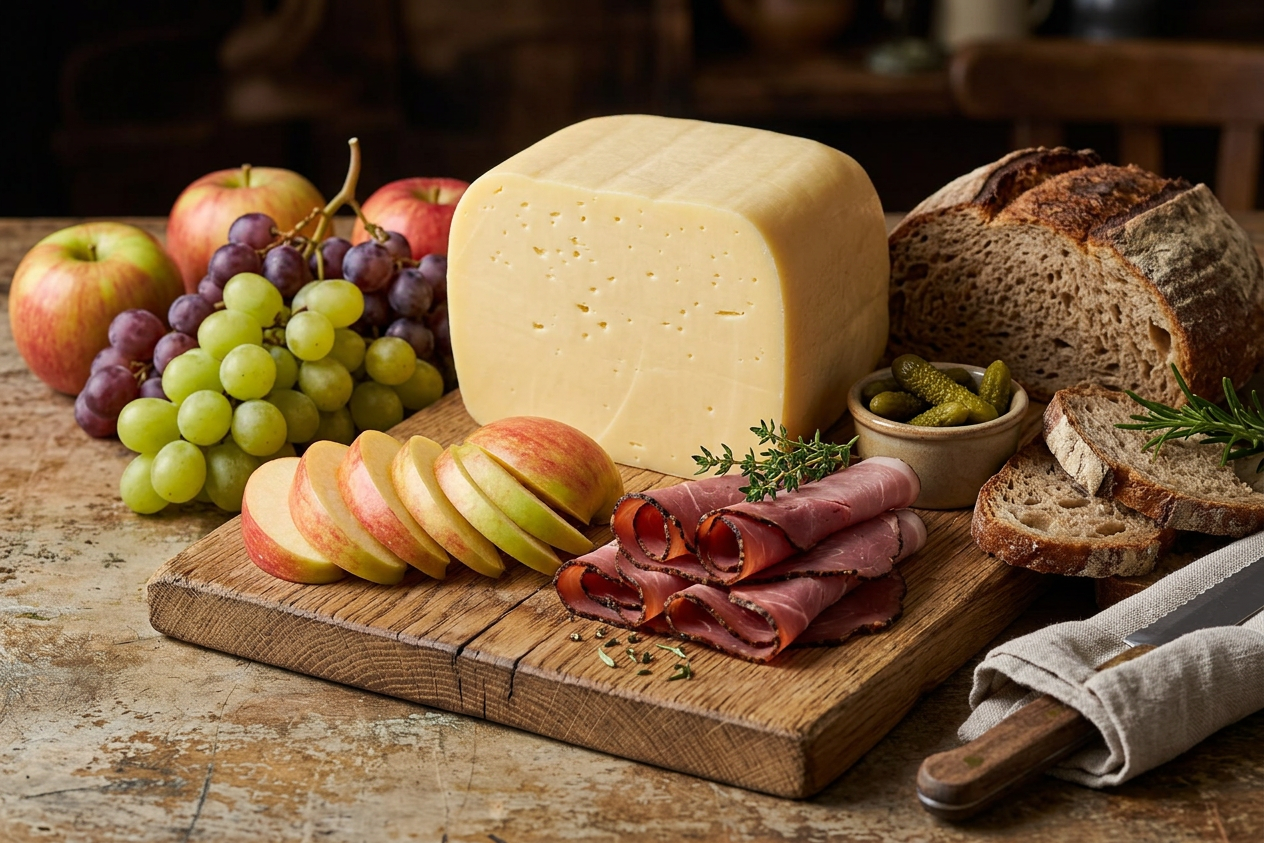
What Makes Butterkäse Special
Butterkäse, literally "butter cheese" in German, earns its name not from any added butter, but from its remarkably creamy texture and mild, sweet flavor. Roth Käse's version represents a perfect marriage of Old World technique and Wisconsin terroir, created in Monroe using milk from family farms within a 60-mile radius.
The cheese belongs to the "washed curd" family, a technique that sets it apart from sharper varieties like cheddar. During production, cheesemakers drain some whey and replace it with warm water, effectively removing lactose and limiting acid development. This creates Butterkäse's signature mildness, what Germans historically called "Damenkäse" or "ladies' cheese" for its delicate, inoffensive character.
Ingredients: Pasteurized cow's milk, salt, microbial enzymes (vegetarian rennet), cultures. rBST-free.

The Wisconsin Connection
While Butterkäse originated in Germany and Austria, Roth's version is distinctly American. The Roth family emigrated from Uster, Switzerland, in 1991, bringing 128 years of cheesemaking expertise to Wisconsin's "Little Switzerland" region. They chose Monroe specifically for its limestone-rich soils and established dairy infrastructure, conditions that mirror their Alpine homeland.
The company sources exclusively from local family farms, ensuring the fresh, high-quality milk essential for this style. Wisconsin's rigorous dairy standards, often exceeding federal requirements, provide an additional quality guarantee that you'll taste in every bite.
Texture and Flavor Profile
Roth Butterkäse delivers exactly what its name promises: a buttery, smooth experience that melts beautifully on the tongue. The texture is pliable enough to bend without breaking, yet firm enough for clean slicing. Small, irregular holes throughout the paste, called "mechanical eyes", are normal and add visual interest.
The flavor is deliberately mild, with sweet cream notes dominating. There's no sharp bite or funky aroma, just clean, fresh dairy character with subtle nutty undertones that develop during its 30-day aging period. This approachability makes it perfect for cheese newcomers while remaining sophisticated enough for experienced palates.

Pro Pairing Tip: Butterkäse's high fat content (about 50% fat-in-dry-matter) means it pairs beautifully with crisp, acidic wines like Riesling or unoaked Chardonnay. The acidity cuts through the richness while complementing the cheese's natural sweetness.
The Science Behind the Smoothness
Butterkäse's exceptional melting properties come from its semi-soft classification and moisture content of 45-52%. This high water activity creates a "living" cheese that ages quickly, reaching peak flavor in just one month, but also means it has a shorter shelf life than harder varieties.
The use of microbial rennet (derived from fungal fermentation) ensures vegetarian-friendly status while providing consistent coagulation. Unlike animal rennet, which can develop stronger flavors over time, microbial enzymes maintain the clean, mild profile that defines this style.
Culinary Applications
In its homeland, Butterkäse is the gold standard for Käsespätzle (cheese noodles), where its smooth melt creates a silky sauce without the stringiness of mozzarella or the greasiness of processed cheese. Here in Pagosa Springs, it excels in gourmet grilled cheese sandwiches, omelets, and as a burger topping that melts evenly without overwhelming other flavors.
For cheese boards, pair it with fresh grapes, sliced pears, or Honeycrisp apples. The fruit's natural acidity and sweetness complement the cheese's creamy richness. Add some Black Forest ham, cornichons, and crusty bread for an authentic German-inspired spread.
Terroir Tales: The Roth family's commitment to traditional methods includes using imported copper vats, the first in America for Alpine-style cheeses. Copper provides superior heat distribution and releases ions that influence enzymatic activity during cheesemaking, contributing to the cheese's distinctive character.
Beer and Wine Pairings
Butterkäse's German heritage makes it a natural partner for beer. A crisp Pilsner's hoppy bitterness and carbonation cut through the buttery richness, while a Hefeweizen's creamy mouthfeel creates a harmonious match. For wine lovers, try it with a dry Grüner Veltliner, an Austrian white that bridges the cheese's European roots with sophisticated flavor complexity.
Light-bodied reds like Pinot Noir work well too, but avoid high-tannin wines that will clash with the cheese's delicate nature. The key is balance: either echo the creaminess or provide gentle contrast.
Storage and Spoilage Signs
Store Butterkäse wrapped in cheese paper or parchment in your refrigerator's cheese drawer. It should maintain quality for 2-3 weeks after opening. The cheese may develop a slightly tacky surface, this is normal for semi-soft varieties and doesn't indicate spoilage.
Watch for actual warning signs: fuzzy mold growth (green, black, or blue-grey), pink or red slime on the surface, ammonia odors, or an overly sour smell. The cheese should maintain its pale yellow color and mild, sweet aroma throughout its shelf life.
Finding Butterkäse in Pagosa Springs
You can find Roth Butterkäse at Murray's Cheese inside City Market, where the knowledgeable staff can help you select the perfect piece and suggest complementary items for your cheese board. Whether you're planning a cozy evening at home or entertaining visitors exploring our beautiful mountain town, this versatile cheese adapts to any occasion.
Pro Pairing Tip: During Pagosa's cooler months, try melting Butterkäse into a warm potato gratin or fondue. Its smooth melt and mild flavor make it ideal for comfort foods that warm you up after a day on the slopes or hiking trails.
The Pronunciation Guide
For those wondering how to ask for it properly, "Butterkäse" is pronounced "BOO-ter-kay-zuh", though many American cheese shops will understand "butter-case" just fine. The important thing is experiencing this remarkable cheese that represents the best of both European tradition and American innovation.
Sources and Further Reading
- Roth Cheese Company - Official company history and production methods
- Wisconsin Cheese Marketing Board - Comprehensive cheese education resources
- Center for Dairy Research, University of Wisconsin - Technical cheesemaking information
- German Käseverordnung (Cheese Ordinance) - Traditional European standards
- FDA Code of Federal Regulations - American cheese classification standards