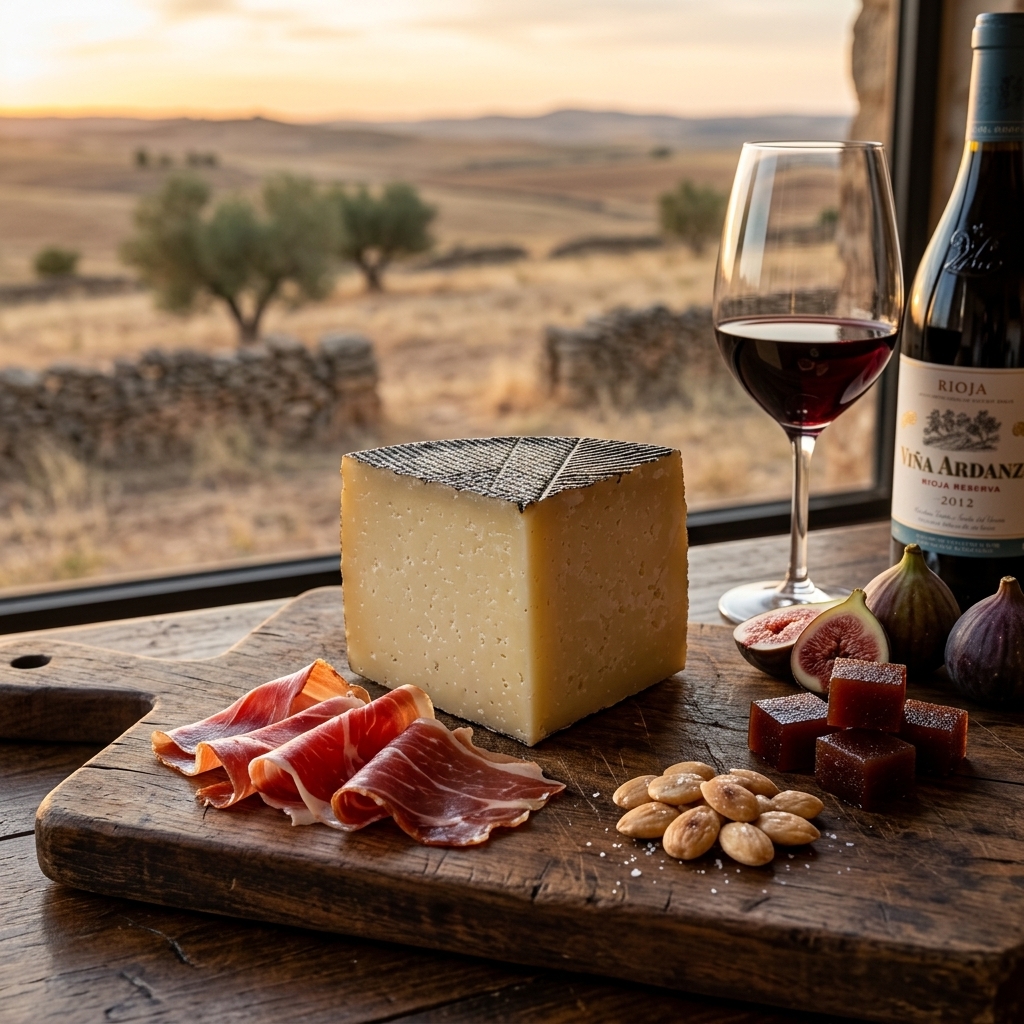
The Meseta 12-Month: Spain's High-Altitude Cheese Masterpiece
This intensely nutty sheep cheese from Spain's central plateau delivers a year's worth of flavor development in every crystalline bite.
Estimated Reading Time: 6 min
If you've ever wondered what happens when Spanish sheep graze at 2,100 feet above sea level for an entire year, the Santa Marta Meseta 12-Month has your answer. This isn't your typical grocery store cheese. It's a product of Spain's harsh central plateau, where "nine months of winter and three months of hell" create milk so concentrated and complex that it needs a full year to reach its potential. The result? A cheese that crunches with tyrosine crystals and delivers waves of toasted almond, caramel, and that distinctive "sheepy" finish that makes Spanish cheese lovers swoon.

The Terroir of Spain's Central Table
The Meseta Central, literally "the table", stretches across Spain's heart like a vast, elevated dining room. At 650 meters above sea level, this isn't gentle rolling pasture. It's a windswept plateau where hardy sheep breeds have learned to thrive on aromatic wild herbs and mineral-rich grasses that would challenge livestock anywhere else.
This harsh environment isn't a bug; it's a feature. The calcareous soil, loaded with minerals, supports vegetation that imparts distinct aromatic compounds to the milk. When sheep consume this diet of hardy shrubs and native herbs, their milk develops a chemical complexity that becomes concentrated during the cheese's 12-month journey.
The Santa Marta brand operates from Manzanares in the heart of Castilla-La Mancha, ensuring the milk never travels far from its source. Some specialty aging happens in underground caves near Jerez de la Frontera, where Sherry-making humidity adds another layer to the maturation process.
Terroir Tale: Archaeological evidence shows Bronze Age inhabitants of the Meseta were already making cheese using perforated ceramic vessels to drain curds. The transhumance tradition, seasonal movement of livestock, allowed for cross-breeding and technique sharing across the plateau for thousands of years.

The Four-Breed Symphony
Here's where Santa Marta Meseta diverges from traditional Manchego. While PDO Manchego requires 100% Manchega sheep milk, this cheese blends four specific breeds: Manchega, Merina, Assaf, and Lacaune. It's a deliberate choice that creates what producers call a "refined and delicate" profile.
The Manchega provides that intense, piquant foundation Spanish cheese lovers expect. Merina sheep, one of Spain's most historic breeds, add tangy complexity. The high-yielding Assaf contributes rich butterfat, while Lacaune, the same breed used for French Roquefort, delivers the protein levels essential for structural stability during long aging.
This multi-breed approach allows cheesemakers to balance traditional intensity with modern consistency. The extensive grazing system means these sheep roam freely across the plateau, consuming a varied diet that translates into higher concentrations of polyunsaturated fatty acids and aromatic compounds in the milk.
Pro Pairing Tip: The blend of breeds creates a cheese that's "both tangy and nutty with hints of fruit," making it more versatile for pairing than single-breed alternatives.
The Science of 12 Months
Twelve months isn't arbitrary, it's the sweet spot where this cheese reaches peak development. The journey breaks down into three distinct phases:
Months 0-3 (Semicurado): Still relatively moist with mild, milky flavors.
Months 3-6 (Curado): The cheese hardens as nutty and caramel notes emerge from proteolysis and lipolysis.
Months 6-12 (Añejo): The magic window. Moisture drops significantly, concentrating all flavors. The texture becomes friable and crystalline, while piquant notes reach full expression.
By month 12, tyrosine crystals, those prized crunchy white specks, consistently form throughout the paste. These amino acid clusters are a hallmark of properly aged cheese and provide a satisfying textural contrast to the dense, creamy paste.
The aging happens under strict temperature control (0°C to 10°C) to ensure slow, even maturation. This prevents surface defects while allowing the complex biochemical processes to unfold naturally.
Texture That Tells a Story
The Meseta's texture is where a year of patience pays off. Despite being classified as a hard cheese, it maintains what producers call a "soft and creamy texture" in the mouth. This seeming contradiction comes from the high butterfat content of sheep's milk, which melts at body temperature.
The paste is firm and compact, offering significant resistance when cut. But it's also friable, meaning it breaks cleanly into irregular shards rather than bending like younger cheeses. This brittleness indicates advanced proteolysis, where long protein chains have broken down into shorter segments.
The real prize is the crystallinity. Tyrosine crystals scattered throughout provide a satisfying crunch that contrasts beautifully with the otherwise dense paste. You might also notice calcium lactate crystals on the surface, a white, powdery film that's completely natural and safe to eat.
Ingredients: Pasteurized sheep's milk, salt, animal rennet, lysozyme (from egg whites), starter cultures. Contains: Milk, Eggs.
Flavor Complexity in Three Acts
Tasting the Meseta 12-Month is like experiencing a well-orchestrated performance:
Opening: A mild zesty brightness combined with robust nuttiness, often described as toasted almonds or filberts.
Mid-Palate: Deep savory notes emerge as the cheese warms. Subtle caramel sweetness balances the salt content, while the "deep fragrance" of sheep's milk offers hints of wild herbs and dried grass.
Finish: The signature spicy, piquant bite from advanced lipolysis. Short-chain fatty acids provide a pleasant sharpness that lingers without overwhelming.
This complexity comes from the multi-breed milk source. Manchega provides the intense foundation, while Merina and Lacaune add refined, buttery layers. The result is a cheese that's accessible yet sophisticated.
Perfect Pairings for Pagosa Evenings
The Meseta's bold profile demands equally structured companions. For wine, think Spanish classics: a Rioja Reserva's dark fruit and oak-driven spice mirrors the cheese's toasted nut flavors, while the proteins bind with tannins for smooth harmony.
For a truly traditional experience, try Amontillado or Oloroso Sherry. These oxidatively aged wines develop nutty, saline notes identical to the cheese's flavor compounds. If you prefer white wine, a Verdejo from Rueda cuts through the rich butterfat with herbal, citrus notes.
Beer lovers should reach for nut brown ales or porters. The roasted malt backbone provides a direct flavor bridge to the cheese's toasted almond character.
Pro Pairing Tip: The classic Spanish combination is membrillo (quince paste). The sweet, floral density provides perfect counterpoint to the salty, nutty cheese.
For food pairings, think Spanish charcuterie, Jamón Serrano or Ibérico layer beautifully with the sheep's milk flavors. Marcona almonds amplify the cheese's own nuttiness while providing textural contrast. Fresh figs, grapes, or a drizzle of wildflower honey offer sweet relief from the intensity.
Culinary Applications
While stunning on a cheese board, the Meseta's "creamy texture" makes it excellent for cooking. Its piquant finish adds depth when grated over pasta or melted into premium gratins. The high protein content means it melts beautifully without becoming stringy.
Storage and Spoilage Signs
Store your Meseta at 0°C to 4°C, wrapped in wax paper or parchment, never tight plastic wrap. The cheese needs to breathe while staying moist.
Don't panic over natural aging signs: tyrosine crystals inside the paste are quality markers, not defects. White powdery calcium lactate on the surface is normal and can be brushed off. Small blue-green mold spots on the rind can be scraped away safely.
True spoilage shows as black, pink, or orange mold, strong ammonia odors, or sticky, slimy surfaces. When in doubt, trust your nose, good aged cheese smells complex but never acrid.
A Living Legacy
The Santa Marta Meseta represents more than just aged sheep cheese. It's a modern interpretation of Bronze Age traditions, utilizing contemporary dairy science to preserve and elevate flavors that have sustained the Spanish diet for millennia. The zigzag pattern on its rind isn't just branding, it replicates marks left by hand-woven esparto grass belts historically used to compress cheese curds.
This is cheese from the "Land of Don Quixote," where the same harsh beauty that inspired Cervantes continues to shape one of Spain's most distinctive dairy products. Each wheel represents a year of patience, a testament to the idea that some things simply cannot be rushed.
Local Note: You can find Santa Marta Meseta 12-Month at Murray's Cheese inside City Market, bringing a taste of Spain's high plateau to Pagosa Springs' own elevated setting.
Sources and Further Reading
- Santa Marta Brand Information - Ambassador Foods
- Pagosa Cheesemongers Specialty Cheese Selection
- Alimentias TGT - Spanish Cheese Producers
- Foods and Wines from Spain - PDO Cheese Information
- Wisconsin Cheese - Manchego Style Cheese Guide
