Estimated Reading Time: 7 min
An English cheese with a protected address
The White Stilton at the heart of Somerdale White Stilton with Blueberries comes from England. Its name carries a Protected Designation of Origin, or PDO, which ties production to three counties: Derbyshire, Leicestershire and Nottinghamshire. The protection covers both White Stilton and Blue Stilton, with rules governing how they are made.
That protection belongs to the underlying cheese. The blueberries are an added flourish, not what makes it Stilton.

Terroir Tale: The village outside the boundary
The village of Stilton, now in Cambridgeshire, helped give the cheese its name through its role as a trading stop on the Great North Road. Yet it sits outside the permitted production area. A cheesemaker there cannot make cheese and sell it under the protected Stilton name.
It is a useful reminder that a cheese's trading history and its production roots are not always the same thing. Travelers spread the word long before refrigerated shipping spread the wedges.
What is in the wedge?
Somerdale White Stilton with Blueberries is a pasteurized cow's milk cheese with sweetened blueberries and vegetarian rennet. Its mild dairy base gives the fruit room to stand out without the sharp, peppery character you might expect from Blue Stilton.
The essentials are straightforward:

- Milk: Cow's milk, rather than goat's or sheep's milk.
- Milk treatment: Pasteurized, as required for Stilton.
- Rennet: A vegetarian coagulating enzyme that helps turn milk into curds.
- Fruit: Sweetened blueberries, which contribute both berry flavor and added sweetness.
- Allergen: Milk. Vegetarian does not mean vegan, dairy-free or lactose-free.
Sweetened dried fruit can include ingredients such as sugar and sunflower oil. Check the label on your particular package for the full ingredient list and any additional allergen statements, especially on store-cut portions.
No single cattle breed defines Stilton's identity. Its protected place and production method matter more than a breed name on the wrapper.
Definition: What does rennet do?
Rennet helps milk proteins gather into a gel, trapping fat and moisture. Cutting that gel produces curds and releases liquid whey. Traditional animal rennet comes from the stomachs of young ruminants; vegetarian alternatives use enzymes produced through microbial processes.
You do not need to memorize the chemistry. For shopping purposes, the useful distinction is whether the cheese meets your dietary needs.
Pasteurization, aging and the absence of blue
Pasteurization heats milk to reduce harmful microbes before cheesemaking begins. One common method holds milk at 161 degrees Fahrenheit for at least 15 seconds. It is an important safety step, but it does not sterilize cheese or make refrigeration optional.
White Stilton and Blue Stilton share a cheesemaking family, not the same finished flavor. White Stilton is made without the deliberate addition of the blue mold used in Blue Stilton and is not pierced to encourage blue-vein development.
It is also sold young, often after roughly four weeks, rather than undergoing the longer ripening that builds Blue Stilton's stronger character. Think fresh dairy tang, not cellar funk.
The cheesemaking sequence, in broad strokes, looks like this:
- Pasteurized milk receives starter cultures and rennet.
- The cultures produce lactic acid, while rennet helps form the curd.
- The curd is cut, drained, broken up and salted.
- For a fruit blend, blueberries are incorporated into the cheese before its final shaping and packing.
That short maturation is a choice, not an unfinished job. A mild, tangy cheese makes a better partner for sweet berries than one competing with them for attention.
Crumbly, moist and creamy: Yes, all three
White Stilton with Blueberries belongs to several useful categories at once: fruit-blended, short-aged, rindless and crumbly. It is often described as semi-soft or semi-hard, which can sound indecisive until you try cutting it.
The wedge holds its shape. The edge breaks into little crumbs. Those crumbs soften quickly on your tongue.
Acid development and the way the curds come together help create that fragile structure. Retained moisture keeps it from eating like a dry, aged grating cheese, while milk fat supplies richness as it warms in your mouth. The berries add soft, slightly chewy pockets.
Definition: Moisture is not the same as water activity
Moisture content measures how much water a food contains. Water activity describes how available that water is to support microbes and other changes. Both matter in cheese, but neither can be judged just by touching a wedge.
Dried berries can absorb moisture from the surrounding cheese and soften. That is part of the appeal, but it is not a preservation system. Treat this as a perishable refrigerated food.
Another label term worth decoding is fat in dry matter. It measures fat as a share of what remains after water is removed. It is not the same as the percentage of fat in the cheese you eat. For everyday nutrition decisions, the serving-size panel is more useful.
What you will taste
Start with a small bite on its own. You might notice a clean, yogurt-like tang, followed by mild buttery richness and sweet berry flavor. A little salt keeps the dairy side present.
This is not Blue Stilton with a fruit garnish. Expect neither blue veins nor the assertive pungency associated with them. Purple streaks around the blueberries come from fruit pigment, not intentional blue mold.
My preference is to treat this cheese as a lightly sweet course in its own right. It already brings plenty of sweetness. Honey, jam and candied nuts all at once can turn a balanced bite into a sugar committee meeting.
Wine: Favor fruit and a little sweetness
A sparkling wine with some sweetness is an easy starting point. Try demi-sec Champagne or a similarly off-dry sparkling wine. Its acidity and fizz offer a refreshing contrast to the cheese, while the sweetness is less likely to seem stripped away beside the berries.
Ruby Port is another good option. Its plum and dark-fruit flavors echo the blueberries, and a small pour suits an after-dinner plate. Late bottled vintage Port can work, too, particularly if you enjoy a richer pairing.
A dry, tannic red would not be my first choice. Beside sweet fruit, it may taste more bitter or severe. That is a preference, not a prohibition. Try a bite before committing your favorite Cabernet to the whole board.
Pro Pairing Tip
Taste the wine, take a bite of cheese, then taste the wine again. If it suddenly seems sour or hollow, switch to something a little sweeter or serve the cheese with a plain cracker to soften the contrast.
Beer: Keep bitterness in the background
A fruity British ale or Belgian dubbel can bring apple, dried-fruit or caramel notes that sit comfortably beside the blueberries. Choose a beer with a gentle finish rather than a forceful hop bite.
Wheat beers offer another route. A witbier adds citrus and light spice; a hefeweizen can bring banana and clove notes. Both often provide lively carbonation without overwhelming bitterness.
A heavily hopped IPA may dominate this mild cheese. If that is what you love, compare it with a wheat beer and see which lets you taste the dairy as well as the fruit.
Not drinking? Try sparkling water alongside the cheese, or a cup of lightly brewed black tea with ginger biscuits.
Three easy ways to serve it in Pagosa Springs
You do not need a formal cheese board. This wedge makes sense after a winter meal, with a summer salad or as a small dessert back at a vacation rental.
1. Build a three-part snack. Put out the cheese, crisp ginger biscuits and sliced pear. Ginger adds warmth, the biscuit provides crunch, and the pear keeps the plate fresh. Start with about 1 ounce of cheese per person for a tasting portion.
2. Give bitter greens a sweeter counterpoint. Toss arugula, frisée or thinly sliced radicchio with a restrained balsamic vinaigrette. Add toasted walnuts, then crumble the cheese over the top. Taste before adding honey to the dressing. You may not need it.
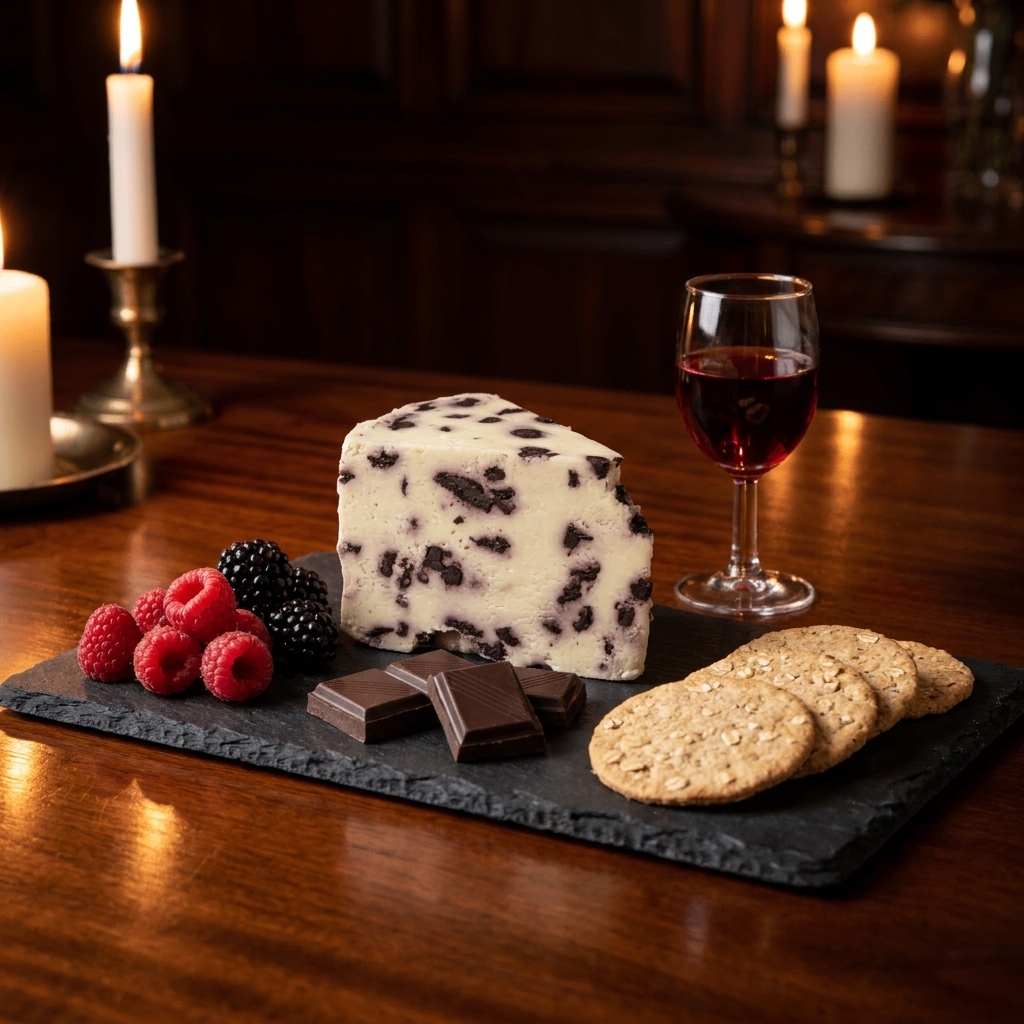
3. Make dessert smaller and more interesting. Serve a few pieces of cheese with fresh berries and a little dark chocolate. Keep them separate so guests can try different combinations. Plain oat crackers are useful for anyone who wants a less sweet bite.
Pro Pairing Tip
Let only the portion you plan to serve sit out for about 20 to 30 minutes in a cool room. Slight warming helps reveal its aroma and soften the texture. Use a clean knife and accept the crumbs. They belong on tomorrow's salad, not in the category of presentation failures.
For local shopping, ask at Murray's Cheese inside City Market in Pagosa Springs about current availability. Stock can change, so check before planning a menu around a particular wedge.
Storage: Purple halos are normal; fuzzy patches are not
Keep the cheese refrigerated at 40 degrees Fahrenheit or below. After opening, wrap it well or place it in a clean, covered container, and follow the package's storage and use-by instructions.
For a picnic along the San Juan River, pack it in an insulated cooler with ice packs. Mountain air can feel cool while a parked car warms quickly.
These features are generally normal:
- Blue-purple staining immediately around pieces of blueberry.
- A mild, clean, cultured-dairy smell.
- A crumbly cut surface.
Discard the cheese if you find fuzzy mold, a slimy surface, unexpected pink or orange growth, swollen packaging or a strong alcoholic or rotten odor. Do not try to identify the organism by its color, and do not taste suspicious cheese to test it.
Because this is a moist, fruit-blended cheese, discard the whole affected piece rather than trimming mold away. It is not a hard block of Parmesan.
Also remember that harmful bacteria do not always announce themselves. Keep total unrefrigerated time under two hours, or one hour when temperatures exceed 90 degrees. A normal smell cannot override unsafe storage.
The names behind the cheese
Somerdale is the British export and distribution business behind the label, not the name of a dairy farm. Founded in 1990, it has helped bring British cheeses to international markets.
Long Clawson Dairy is a notable producer of White Stilton fruit blends, including its Blueberry Fayre. Established in 1912 by 11 farmers, the dairy connects this modern sweet-savory style to a much older regional cheesemaking tradition.
White Stilton deserves to be understood as its own cheese, not as failed Blue Stilton. Its mildness is useful. Blueberries, cranberries and apricots each take that same crumbly foundation in a different direction.
And ordering it is easy: SUHM-er-dayl white STILL-tuhn with BLOO-bair-eez. No special cheese-counter accent required.
Sources and Further Reading
- White Stilton Cheese / Blue Stilton Cheese protected designation, European Commission, eAmbrosia register.
- Somerdale White Stilton Blends, Somerdale International.
- Somerdale White Stilton with Blueberry, Gourmet Foods International.
- Clawson Farms Blue Stilton, Academy of Cheese.
- Molds on Food: Are They Dangerous?, U.S. Department of Agriculture, Food Safety and Inspection Service.
