Estimated Reading Time: 7 min
A Western Slope Cheese With Farm Roots
Rocking W makes its Garlic & Chive Jack in Olathe, Colorado, in the Uncompahgre Valley. That puts its home on the Western Slope, among irrigated fields in a dry, high-elevation landscape. For Pagosa Springs shoppers, this is a Colorado cheese, though not quite a next-door neighbor.
The business is tied to Webb Dairy, a family operation whose dairy herd dates to 1965. The family opened the Rocking W cheese plant in 2008, adding cheesemaking to its agricultural work.

Garlic & Chive Jack is a farmstead cheese, meaning it is made with milk from the producer’s own herd on the farm where that milk is produced. Here, that herd consists of Holstein cows. The milk goes into cheesemaking within 24 hours of milking.
That close connection matters. Raising the cows and making the cheese gives a producer direct control over both the milk supply and what happens in the vat. It also gives you a useful answer to a simple question: Where did this cheese begin?
Terroir Tale: More Than Mountain Air
Terroir means the influence of place on food. In cheese, that can include feed, climate, animal care and cheesemaking habits. Webb Dairy’s homegrown feed ties its milk to the surrounding farmland. Still, elevation alone does not explain a cheese’s flavor. The people tending the herd and working the vat deserve plenty of credit, too.
What’s in It, and What Kind of Cheese Is It?
The useful short description is this: a farmstead, artisan, semi-soft, short-aged Jack with garlic and chives. It belongs to the Monterey Jack family, an American cheese style prized for its mild flavor and usefulness in the kitchen.

The key ingredient and dietary details are:
- Milk: Pasteurized whole cow’s milk.
- Rennet: Vegetarian microbial enzymes, which help turn liquid milk into curd.
- Flavorings: Garlic and chives.
- Allergen: Milk. This is dairy cheese, not a vegan product.
Microbial rennet comes from microorganisms rather than an animal’s stomach. It is sometimes loosely called vegetable rennet, but that wording can confuse it with plant coagulants such as thistle. If you follow a strict vegetarian diet or have other ingredient concerns, check the current package label before buying.
Pasteurization uses a controlled heat treatment to reduce harmful microbes in milk. It does not make cheese sterile or remove the need for refrigeration. Starter cultures then help develop the acidity and flavor needed for cheesemaking.
Why Young Jack Stays Supple
Garlic & Chive Jack is typically aged about one to three months. Affinage is the cheesemaking term for this managed ripening period. No need to memorize it, but now the fancy word on the tasting sheet has lost some of its power.
During ripening, enzymes gradually break down proteins and help the cheese develop flavor and a softer bite. A young Jack stays mild and moist rather than heading toward the firm, concentrated character of a long-aged Dry Jack.
Moisture is central to that difference. Water held within the cheese helps keep its protein structure flexible. Acidity, fat and aging also affect whether a slice bends, crumbles or melts.
One useful technique to understand is curd washing. Cheesemakers remove some whey, the liquid surrounding the curds, and replace it with water. This removes some lactose, the milk sugar that starter bacteria turn into acid. With less fuel available, the cultures produce less acid, helping create a milder cheese.
Washed-curd cheeses and washed-rind cheeses are not the same thing. The first term describes work inside the vat. The second describes treatment of a cheese’s outside during aging. Garlic & Chive Jack is a rindless cheese, not a pungent, surface-ripened one.
Taste First, Then Notice the Texture
Expect a mild, buttery foundation with savory garlic and a green, onionlike lift from the chives. This is not sharp cheddar wearing an herb jacket. The Jack itself stays gentle, leaving room for the seasonings.
Garlic and chives belong to the allium family. Their sulfur-containing compounds help create their familiar aromas. In a creamy cheese, those flavors can seem rounder and less biting than a mouthful of raw garlic.
The texture is pliable and creamy. You may see small, irregular gaps inside a cut piece. Cheesemakers call that an open texture, meaning the curds have not knit into a completely solid-looking mass. A slice may break a little at an edge yet feel smooth as it warms in your mouth.
To get acquainted with it:
- Cut a small serving and leave the rest refrigerated.
- Let that portion lose its refrigerator chill for about 20 to 30 minutes.
- Taste it plain before adding crackers, wine or anything sweet.
- Notice the order of flavors: milk and butter, savory garlic, then the lighter chive note.
The green flecks are part of the point. They are not a reason to reach for the trash can.
Put It to Work: Breakfast, Potatoes and Pasta
For a cold Pagosa morning, this cheese makes a strong case for breakfast at home. Or at the rental cabin. You need neither a full spice rack nor an ambitious plan.
A Simple Breakfast Quesadilla
For one generous serving, gather two small flour tortillas, about 2 ounces of shredded Garlic & Chive Jack, one or two scrambled eggs, and a little butter or oil.
- Heat a skillet over medium-low heat and add a thin film of butter or oil.
- Lay in one tortilla. Add half the cheese, the cooked eggs and the remaining cheese.
- Top with the second tortilla. Cook until the underside is golden, then flip carefully.
- Cook until the cheese melts and the second side browns. Rest briefly before cutting.
Serve pico de gallo on the side. Its tomato acidity gives each bite a fresh contrast without making the tortilla soggy.
Jack is a good melting cheese, but gentle heat still matters. High heat can make even a cooperative cheese release oil or turn a sauce grainy.
Try these other uses:
- Mashed potatoes: Stir a modest handful into hot potatoes off the heat. Taste before adding more salt.
- Soup: Add finely shredded cheese gradually over low heat, preferably to a thickened soup. Do not expect cheese alone to turn thin broth into a stable sauce.
- Macaroni and cheese: Melt it into a warm milk-based sauce for garlic flavor and chive flecks throughout.
- A snack plate: Pair slices with plain water crackers. Try a tiny drizzle of honey on one bite before committing the whole plate.
Pro Pairing Tip: Leave Room for the Cheese
Skip garlic crackers on your first tasting. Plain bread or crackers let you judge the balance already in the cheese. More garlic is an option, not an obligation.
Wine: Match the Butter or the Herbs
Two good approaches lead in different directions: echo the cheese’s creamy side or brighten its herbal side.
A moderately oaked Chardonnay suits the first approach. A wine with round texture and buttery notes can feel at home beside young Jack. Those buttery aromas often come from malolactic fermentation, a process that softens wine acidity, rather than from oak itself.
Sauvignon Blanc takes the fresher route. Its lively acidity and green, herbal character can complement chives, especially if you are serving the cheese with vegetables.
Dry or off-dry rosé offers a useful middle ground, with refreshing acidity and fruit flavors beside the savory garlic.
Prefer red? Try a fruit-forward Merlot or another softer, modestly tannic red. A heavily tannic bottle would not be my first choice for this mild, herb-seasoned cheese. Still, pairing is a tasting exercise, not a courtroom ruling.
Beer: Start Crisp, Then Explore Hops
A pilsner is an easy starting point. Its crisp finish and carbonation offer a refreshing contrast to the creamy texture without crowding the chives.
A balanced pale ale adds malt flavor that works well with the garlic, particularly alongside a toasted sandwich or quesadilla.
A wheat IPA brings a bready base and more hop aroma. Look for one whose bitterness stays in balance. Citrus or floral hop notes can be appealing here; a very bitter beer may overwhelm the Jack’s milky side.
Pro Pairing Tip: Build a Two-Sip Test
Taste the cheese, take a sip, then taste the cheese again. Does the garlic seem pleasantly savory, or does the drink drown everything out? Your answer is more useful than a rigid pairing chart.
Keep It Cold, and Know When to Let It Go
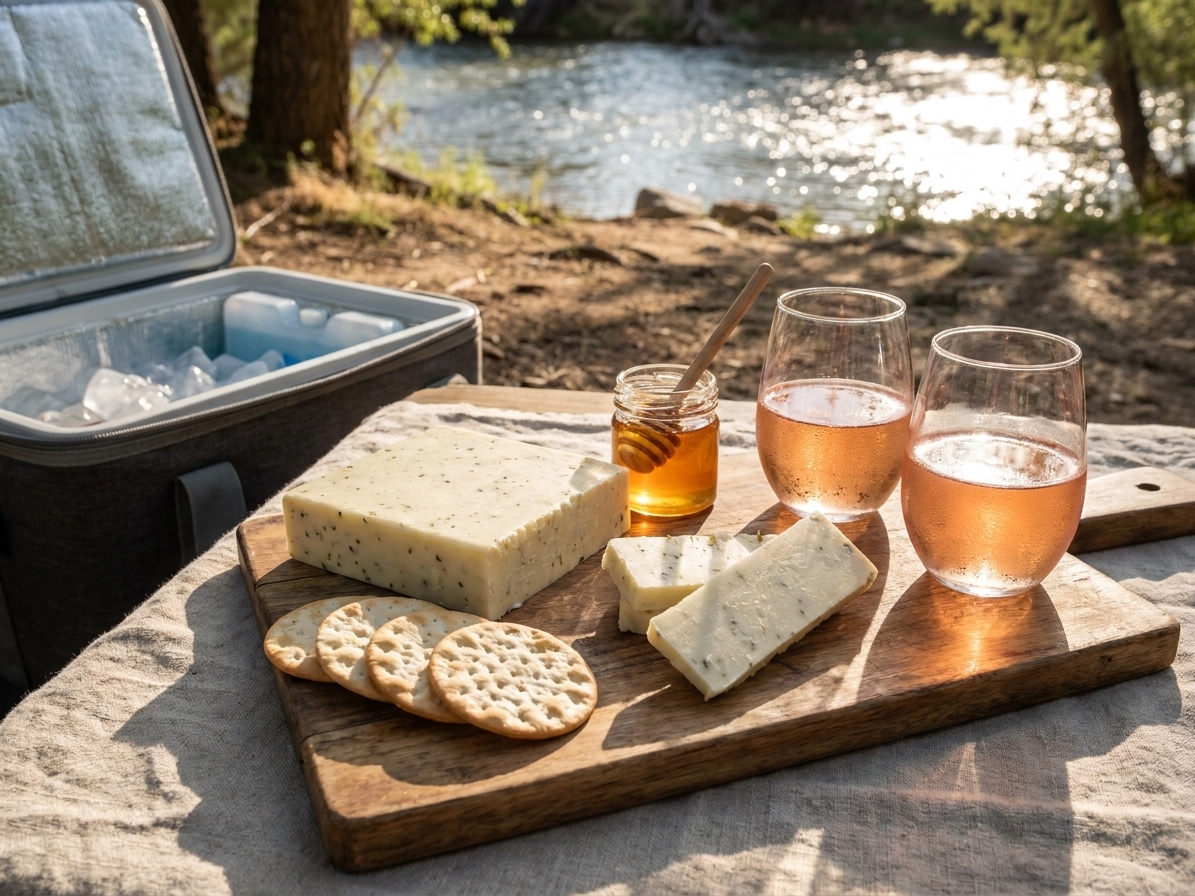
Store the cheese at 40 F or below, follow package directions and use clean utensils when cutting it. Wrap the cut surface well to limit drying. For a summer picnic along the San Juan River, carry it in an insulated cooler with ice packs.
Some changes are normal. A little surface moisture or a few beads of oil can appear as cheese warms. Garlic and chive pieces remain visible within the paste, and small internal gaps can be part of its texture.
Other changes call for disposal:
- New fuzzy growth on the surface.
- Unexplained pink, red or dark discoloration.
- A slimy coating.
- Strong ammonia, rotten or otherwise unfamiliar odors beyond the expected garlic aroma.
For this moist, semi-soft cheese, the cautious choice is to discard a moldy piece rather than scrape it clean. Do not taste suspicious cheese to test it. Harmful contamination does not always announce itself through smell or appearance.
Keep total unrefrigerated time under two hours, or one hour when temperatures exceed 90 F.
Garlic and chive compounds have shown antimicrobial effects in some food studies, but that does not make an herb-flecked cheese self-preserving. Flavor is not a substitute for safe storage.
An American Original With a Complicated Name
Monterey Jack’s roots lie in California cheesemaking traditions associated with Spanish missions and Californio dairy households. David Jacks, a 19th-century landowner and businessman, helped commercialize the cheese and became closely linked to its name.
The fuller history is less tidy than a single inventor’s tale. Accounts also credit cheesemaker Doña Juana Cota de Boronda, while the exact origins of the name remain debated. Jacks’ role in Monterey’s contentious land history adds another layer. Best to remember that a famous name on a cheese does not necessarily identify the person who created it.
Rocking W’s version carries that American style into a Colorado farmstead setting, with garlic and chives doing the seasoning.
Ask for it as RAH-king DUB-uhl-yoo GAHR-lik and CHYV JAK. In Pagosa Springs, check with Murray’s Cheese inside City Market about current availability. Take home a piece, taste it plain and save enough for tomorrow’s eggs. That last part may require planning.
Sources and Further Reading
- About Us, Rocking W Cheese.
- Rocking W Garlic & Chive Jack, Pagosa Cheesemongers.
- Washed Curd, Cheese Science Toolkit.
- Molds on Food: Are They Dangerous?, USDA Food Safety and Inspection Service.
- The Local Story Behind the Country’s Proudest Cheese Is Hard to Slice, Monterey County Weekly.
