Estimated Reading Time: 7 min
What Is Stracciatella, Exactly?
If you have cut into burrata and wished you could buy just the soft center, stracciatella is your cheese. It combines shreds of fresh mozzarella with sweet cream, without the outer mozzarella pouch that gives burrata its shape.
BelGioioso sells that filling on its own. The result is spoonable, mild and ready for anything from a tomato salad to a slice of grilled bread. Think of it as a finishing cheese rather than something to grate over dinner.

Say it strah-chaht-TEL-lah. The Italian name means “little shreds” or “little rags,” a nod to the torn mozzarella. The same name also appears on Italian soup and chocolate-flecked gelato, so a little context helps when ordering.
Wisconsin-Made, With Southern Italian Roots
BelGioioso makes its stracciatella in Wisconsin. Its culinary roots, though, lie in Puglia, the southern Italian region closely associated with burrata.
The distinction matters. This is an American-made, Italian-style cheese, not an imported Burrata di Andria PGI. That protected European designation applies to a specific regional burrata, not to every cheese called stracciatella.
Terroir Tale: An Italian Cheesemaker Heads to Wisconsin
Errico Auricchio founded BelGioioso in 1979 after moving from Italy to Wisconsin. He brought a family cheesemaking tradition to a state with a well-established dairy industry.

That meeting of tradition and location is more useful to understand than any claim that Wisconsin milk duplicates Puglia's. The method has Italian roots; the milk and production are American. Both parts belong in the story.
Ingredients, Milk and Rennet: What to Know
BelGioioso Stracciatella uses cow's milk, not buffalo milk. Its ingredient list includes pasteurized milk, pasteurized cream, salt and enzymes. The milk comes from local Wisconsin suppliers; no particular cattle breed defines this cheese.
Both the milk and cream are pasteurized. This heat treatment reduces harmful microbes, but it does not make the finished cheese shelf-stable. Refrigeration remains essential.
BelGioioso also states that its farmers do not use rBST, a hormone used to increase milk production. That is a sourcing choice, not proof of a nutritional advantage. The required labeling qualification notes that no significant difference has been shown between milk from rBST-treated and untreated cows.
Rennet is the milk-coagulating enzyme used to help form curds. An ingredient list that says only “enzymes” does not establish whether the coagulant comes from animals, microbes or fermentation. If vegetarian suitability matters to you, confirm the current product's status with BelGioioso. Likewise, look for an actual certification rather than assuming the cheese is kosher or halal.
Allergen note: This cheese contains milk. It is not suitable for someone with a milk allergy, and it should not be assumed to be lactose-free.
How Stretching and Heat Build the Texture
Stracciatella belongs to several overlapping categories: fresh, soft, unripened and rindless. Its mozzarella component also belongs to the pasta filata family, meaning stretched-curd cheese.
The basic process works like this:
- Milk is coagulated into curds, and acidity is developed to make those curds stretchable.
- Hot water softens the curd so the cheesemaker can stretch it into a smooth, elastic mass.
- The mozzarella is cooled and torn into strands.
- Those strands are mixed with pasteurized sweet cream.
Stretching aligns the cheese's proteins into fibers. That is why mozzarella pulls into strings rather than crumbling like feta.
Pasteurization and hot-water stretching serve different purposes. The first treats the dairy ingredients; the second helps create the curd's structure. Neither removes the need for careful handling afterward.
No Aging, Plenty of Moisture
Stracciatella is unaged. It does not spend weeks developing a rind or months building the sharp, nutty flavors of a hard cheese. Freshness is the point.
It is also a high-moisture cheese. Published nutrition-based estimates place its water content around two-thirds of its weight, but that is best treated as an approximation rather than a fixed product specification.
The practical lesson is simpler: This cheese has enough liquid to spread across a plate. Serve it in a shallow bowl or on a rimmed platter, not on a flat board beside crackers you want to keep crisp.
A little loose cream or liquid is normal. Stracciatella is not supposed to hold a tidy wedge shape.
What You Will Taste and Feel
The first impression is sweet cream, followed by fresh milk, light salt and a gentle tang. Here, “sweet” describes the dairy flavor, not a sugary dessert filling.
Do not expect cheddar's bite or Gorgonzola's pungency. Stracciatella's appeal is quieter. Taste a spoonful before adding toppings, or you may miss it altogether.
Texture does much of the work. The cream is smooth and rich; the mozzarella strands offer a soft, springy chew. Unlike ricotta, stracciatella has distinct threads rather than fine curds. Unlike a ball of mozzarella, it needs a spoon.
Freezing is a poor choice when that texture matters. After thawing, the cream can separate and the curds can become less tender. Buy an amount you can enjoy fresh instead.
Keep It Cold, and Know When to Let It Go
In Pagosa Springs, a grocery run can easily turn into lunch, an errand and a drive home. Make fresh cheese your last stop, especially in summer. Bring an insulated bag with ice packs if you will not head straight to a refrigerator.
Store stracciatella at 40 F or below, follow the package date and handling instructions, and use a clean spoon each time. For best quality, plan to finish it within a day or two of opening unless the label directs otherwise. That is a freshness goal, not a guarantee of safety.
Discard it if you notice:
- Fuzzy mold or unusual pink, blue, green or other discoloration.
- A newly swollen or leaking package.
- Strong sour, yeasty, rancid or otherwise unpleasant odors.
- An unusual slimy texture, distinct from the cheese's normal creaminess.
Do not scoop mold off a soft cheese and eat what remains. Discard the whole container.
Slight separation alone does not prove spoilage. Conversely, a normal smell does not prove safety. As a general food-safety rule, discard perishable cheese left unrefrigerated for more than two hours, or one hour when temperatures exceed 90 F. A shady picnic table is still not a refrigerator.
Food Pairings: Give the Cream Some Contrast
Stracciatella is rich enough that the best partners usually bring acidity, crunch, salt or fresh herbs. You do not need all four at once.
For a late-summer lunch, try ripe tomatoes, basil, toasted sourdough and a restrained drizzle of olive oil. Salt the tomatoes first, taste the cheese, then decide whether the plate needs more seasoning.
When the weather turns cold, trade tomatoes for roasted beets, squash or carrots. A little lemon juice or vinegar keeps the vegetables and cream from tasting too sweet together.
Other useful combinations include:
- Thinly sliced prosciutto and melon.
- Seasonal berries with black pepper and toast.
- Roasted peppers with basil.
- Warm pasta with tomatoes or greens.
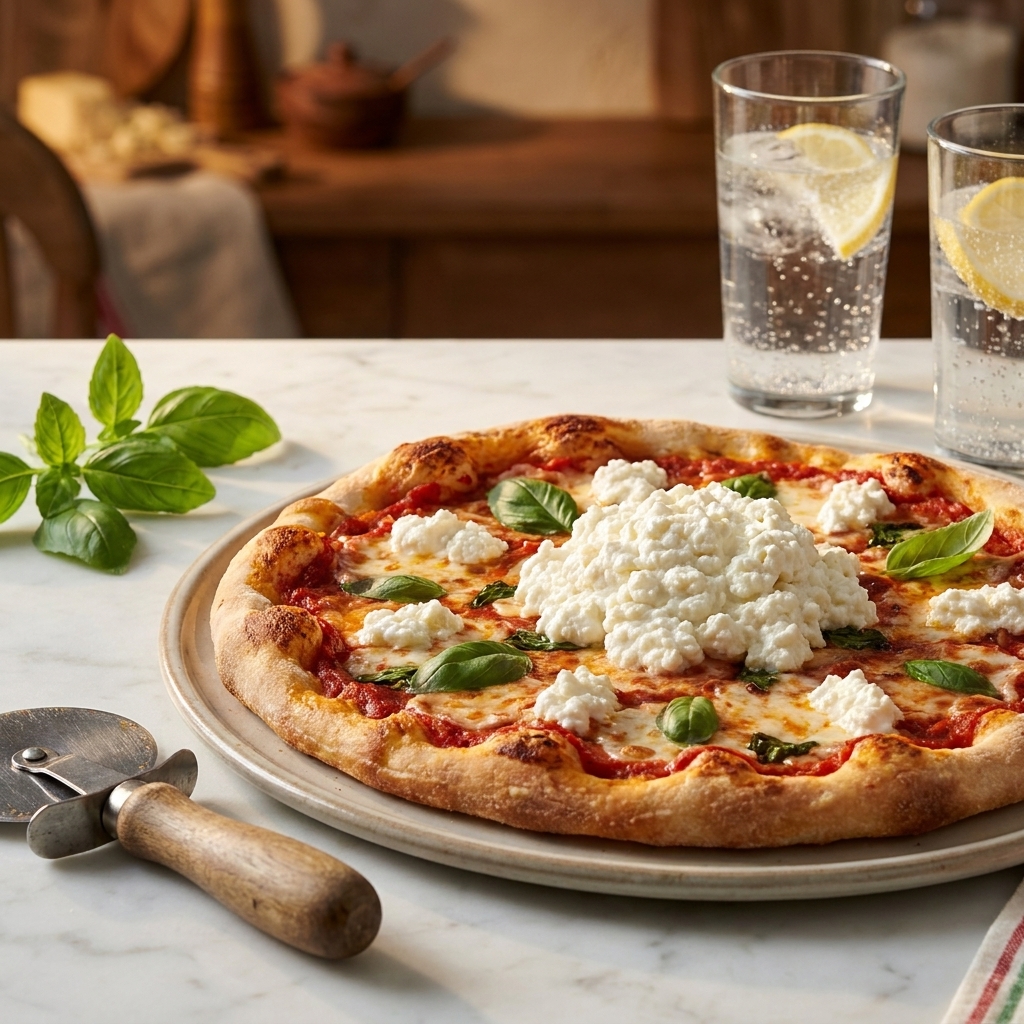
- Pizza finished with a few small spoonfuls after baking.
Pro Pairing Tip: Add It After the Heat
For the best creamy texture, spoon stracciatella onto pizza after it leaves the oven or onto pasta after the pan comes off the burner. Long exposure to high heat can separate the cream and toughen the curds.
It is a finishing touch, not a substitute for the mozzarella that holds your pizza toppings together.
A Five-Minute Toast Worth Making
Toast thick slices of bread until crisp. Spoon on stracciatella, add chopped tomatoes or roasted vegetables, then finish with pepper and a few herb leaves. Taste before adding salt. Eat promptly, while the bread still has some backbone.
Wine Pairings: Bright Beats Heavy
Start with a crisp white wine. Sauvignon Blanc works particularly well with tomatoes and herbs, while Pinot Grigio and Vermentino offer a fresh counterpoint to the cream.
Prosecco or Franciacorta makes a pleasing match, too. Their acidity and bubbles create a refreshing contrast between bites.
Prefer Chardonnay? Choose one with restrained oak and enough acidity to avoid making the pairing feel heavy. A little buttery character can complement the cheese, but a heavily oaked bottle may dominate it.
Big, tannic reds are not my first choice here. If red wine is what you enjoy, let the rest of the meal guide you rather than forcing the cheese to carry the pairing.
Beer Pairings: Keep the Bitterness in Check
Wheat beers are an easy starting point. A German hefeweizen brings banana and clove notes; a Belgian witbier often offers citrus and spice. Both can complement fresh dairy without burying it in hop bitterness.
Kölsch, cream ale and a light lager are good options when you want a cleaner match. Despite its name, cream ale does not ordinarily contain cream.
A restrained pale ale can work with herb-topped toast or roasted vegetables, though a double IPA is likely to drown out the cheese. Pilsner is another refreshing choice, especially when its bitterness is moderate.
Pro Pairing Tip: Match the whole bite. Tomato and basil favor bright, herbal drinks; roasted vegetables invite a little more malt or body. For a nonalcoholic option, try sparkling water with lemon alongside the meal.
A Few Details Worth Bringing to the Table
Selling stracciatella separately gives cooks access to burrata's filling without opening several cheese pouches. BelGioioso offers it in tub formats, including 8-ounce and 1-pound sizes. For a small household, the smaller container is often the sensible purchase.
The company's stracciatella has also earned first-place recognition at American Cheese Society competitions in 2019 and 2023. Nice credentials, though the most useful test is still what you put on your toast.
For local shopping, ask at Murray's Cheese inside City Market in Pagosa Springs about current availability. Fresh-cheese selections can change, so check before planning dinner around a particular tub.
Then keep the plan simple: good bread, one seasonal topping and a cold container of cheese. Stracciatella does not need an elaborate cheese board. It needs a spoon and a timely invitation to dinner.
Sources and Further Reading
- Burrata Filling “Stracciatella”, BelGioioso Cheese. Product details, ingredients and awards.
- Celebrating 40 Years of BelGioioso, Cheese Connoisseur. Company history and cheesemaking heritage.
- Mozzarella Cheese Manufacture, American Dairy Products Institute. Stretched-curd production explained.
- Stracciatella, Wisconsin Cheese, Dairy Farmers of Wisconsin. Serving and pairing ideas.
- Danger Zone: 40 F to 140 F, USDA Food Safety and Inspection Service. Refrigeration and time limits for perishable foods.
