Estimated Reading Time: 8 min
Meet the Creamier Side of Appenzeller
Appenzeller White Label is a raw cow’s milk cheese from eastern Switzerland, enriched with cream and aged for at least three months. Emmi offers this version of the classic Swiss cheese, whose rind is regularly washed with a closely guarded herbal brine.
That extra cream matters. It gives White Label a softer, richer feel than classic Appenzeller, while the relatively short aging period keeps its savory bite from becoming too forceful. Think butter and toasted nuts, followed by a little herbal zip.

Say it AHP-en-tsel-er white LAY-buhl. No need to rehearse before approaching the cheese counter, but it helps.
A Swiss Cheese With a Specific Home
Appenzeller comes from the cantons of Appenzell Innerrhoden and Appenzell Ausserrhoden, plus parts of neighboring St. Gallen and Thurgau. This is eastern Switzerland’s green, pre-Alpine country, where rolling pastureland is as much a part of the dairy landscape as the mountains beyond it.
The cheese is made year-round. Summer grass and winter hay help sustain that cycle; cows do not graze lush meadows through a Swiss winter.
Unlike Gruyère AOP, Appenzeller is protected through a collective trademark rather than an AOP designation. AOP is a protected designation of origin that ties a food to a place and production rules. Appenzeller’s trade organization sets its own regional and production requirements.

Terroir Tale: Cheese as Payment
Appenzeller’s documented history reaches back more than 700 years, including records of cheese paid as a tithe to the Abbey of St. Gallen. Long before it appeared on a grocery store cheese board, it had a practical role in the local economy. A wheel was food, stored milk and something of value.
What Goes Into White Label?
The essentials are cow’s milk, added cream, salt, starter cultures and animal rennet, with herbal brine used during aging. Check the package for the full ingredient declaration of the piece you buy.
Brown Swiss cattle are closely associated with the region’s dairy traditions. Feeding rules for Appenzeller exclude silage, or fermented stored forage. One reason is quality control: Silage can carry bacterial spores that cause unwanted gas and cracks as cheese ages.
Rennet is the ingredient that helps milk set into curd. Traditional Appenzeller uses calf rennet, so it is not suitable for vegetarians who avoid animal-derived rennet.
Allergen note: This cheese contains milk. Very low lactose levels in an aged cheese do not make it safe for someone with a milk allergy. Anyone managing lactose intolerance should check the product label and their own tolerance rather than treating all dairy concerns as the same thing.
How Milk Becomes a Washed-Rind Wheel
Appenzeller fits several cheese categories at once: semi-hard, pressed, cooked-curd and washed-rind. Those terms describe different parts of the same process.
Here is the useful version:
- Culture the milk. Starter bacteria turn milk sugar into lactic acid, helping shape flavor and texture.
- Set and cut the curd. Rennet forms a gel, which the cheesemaker cuts into small pieces to release whey, the watery part of milk.
- Warm the curds. Gentle cooking helps them shed more whey. This is what “cooked-curd” means; it does not mean the milk has been pasteurized.
- Mold and press. Pressure joins the curds into a wheel and removes more whey.
- Salt and age. A salt bath is followed by cellar aging, where repeated herbal-brine washes help develop the rind and aroma.
Affinage is simply the skilled care of cheese as it matures. With Appenzeller, that care includes managing temperature, humidity and the surface community of yeasts and bacteria. The rind is not just packaging. It is part of the cheesemaking.
Three Months, Extra Cream and a Useful Label Lesson
White Label ages for at least three months. Classic Silver Label generally spends three to four months aging, while Gold and Black versions mature longer and develop stronger flavors. The oldest expressions can have a firmer texture and a more persistent finish.
White Label’s defining difference is not age alone. It is the added cream.
Its specification calls for at least 55% fat in dry matter. That does not mean your wedge is 55% fat by weight. “Dry matter” means everything left after the water is removed. The actual fat content is about 35 grams per 100 grams of cheese.
Moisture matters, too. White Label remains a semi-hard cheese with enough water to feel flexible rather than brittle. More fat interrupts the protein structure, helping explain its supple bite. It is sliceable, not spreadable, and creamy without being a soft-ripened cheese like Brie.
What You Will Taste and Feel
Start with a small piece on its own. You might notice fresh cream, butter and toasted hazelnut, followed by savory, herbal notes. Some tasters find hints that suggest tea, clove or ginger. Those are tasting impressions, not a disclosed ingredient list.
The aroma can be more assertive than the flavor. That is common with washed-rind cheeses, whose surface microbes produce pungent compounds during aging. Give the interior a fair hearing before deciding that the whole wedge tastes like its rind smells.
Inside, expect an ivory to pale-yellow paste. “Paste” is the cheese term for the interior. A few small holes, called eyes, are normal. They form when gas collects during fermentation and should not be confused with large cracks or a swollen package.
The texture should be smooth and yielding, with enough firmness for neat slices. White Label is also a useful melting cheese, though no cheese is immune to overheating. High heat can still leave you with separated fat and a chewy tangle.
Raw Milk: What the Heat Step Does Not Do
White Label is made with raw, unpasteurized cow’s milk. Warming the curds during production does not turn it into a pasteurized-milk cheese.
Its minimum three-month aging period exceeds the 60-day aging period required for certain raw-milk cheeses sold in the United States. But aging is not a guarantee that harmful bacteria are absent. Neither a pleasing smell nor an attractive rind proves safety.
People who are pregnant, adults 65 and older, young children and people with weakened immune systems should choose pasteurized dairy products in line with public health guidance. Raw milk is a production choice, not a promise of better nutrition or safety.
Build a Pairing Around Freshness
With White Label, I would start with something bright rather than something powerful. You already have creaminess, salt and plenty of aroma on the plate.
Wine: Riesling First, Big Reds Later
A dry or off-dry Riesling brings fresh acidity and apple or peach notes that balance the cheese’s richness. Gewürztraminer offers a different approach, echoing its floral and spicy side. Choose one with enough freshness to keep the pairing lively.
An unoaked or lightly oaked Chardonnay can work well, especially if you enjoy the buttery side of the cheese. For red wine, try Pinot Noir or another lighter, fruit-forward style. Heavily tannic reds are not forbidden, but they can dominate this young, creamy version.
Beer and Cider: Keep It Crisp
A Pilsner offers a clean contrast, with lively carbonation and enough bitterness to balance a rich bite. Witbier, often brewed with coriander and orange peel, can pick up the cheese’s herbal character. A wheat ale is another gentle option.
Dry or lightly off-dry apple or pear cider makes an easy match. Orchard fruit and cheese have been getting along for a long time; there is no need to complicate the introduction.
Pro Pairing Tip: Taste the cheese first, take a sip, then try another bite. If the drink buries the cheese or makes the finish seem harsh, switch to something lighter. Pairing is a comparison, not an exam.
Put It to Work in a Pagosa Kitchen
After a cold day near Wolf Creek or a long afternoon outside, White Label earns its place in a simple supper. It brings enough flavor that you do not need an elaborate recipe.
Try these approaches:
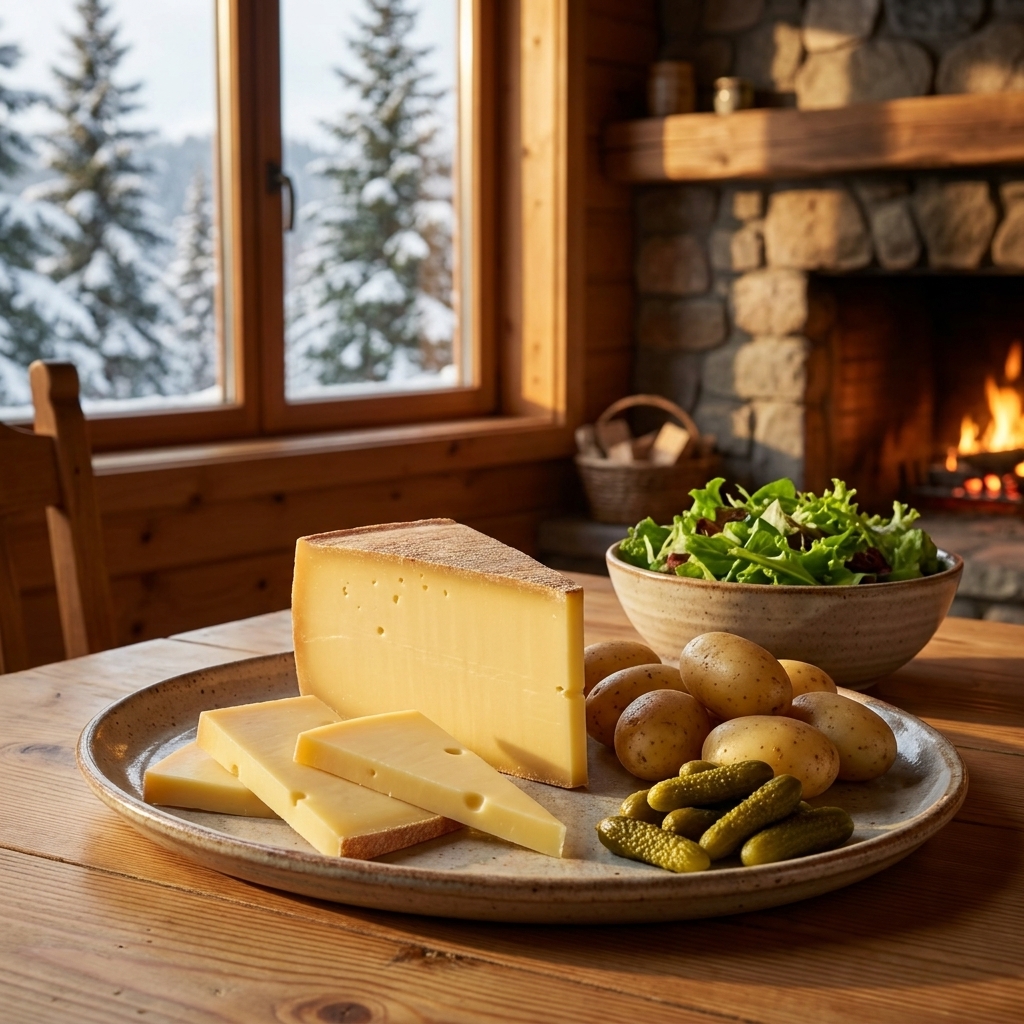
- Hot potatoes: Serve thin slices alongside boiled potatoes, pickles and a green salad. This follows the spirit of Swiss Gschwellti, a meal built around potatoes boiled in their skins.
- Rösti: Add grated cheese near the end of cooking a crisp shredded-potato cake. Cover briefly to melt it without scorching the bottom.
- Macaroni and cheese: Replace part of your usual cheese with White Label. Swiss Chäsörnli offers a good reminder that pasta and Alpine cheese belong together.
- Eggs: Fold a modest handful into an omelet with mushrooms or smoked trout. Taste before adding salt.
- A quick board: Pair it with apple or pear slices, walnuts, bread and a few pieces of salami. Keep sweet preserves in a small dish so they do not overwhelm every bite.
For fondue or a sauce, grate the cheese and add it gradually over gentle heat. Cream enrichment helps the texture, but technique still counts.
At Murray’s Cheese inside City Market in Pagosa Springs, ask whether Appenzeller White Label is currently available. Confirm the label if you want this cream-enriched version rather than an older Appenzeller. Selection can change, and a quick question beats buying the wrong wedge.
Keep the Good Funk, Watch for Trouble
A golden-orange to reddish-brown rind, a little surface tackiness and a savory, pungent aroma can be normal. A strong odor alone does not mean the cheese has spoiled.
More concerning signs include new fuzzy growth, unusual pink discoloration inside the cheese, heavy slime, package swelling or a sharply unpleasant ammonia smell that persists after unwrapping. Do not taste suspicious cheese to test it. If you are unsure, stop eating it and contact the retailer.
Wrap leftovers in cheese paper or parchment, place them in a loosely closed container and refrigerate at 40 F or below. Follow the package’s storage guidance. For serving, set out only what you expect to eat, and keep total time unrefrigerated under two hours, or one hour above 90 F.
That last point matters on summer outings around Pagosa. A cooler with ice packs is a better cheese companion than a warm backpack.
A Secret Wash and a Scientific Signature
Appenzeller’s herbal wash, often called Sulz, remains a closely guarded recipe. It helps give the cheese its recognizable character, but guessing the full botanical blend from a bite is a losing game. Enjoy the mystery without turning dinner into detective work.
There is a less romantic, equally interesting protection behind the name. Swiss agricultural researchers at Agroscope developed bacterial marker cultures that can help authenticate Appenzeller through DNA testing. The selected cultures provide a traceable signature without being intended to change the cheese’s flavor.
Old regional craft, modern identity checks. Both serve the same purpose: making sure the cheese carrying the name is the real thing.
Your part is simpler. Buy a small piece, taste it plain, then melt a little over potatoes. White Label makes its case best at the table.
Sources and Further Reading
- Appenzeller White Label product specifications, Appenzeller Käse.
- Appenzeller, Emmi USA.
- Appenzeller: A Swiss Favorite, Cheese Connoisseur.
- Microbiological Surveillance Sampling: FY14-16 Raw Milk Cheese Aged 60 Days, U.S. Food and Drug Administration.
- Bacteria to Protect Appenzeller Cheese From Fakes, SWI swissinfo.ch.
