Estimated Reading Time: 7 min
Meet the cheese: Wisconsin milk, California roots
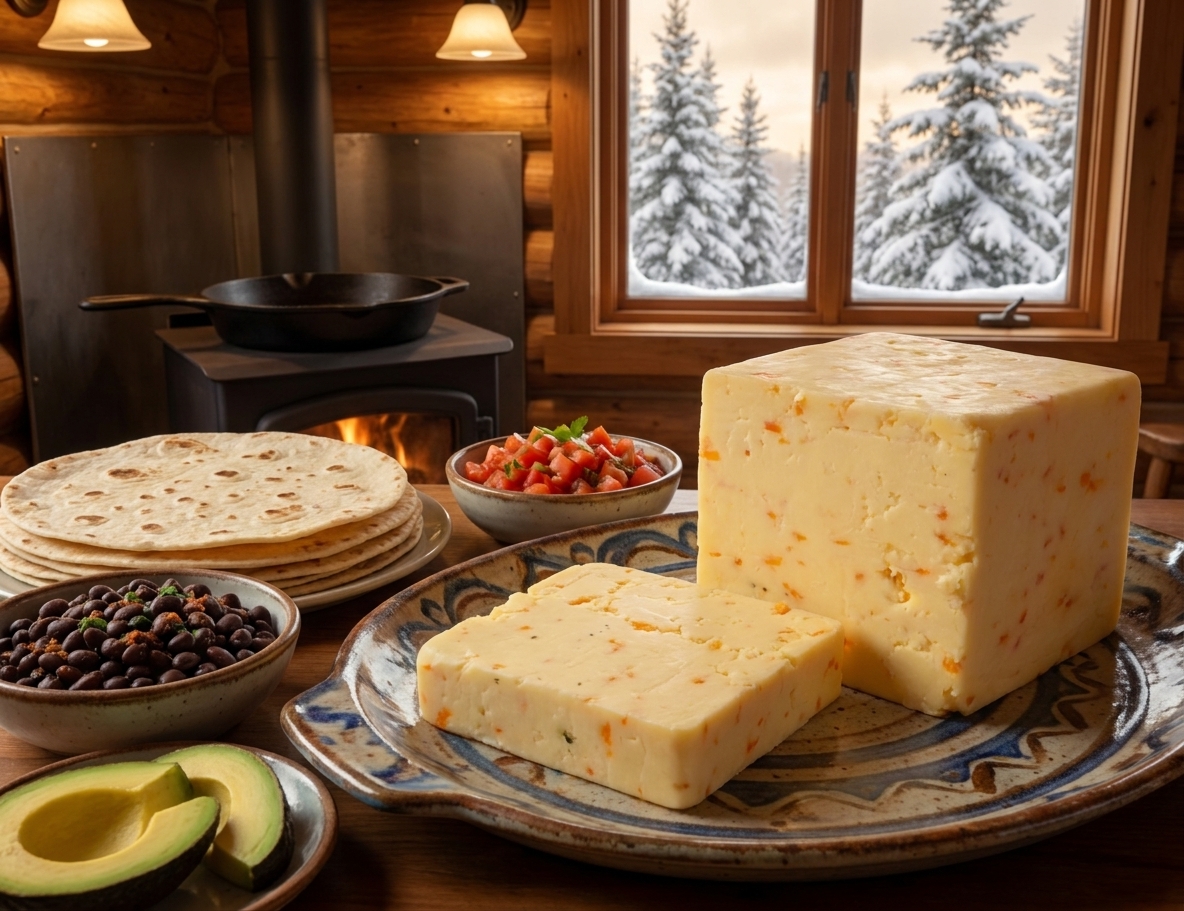
Maple Leaf Habanero Jack is a Wisconsin-made cow’s milk cheese with a mild, creamy Monterey Jack base and habanero peppers mixed throughout. It belongs to the pepper Jack family, but this is the cousin you approach with a little respect. Habaneros bring both serious heat and a fruity flavor that can get lost if you rush the tasting.
Its name is pronounced hah-bah-NEH-roh JAK.

Maple Leaf’s cheesemaking roots reach back to a cooperative founded in 1910 in southern Wisconsin. Its home territory, Green County, has a long dairy history shaped by immigrant farmers and cheesemakers. The area around the cooperative was known as English Hollow, a reminder that Wisconsin’s cheese story includes more than its well-known Swiss connections.
Monterey Jack’s story begins farther west. The cheese developed from California’s early cheesemaking traditions, and businessman David Jacks helped commercialize it in the late 19th century. Wisconsin makers later made the style their own. Add habaneros, and you have a distinctly American meeting of mild dairy and assertive chile.
Terroir Tales: Skill matters as much as scenery
Maple Leaf’s history includes Wisconsin Master Cheesemakers Jeff Wideman and Paul Reigle. The state’s certification program requires extensive experience followed by advanced training and evaluation. Wideman’s certifications include Monterey Jack and cheddar.
That matters with a mild cheese. There is no deeply aged rind or powerful blue mold to distract from a poor texture. The base has to work before the peppers arrive.

What’s in it, and what pasteurization does
The essentials are straightforward: pasteurized cow’s milk, cheese cultures, salt, coagulating enzymes and habanero peppers. Check the package for the complete ingredient list and any formulation changes.
Rennet is the enzyme preparation that helps milk set into curd. Maple Leaf Habanero Jack is listed with nonanimal, microbial or vegetable-derived enzymes, making it an option for people who eat dairy but avoid animal rennet. If vegetarian certification matters to you, confirm it on the current label.
The key allergen is milk. This is not a dairy-free cheese, and you should not assume it is lactose-free.
Pasteurization heats milk to destroy disease-causing microbes. One common method holds milk at 161 degrees Fahrenheit for at least 15 seconds, though other approved time-and-temperature combinations exist. Pasteurization does not sterilize milk or make finished cheese immune to contamination. Clean handling and cold storage still matter.
Why young Jack stays supple
Habanero Jack is a young cheese, built for mild flavor and easy melting rather than years in an aging room. Young Monterey Jack commonly matures over a period of weeks to a few months. Do not expect the brittle texture or concentrated bite of a long-aged cheddar.
Three changes shape cheese as it matures:
- Fermentation: Cultures turn milk sugar into lactic acid, creating a gentle tang.
- Protein breakdown: Enzymes gradually change the curd’s structure and flavor.
- Fat breakdown: Small changes can add aroma, while excessive breakdown can create rancid flavors.
For a cheese like this, balance is the goal. Enough development to taste like cheese, not so much that the milk’s mild character disappears behind the peppers.
Moisture helps explain its feel. The federal standard for Monterey Jack sets a maximum moisture content of 44% and requires at least 50% milkfat in the remaining solids. That second number is fat in dry matter, not the percentage of fat in the whole cheese. High-moisture Jack is a separate category with more than 44% but less than 50% moisture.
Those are category standards, not a laboratory reading for your particular wedge.
Jack production involves cutting and stirring curds before draining and pressing. Some methods also wash or cool the curds with water. Washing removes some lactose, which limits further acid production and helps create a mild cheese. The exact handling of moisture, acidity and curd determines how well the finished block slices and melts.
Cream first, then a growing burn
Expect a milky, buttery base with a little tang, followed by the peppers’ fruity heat. The texture is supple and semi-firm: easy to slice when cold, softer as it warms. Small, irregular openings may appear in the interior. These are not the large, gas-formed eyes you see in Swiss cheese.
The habanero pieces add small interruptions to the smooth paste. More important, they bring capsaicin, the compound that triggers heat-sensitive receptors in your mouth. The burning sensation is not the cheese’s temperature, though your tongue may argue otherwise.
Dairy can reduce perceived chile burn, and both milk proteins and fat can play a role. But creamy cheese does not cancel habanero heat. You may notice the warmth building after the first bite, so pause before declaring it tame.
Try this simple tasting sequence:
- Cut a small piece and let it lose its refrigerator chill for about 15 to 20 minutes.
- Taste it alone, noting the dairy flavor before the pepper takes over.
- Wait a moment before taking another bite.
- Try a second piece with mango, a plain cracker or avocado.
Serve it last in a mild-cheese tasting. A delicate fresh cheese has a hard time making its case after habanero.
Make it dinner, not a dare
Habanero Jack is most useful when you want heat and melted cheese from one ingredient. Think quesadillas, burgers, breakfast burritos, grilled cheese and baked egg dishes.
After a cold day around Pagosa Springs, a crisp tortilla with beans and melted Jack is an appealingly modest dinner. You do not need six toppings or another bottle of hot sauce.
For a quick skillet quesadilla:
- Grate the cheese while it is cold.
- Scatter a modest layer over half a tortilla. Add cooked black beans or cooked chicken if you like.
- Fold and cook in a lightly oiled skillet over medium-low heat.
- Turn once, letting the tortilla brown while the cheese melts.
- Serve with avocado and a mild tomato salsa.
Moderate heat is your friend. A ripping-hot skillet can scorch the tortilla before the filling warms, and prolonged high heat can make cheese release oil.
Pro Pairing Tip: Blend before you commit
For a mixed crowd, start with equal parts Habanero Jack and plain Monterey Jack. You keep the pepper flavor while reducing its concentration. It is much easier to add heat than to negotiate with a full pan of overly spicy macaroni and cheese.
On a board, pair small slices with buttery crackers, fresh figs, ripe mango or a little honey. Mild ham or prosciutto can work, too. Skip the spicy salami at first. Let one ingredient handle the fire.
Wine: A little sweetness helps
The most dependable wine direction is lower alcohol, modest sweetness and little tannin. Alcohol can heighten the sensation of chile heat, while a big, tannic red may feel harsh beside it. These are useful guidelines, not laws governing your glass.
- Off-dry Riesling: Fruit, acidity and a little sweetness balance the cheese’s richness. Kabinett and Spätlese describe German grape-ripeness categories, not guaranteed sweetness, so check the bottle or ask for help.
- Gewürztraminer: Lychee, floral and spice notes can echo habanero’s fruity side. Choose carefully: Some versions are dry and fairly high in alcohol.
- Moscato d’Asti: Its sweetness, light sparkle and typically low alcohol make it an approachable match for a small cheese plate.
None of these neutralizes capsaicin. The aim is a pleasant next sip, not a chemical antidote.
Beer: Start with malt, then explore
A malty beer often makes a comfortable partner. Toasted grain and gentle sweetness give the cheese something to lean against without adding a second sharp edge.
Vienna lager or Märzen is a sensible starting point. Look for moderate alcohol and restrained bitterness. Milk stout or sweet stout offers a richer option, with roast flavors that contrast with the creamy cheese. Milk stout contains lactose, an important detail for anyone avoiding it.
Doppelbock can bring appealing bread, toffee and dark-fruit notes, but its higher alcohol may make the burn more noticeable. Pour a small sample before committing to the pairing.
What about an IPA? If you like bitterness and chile together, try it. Just do not expect a heavily hopped, high-alcohol beer to soothe the heat. Personal preference matters more than a rigid pairing ban.
Store it cold, and know when to let it go
Keep Habanero Jack refrigerated at 40 degrees Fahrenheit or below. After opening, wrap it well or use a clean, airtight container. Follow package guidance and avoid repeatedly leaving the whole block on the counter.
For a picnic near the San Juan River or lunch at a trailhead, use an insulated cooler with ice packs. Perishable food should not sit unrefrigerated for more than two hours, or one hour when temperatures exceed 90 degrees.
A little moisture in the package is not automatically spoilage. Neither are the pepper’s natural red or orange flecks. Watch instead for new surface discoloration, slime, fuzzy growth, a swollen package or strong rotten, rancid or ammonia-like odors.
This is a rindless cheese. Surface mold is not a planned feature. Discard moldy shredded, sliced or crumbled cheese. For an intact block, do not assume that wiping off growth makes it safe; consult USDA guidance or discard it if you are unsure. Never taste questionable cheese to test it. Harmful contamination does not always announce itself by smell.
Your next cheese-counter question
At Murray’s Cheese inside City Market in Pagosa Springs, ask whether Maple Leaf Habanero Jack is currently in stock. Availability can change, so visitors planning a specific meal may want to check before shopping.
Start with a small piece, a mild companion cheese and one sweet accompaniment. That is enough to find out whether you prefer this Jack on a board or tucked into something warm and crisp. My vote goes to the quesadilla. The cheese gets to be useful, and dinner gets a little more interesting.
Sources and Further Reading
- Maple Leaf Cheesemakers Inc., Wisconsin Cheese, Dairy Farmers of Wisconsin.
- Maple Leaf Habanero Monterey Jack Cheese, H-E-B.
- Cheeses and Related Cheese Products, 21 CFR Part 133, Electronic Code of Federal Regulations, U.S. Food and Drug Administration.
- The Effect of Interactions Between Capsaicin and Dairy Proteins, Pennsylvania State University.
- Molds on Food: Are They Dangerous?, USDA Food Safety and Inspection Service.