Estimated Reading Time: 7 min
A Wisconsin cheese with an Italian family resemblance
Cello Smoky Pepper Rubbed Fontal comes from Lake Country Dairy in Turtle Lake, Wisconsin, a Schuman Cheese facility that makes Italian-style and Alpine-style cheeses. Its identity is firmly Midwestern, even if its family resemblance points toward Italy.
Fontal and Fontina are related styles, not interchangeable names for the same protected cheese. Fontina PDO comes from Italy’s Aosta Valley and follows regional production rules, including the use of raw cow’s milk. PDO means protected designation of origin, a designation that ties a food to a place and its established methods.

Fontal is a separate style made outside those requirements. Cello’s version uses pasteurized milk and a seasoned exterior, giving it a different personality from traditional Fontina.
The distinction matters at the cheese counter. If you want the earthy complexity of Aosta Valley Fontina, buy that. If you want a mild, creamy cheese with a smoky, savory edge for tonight’s sandwiches, this Fontal makes a strong case.
Terroir Tales: European methods, Wisconsin milk
Lake Country Dairy draws milk from regional family farms and has worked with France’s École Nationale d’Industrie Laitière, a dairy education institution. That connection reflects a practical exchange of cheesemaking skills, not an attempt to turn Wisconsin into the Italian Alps. The dairy has also earned recognition for its cheeses in national and international competitions.
What’s in it: Milk, cultures, rennet and spice
The base is pasteurized cow’s milk. Cow’s milk gives this young cheese its mild, buttery foundation, leaving room for the pepper coating to speak up.

Like many cheeses, Fontal starts with four basic components: milk, cultures, salt and enzymes. Starter cultures are helpful bacteria that turn milk sugar into lactic acid. Rennet is the enzyme preparation that helps milk set into curds. Cello uses microbial enzymes for this cheese, making it suitable for vegetarians who eat dairy.
The rub adds smoky pepper, paprika, dehydrated onion, bell pepper and garlic, along with ingredients such as sea salt, natural flavors and yeast extract. Yeast extract contributes savory depth, often called umami. Think of the satisfying quality of broth or browned mushrooms rather than another kind of heat.
Ingredient essentials: This cheese contains milk and is not vegan or suitable for someone with a milk allergy. Read the current package for the full ingredient list and allergen information, especially if you have dietary restrictions beyond avoiding animal rennet.
What pasteurization does, and what it doesn’t
Pasteurization heats milk to reduce harmful microorganisms before cheesemaking begins. One common method heats milk to at least 161 degrees Fahrenheit for 15 seconds, though pasteurization can use other approved time-and-temperature combinations.
It does not sterilize milk, and pasteurized cheese still needs safe handling and refrigeration. It also does not make all cheeses taste alike. Cultures, moisture, salt, aging and the cheesemaker’s choices continue to shape the finished food.
For this Fontal, the result is a consistent, approachable base. The spice coating supplies much of its distinctive character.
Young, supple and made to melt
Cello’s Fontal is typically aged about 60 to 90 days. During that time, enzymes begin breaking down the milk’s protein structure, helping the cheese become more supple while its flavor develops.
You may see Fontal described as semi-soft or semi-hard. Those labels cover some variation in firmness, but the useful kitchen description is simpler: It is firm enough to slice and moist enough to yield easily when you bite it.
Moisture helps the cheese soften and flow when heated. So do its acidity, mineral balance and protein structure. Water content alone does not decide whether a cheese melts well. Otherwise, every moist cheese would behave like mozzarella, and paneer would have some explaining to do.
This is also a spice-rubbed cheese, not a washed-rind cheese. A washed rind develops through repeated surface treatments that encourage particular microbes. Here, an edible seasoning coating supplies the exterior’s flavor and color. Leave that coating on when serving or cooking unless you want a milder bite.
What you’ll taste and feel
The interior, sometimes called the paste, is mild, buttery and gently nutty. Its texture is smooth and elastic rather than crumbly. The exterior brings smoke, pepper warmth and savory garlic-onion notes.
Expect a warming finish rather than assuming this is a hot chile cheese. Your tolerance matters, and a piece with plenty of coating will taste bolder than one cut from the center.
Try a small tasting comparison:
- Cut a thin piece from the interior and taste it alone.
- Take a second piece that includes the spice coating.
- Follow with a plain cracker, then try the coated piece again.
That small exercise makes the cheese’s design clear. The mild center cushions the seasoning; the coating keeps the mild center from being dull.
For a board, take out only what you plan to serve about 20 to 30 minutes before eating. Keep the rest refrigerated. A little time out of the fridge lets the texture soften without turning the entire wedge into an afternoon-long countertop project.
Build a board with contrast, not more smoke
For a small gathering after a soak or a day outside Pagosa Springs, you don’t need six cheeses and a decorative rosemary forest. This one can anchor a modest board.
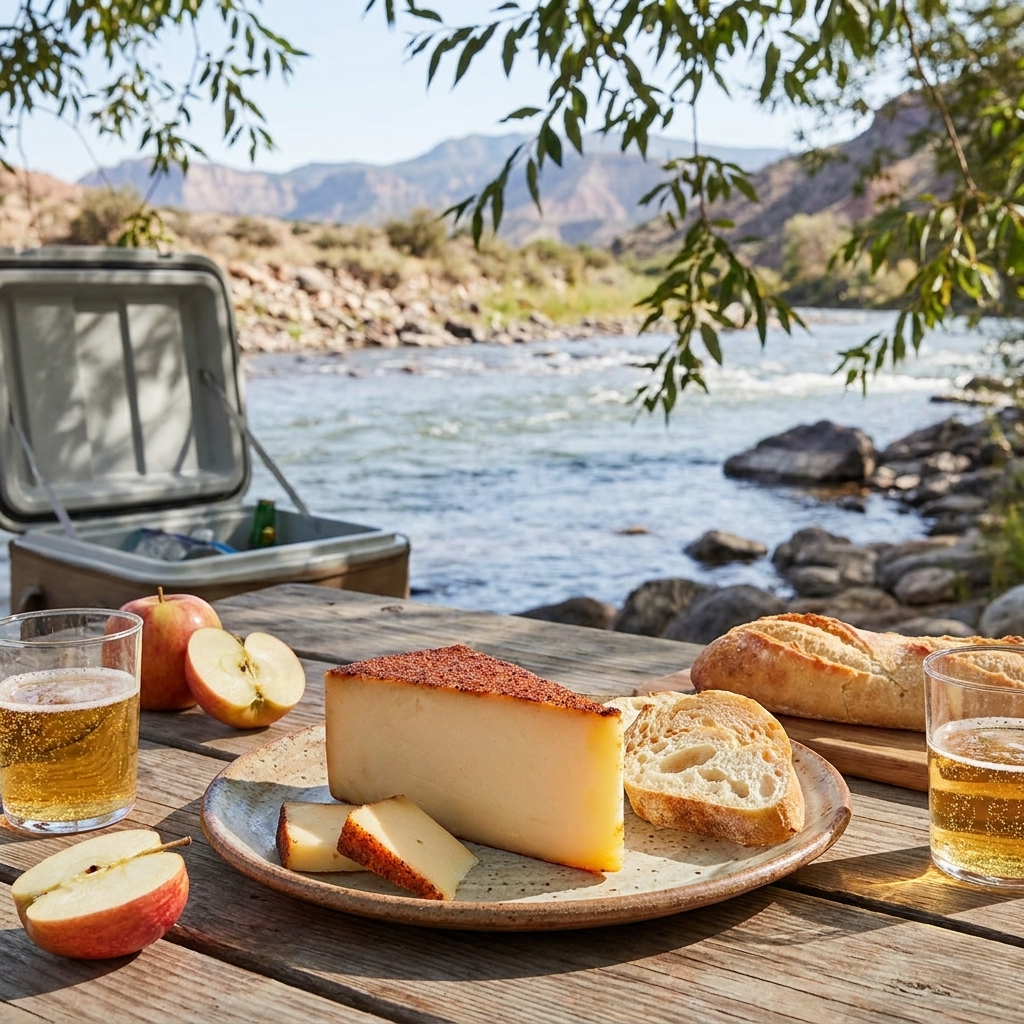
Add plain crackers or sliced baguette, a few dried apricots or figs, and something fresh, such as apple slices. Dates offer a richer sweetness. Prosciutto, coppa or salami work for meat eaters, but use a light hand: The cheese already brings salt and seasoning.
Dark chocolate is worth trying as a separate tasting bite. Its bitterness can be interesting beside the sweet dairy notes, though it is less universally friendly than fruit.
Pro Pairing Tip: Give the rub some breathing room
Start with unseasoned bread and fruit before reaching for smoked nuts, pepper jelly or heavily seasoned crackers. Too many smoky or spicy additions blur the cheese’s flavor instead of improving it.
When shopping locally, ask at Murray’s Cheese inside City Market about Cello Smoky Pepper Rubbed Fontal and current availability. If it isn’t in stock, describe what you need: a mild melting cheese with a peppery or smoky finish.
Wine: Match the pepper or soften it
Syrah is a good first choice if you enjoy red wine. Its peppery, dark-fruit character can echo the rub without requiring an especially expensive bottle. Pinot Noir offers a lighter approach, with bright fruit and acidity that contrast with the creamy cheese.
Cabernet Sauvignon, Chianti and Montepulciano can also work, particularly when the board includes cured meats. Very tannic or high-alcohol reds may make the seasoning feel more assertive, so bigger is not automatically better.
For whites, choose off-dry Riesling when you want a touch of sweetness against the pepper. Off-dry Vouvray, made from Chenin Blanc, offers another option. Check the label or ask the wine seller, since Vouvray comes in several sweetness levels.
An oak-aged Chardonnay takes a different route, echoing the cheese’s buttery richness. That can be satisfying, though a fresher, more acidic wine may feel livelier over several bites.
Beer: Brown ale earns its place
A brown ale or bock is my first pick here. Toasted malt and gentle sweetness complement the cheese’s nutty center while giving the pepper a softer landing.
Porter and stout bring roasted flavors that suit the smoky coating. Choose a restrained example before an intensely bitter or high-alcohol one, which can dominate the cheese.
For contrast, try a saison with lively carbonation and peppery yeast notes, or a crisp pilsner. Hop bitterness can make heat seem stronger to some drinkers, so a balanced pilsner is a safer starting point than the most aggressively hopped beer on the shelf.
No alcohol? Sparkling apple cider offers sweetness and fizz, while plain sparkling water keeps the focus on the cheese.
Put it to work in a warm dinner
This is where Fontal earns refrigerator space. It suits grilled cheese, macaroni and cheese, potato gratins and baked pasta. It also melts nicely into polenta or a fonduta-inspired cheese sauce. Traditional Aosta Valley fonduta uses Fontina; this seasoned version is a variation, not a substitute for that dish’s identity.
For an easy grilled cheese:
- Slice the Fontal thinly so it melts before the bread overbrowns.
- Butter the outside of two bread slices lightly.
- Add the cheese, including some of the seasoned edge. Thin apple slices are optional.
- Cook over medium-low heat, turning when the underside is golden.
- If the bread is ready before the center, lower the heat and cover briefly.
For a sauce, grate the cold cheese and add it gradually over low heat, stirring between additions. In polenta, stir it in near the end of cooking. Taste before adding extra salt, garlic or pepper.
A useful caution: Good melting cheese is not indestructible. Excess heat or prolonged cooking can still make it oily or tough. Gentle heat does more for dinner than a heroic blast from the burner.
Keep it fresh, and know when to let it go
Store the cheese at 40 degrees Fahrenheit or below. Follow the package’s storage directions and any use-after-opening guidance. Once opened, keep it well wrapped in cheese paper or parchment inside a covered container to limit drying and protect it from refrigerator odors.
The seasoning naturally creates a mottled, dark exterior. Slight drying at a cut edge or some darkening of damp spices does not automatically mean spoilage.
New fuzzy growth, unusual pink patches, a slimy film, or strong rotten or ammonia-like odors are different. Those are reasons to discard it. Because this is a moist, semi-soft-style cheese, don’t apply the mold-trimming advice meant for hard cheeses. Discard grated or sliced cheese if mold appears, too.
Do not taste questionable cheese to test its safety. Harmful bacteria do not always announce themselves with a bad smell.
For summer picnics along the San Juan River, pack it in a cooler with ice packs. Limit unrefrigerated time to two hours total, or one hour when temperatures exceed 90 degrees Fahrenheit.
One last thing: How to ask for it
Say SMOH-kee PEP-er RUBD FAHN-tuhl.
Then decide whether tonight calls for a board or a skillet. For a chilly Pagosa evening, I’d choose the skillet: crisp bread, a soft center and enough pepper to make a simple dinner feel considered.
Sources and Further Reading
- Smoky Pepper Fontina, Cello Cheese. Product details and serving ideas.
- Fontal Cheese, Dairy Farmers of Wisconsin. Style background and kitchen uses.
- Fontina PDO, Consorzio di Tutela Fontina. Information about the protected Italian cheese.
- Schuman Cheese’s Lake Country Dairy Plant Makes Italian-Style, Alpine Cheeses, Dairy Foods. Producer history and production practices.
- Molds on Food: Are They Dangerous?, USDA Food Safety and Inspection Service. Safe handling and mold guidance.