Estimated Reading Time: 7 min
Italian roots, New York character
Mozzarella has deep roots in southern Italy, especially Campania, where water buffalo milk became central to its identity. Murray's Fresh Mozzarella is an American-made cow's milk version, part of the Italian-American tradition that helped make this cheese a household staple.
Murray's began in Greenwich Village in 1940, founded by Murray Greenberg. Its New York identity matters, but it does not turn every packaged ball into cheese stretched that morning on Bleecker Street. House-made mozzarella and packaged retail mozzarella share a tradition, not necessarily a production schedule.

The Italian name for cow's milk mozzarella is fior di latte, or “flower of the milk.” Buffalo mozzarella is a different expression, generally richer and softer. Mozzarella di Bufala Campana also has protected designation of origin status, tying that name to specified Italian production areas and rules.
For your shopping list in Pagosa Springs, look for Murray's Fresh Mozzarella at Murray's Cheese inside City Market. Check the current selection and package date, especially if you are buying for a particular meal.
What is inside the ball?
Murray's Fresh Mozzarella uses pasteurized whole cow's milk. Expect a mild, creamy cheese with enough structure to slice neatly and enough moisture to leave a little milky liquid on the plate.
Its basic identity is easy to unpack:

- Milk: Pasteurized whole cow's milk.
- Cheese family: Pasta filata, meaning stretched-curd cheese.
- Style: Fresh, unaged and high-moisture, with a soft, elastic body.
- Rennet: A milk-setting enzyme. Check the specific package for its type.
- Allergen: Milk. Fresh mozzarella is not automatically lactose-free.
Rennet helps milk proteins gather into curd, the solid foundation of cheese. It can come from animal or microbial sources. Some Murray's mozzarella products use microbial rennet and are suitable for vegetarians, but the words “rennet” or “enzymes” alone do not tell you which kind was used. If that distinction matters, look for a vegetarian claim or ask the cheesemonger to confirm the exact product.
A typical 1-ounce serving provides about 80 calories and 5 to 6 grams of protein. Fat and sodium vary by format, so use your package's Nutrition Facts panel rather than treating every ball, log and marinated version as identical.
How milk becomes something you can pull into ribbons
Mozzarella's stretch is not a trick added at the end. It is built into the cheese.
The process starts with milk that is acidified through starter cultures or the addition of food-grade acid. Rennet sets the milk into curd. The curd is then cut, drained and brought to the right balance of acidity and calcium for stretching.
That balance matters. Calcium helps hold milk proteins together. As the curd becomes more acidic, some of that calcium shifts out of the protein network, making the curd more flexible. For many cultured mozzarella processes, stretching happens around pH 5.1 to 5.3, though the ideal point varies with the method.
Next comes hot water and careful handling. The cheesemaker folds and stretches the warmed curd, lining its proteins up into strands. Fat and moisture remain tucked between those strands. Cooling helps the cheese hold its new shape.
Think of the difference between a loose pile of thread and a gathered bundle. That organized structure is why mozzarella pulls apart in layers instead of crumbling like feta.
Two uses of heat, two different jobs
Pasteurization treats the milk for safety before cheesemaking. One common method heats milk to 161 F for 15 seconds, although that is not the only approved approach.
The later stretching step uses hot water, often around 160 to 185 F, to make the curd pliable. This step can reduce some microbes, but it is not a substitute for pasteurized milk, clean handling or refrigeration.
Making mozzarella at home? Choose milk suited to cheesemaking and avoid ultra-pasteurized milk unless your recipe specifically accommodates it. Its more intense heat treatment can interfere with the firm, stretchable curd you need. Also, hot curd burns. Follow a tested recipe rather than copying a bare-handed demonstration.
Taste the quiet details
Fresh mozzarella does not arrive with the sharpness of aged cheddar or the earthy punch of a washed-rind cheese. Its appeal is gentler: sweet cream, fresh milk, a hint of butter and a light tang.
Taste a plain piece before adding anything. You might notice a mild saltiness, followed by a clean dairy finish. The acidity should feel fresh, not harsh.
The texture should be smooth, moist and yielding, with a little spring. Tear a piece and look for fine layers. Very fresh mozzarella can even squeak slightly against your teeth, though a lack of squeak does not mean something is wrong.
For a tasting plate, take out only the portion you plan to eat and let it lose some refrigerator chill for about 15 to 20 minutes. Keep the rest cold. The flavor is easier to appreciate when the cheese is not ice-cold.
Why fresh mozzarella makes pizza wet
Water is a large part of the story. Under the U.S. standard of identity, mozzarella contains more than 52% and no more than 60% moisture. Low-moisture mozzarella contains more than 45% and no more than 52%.
That modest-looking difference changes how the cheese behaves.
Fresh mozzarella releases liquid when cut or heated. Low-moisture mozzarella is firmer, easier to shred and often a better choice for an evenly covered, browned pizza. Neither is the superior cheese in every setting. They have different jobs.
For fresh mozzarella on pizza:
- Drain it well.
- Tear it into small pieces or cut thin slices.
- Blot the surfaces with a clean paper towel.
- Use a light hand, leaving room between pieces.
- Keep other wet toppings, including tomatoes, under control.
Skip the box grater. Fresh mozzarella usually smears rather than producing useful shreds. On a home-oven pizza, a mix of fresh and low-moisture mozzarella can give you both milky pockets and reliable coverage.
Fresh means unaged, not shelf-stable
Mozzarella is ready to eat without a ripening period. It does not improve through weeks of aging in your refrigerator.
Unopened shelf life depends on packaging and production method. Follow the package date and storage directions. After opening, use it promptly within the manufacturer's recommended window rather than assuming the original date still applies.
Keep it refrigerated at 40 F or below, tightly covered and in its original liquid when applicable. Use clean utensils. Do not replace the liquid with an improvised salty bath unless the maker recommends doing so.
For a picnic beside the San Juan River, carry mozzarella in a cooler with ice packs. Perishable food should not sit unrefrigerated for more than two hours, or one hour when the temperature is above 90 F. A cool mountain breeze is pleasant, but it is not a refrigerator.
Normal moisture or actual spoilage?
A little cloudy liquid, a wet surface and a faint milky tang can be normal. Watch instead for:
- Mold or unusual blue, green or pink discoloration.
- Thick slime or marked breakdown into mush.
- Swollen packaging or unexpected gas.
- Strong yeasty, rotten or rancid odors.
Discard spoiled fresh mozzarella, including its liquid. Do not cut away a moldy spot and eat the rest, and do not taste questionable cheese to test it. Harmful microbes may not produce obvious smells or visible changes, so safe storage matters even when the cheese looks fine.
Build dinner around what is in season
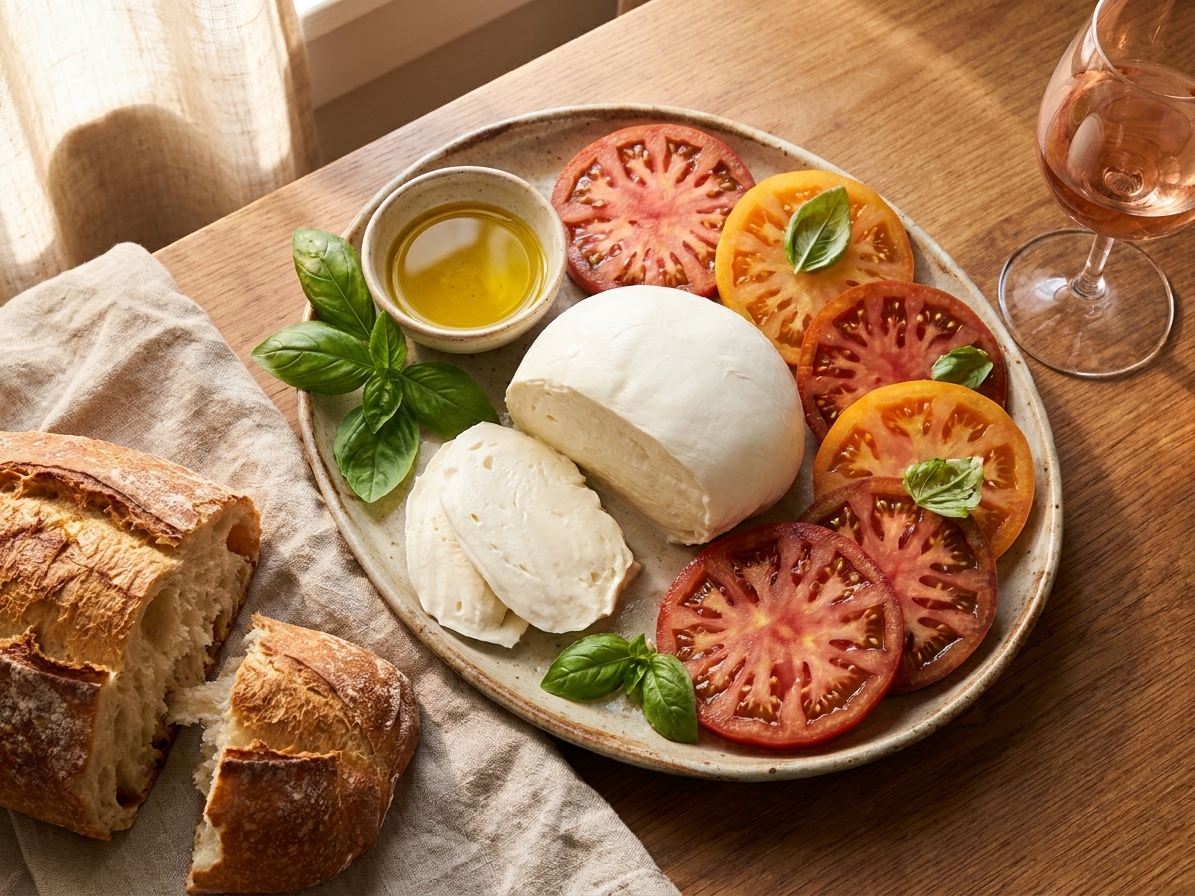
A ripe tomato, fresh mozzarella, basil and olive oil need little help. Salt the tomatoes, arrange them with the cheese, then add torn basil and a modest drizzle of oil. Taste before adding more salt.
Balsamic vinegar is optional. A few drops can work; a thick blanket of sweet glaze can hide the milk flavor you paid for.
In Pagosa Springs, the tomato plan makes more sense in late summer than during a snowy stretch in February. When tomatoes disappoint, use roasted peppers, warm roasted squash or other well-seasoned vegetables. Add the mozzarella near serving time so you keep some of its soft, fresh texture.
Prosciutto supplies a useful salty contrast. Focaccia or crusty bread catches the milky juices. For a simple supper after a trail day, put those on a plate with vegetables and stop there. Not every dinner needs another pan.
Pro Pairing Tip: Season the whole bite
Taste cheese and accompaniment together. Salty prosciutto may supply all the salt you need. Sweet roasted vegetables may benefit from lemon juice. The goal is balance, not making mild cheese taste loud.
Wine that leaves room for the cheese
Start with crisp whites and restrained rosés:
- Vermentino: Citrus, lively acidity and often a savory edge suit olive oil and herbs.
- Fiano: This Campanian white makes a natural regional match, with enough body for the cheese.
- Pinot Grigio: A dry, fresh style keeps a simple mozzarella plate light.
- Sauvignon Blanc: Herbal notes work especially well with basil and vegetables.
- Dry rosé: A useful choice when tomatoes or cured meats join the plate.
Big, tannic reds can overwhelm plain mozzarella, but pairing is not a laboratory verdict. If you want red wine, try lightly chilled Beaujolais or a lighter Pinot Noir. Tomato sauce, grilled food and cured meat may matter as much as the cheese.
Beer belongs at this table, too
A crisp pilsner is an especially good starting point. Its herbal hop notes suit basil, while its clean finish keeps the pairing refreshing.
Witbier brings citrus and spice, often from orange peel and coriander. Kölsch offers a gentler option for mozzarella with bread or roasted vegetables. A tart, lightly salty gose can be fun alongside tomatoes, though a sharply sour version may dominate the cheese.
Pro Pairing Tip: Pour for the plate
Choose pilsner for a simple cheese-and-bread snack, dry rosé for caprese, or Kölsch for roasted vegetables. For a nonalcoholic option, sparkling water with lemon gives a refreshing contrast without burying the dairy flavor.
A name made by hand
The name mozzarella comes from mozzare, meaning to cut or cut off, a reference to separating portions from the stretched curd. The name describes work you can still watch a cheesemaker do.
Murray's has made that work part of its public identity through mozzarella-making classes and cheese education. It has also celebrated National Cheese Day with a giant mozzarella-stretching event in Greenwich Village. Same basic craft. Considerably more lifting.
To order it, say MUR-eez fresh moht-suh-REL-uh. Then ask the more useful questions: Which package is freshest? How should it be stored? What would taste good with it tonight?
Buy a modest amount, keep it cold and give it a simple meal to shine in. Fresh mozzarella rewards good timing more than elaborate treatment.
Sources and Further Reading
- Murray's Fresh Mozzarella Ball, 8 ounces, Murray's product listing, Ralphs.
- 21 CFR 133.155: Mozzarella cheese and scamorza cheese, U.S. Food and Drug Administration, Electronic Code of Federal Regulations.
- Pasta Filata, Cheese Science Toolkit.
- Making Fresh Mozzarella, University of Alaska Fairbanks Cooperative Extension Service.
- Bootcamps, Murray's Cheese Classes.