Estimated Reading Time: 7 min
A California Cheese With a Place at a Colorado Table
Cypress Grove is based in Arcata, in California's Humboldt County, where coastal fog and mild weather shape the region's dairy landscape. It's a different setting from Pagosa Springs, with our dry air, snowy winters and summer afternoons that invite you outside. But this goat cheddar travels well from one kind of table to another: sliced beside an apple, tucked into a sandwich or melted over dinner.
This is an American artisan cheese, not a geographically protected European cheese. Its name points to a familiar style, cheddar, while its goat milk gives that style a different character.

Say it: SY-prus GROHV GOHT CHED-er.
Terroir Tales: Two Goats and a Kitchen Stove
Mary Keehn founded Cypress Grove in 1983. Her cheesemaking grew out of keeping goats to supply milk for her family, then finding a use for the surplus. Two early goats, Esmeralda and Hazel, have become part of the creamery's origin story.
Keehn helped build an audience for American artisan goat cheese at a time when it was far less familiar to shoppers. That history matters here. Goat cheddar offers an easy route into the category without asking you to abandon the flavors and uses you already enjoy.
What's in It: Goat Milk, Cultures and Vegetarian Rennet
Cypress Grove Goat Cheddar is made with pasteurized, cultured goat milk, salt and microbial rennet. It is aged for at least two months.

A few terms are worth unpacking:
- Cultures are useful bacteria that turn milk sugar into lactic acid. They help develop the cheese's texture and flavor.
- Rennet is the enzyme preparation that helps milk set into curd, the solid portion that becomes cheese.
- Microbial rennet comes from microorganisms rather than an animal's stomach. It makes this cheese suitable for vegetarians, though not vegans.
Goat milk has a different balance of fats and proteins from cow milk. Those differences influence how the curd forms and how the finished cheese tastes. Certain fatty acids contribute the earthy, tangy notes people associate with goat cheese, but their presence does not mean every goat cheese tastes strong.
The cheese's identity rests on goat milk rather than a single named breed. Cypress Grove also emphasizes animal welfare in its dairy operations, including humane-certified practices at its model dairy.
Allergen note: This is a milk product. Goat milk is not a safe substitute for someone with a cow's milk protein allergy because the proteins can cross-react. Nor does aging automatically make a cheese lactose-free. Check the current package and follow medical guidance for dietary restrictions.
Pasteurization: Important, but Not a Safety Force Field
The milk is pasteurized before cheesemaking. Pasteurization uses controlled heat to reduce harmful microorganisms and helps the cheesemaker begin with a more consistent milk supply.
One common dairy method heats milk to at least 161 degrees Fahrenheit for 15 seconds. Other approved time-and-temperature combinations exist, so that example should not be mistaken for a product-specific processing specification.
Pasteurized cheese still needs sound handling and refrigeration. Contamination can happen after heat treatment, and a warm car is no place to store your grocery haul while you make one more stop downtown.
How Two Months of Aging Change the Cheese
Traditional cheddar making includes cutting and cooking the curd, draining whey, and allowing curds to knit into slabs. Those slabs are stacked and turned during cheddaring, then cut into smaller pieces, salted and pressed.
During aging, enzymes gradually break down proteins and fats. This process builds flavor and changes how the cheese feels in your mouth. The useful scientific terms are proteolysis, protein breakdown, and lipolysis, fat breakdown. You don't need to memorize either to appreciate the result.
At two months or more, Cypress Grove Goat Cheddar has had time to develop savory depth without becoming the dry, brittle cheese you might expect from a much older cheddar. Longer aging isn't automatically better. For sandwiches and everyday cooking, a younger, more supple cheese often makes more sense.
Cheese Type, Moisture and Texture: Firm Enough to Slice
Think of this as an aged, semi-firm goat cheddar with good slicing, shredding and melting potential. Retailers may place it in a broad hard-cheese category, but that does not mean it behaves like a dry grating cheese.
Moisture matters. During cheesemaking, curds release whey, a process called syneresis. How much whey drains away helps determine whether a cheese ends up soft, springy, firm or crumbly. Acidity, salt, fat and aging also shape the result; water content alone doesn't tell the whole story.
For your kitchen, the useful distinction is simple: this cheddar has a smooth, cohesive body rather than the pronounced crumble of a long-aged cheddar. It holds a slice yet softens pleasantly as you eat it.
Don't buy it expecting a mouthful of crunchy crystals. Those are more associated with some longer-aged cheeses. Calcium lactate crystals can occur in cheddar, but they aren't required for good quality.
What You'll Taste
The central flavors are nutty and savory, with a mild sweetness and a slightly sharp finish. A gentle goat-milk tang gives it character without making every bite a declaration about goats.
That balance makes it a sensible choice if you enjoy cheddar but find some fresh goat cheeses too tart. It is not simply cow's milk cheddar wearing a different label, though. Taste it plain before adding mustard, jam or a strongly flavored cracker.
Try this small tasting exercise:
- Cut a few thin slices and let them lose their refrigerator chill for about 20 minutes.
- Smell one before tasting. Look for mild dairy and nutty aromas.
- Take a plain bite and notice how the flavor changes as the cheese softens.
- Follow with a tart apple slice, then try the cheese again.
The apple makes the cheese's sweetness and savory side easier to notice. No tasting notebook required.
Wine Pairings: Start Crisp, Then Explore
Sauvignon blanc is a strong first choice. Its bright acidity gives a refreshing contrast to the cheese's richness, while herbal notes can work nicely with the gentle tang.
Unoaked chardonnay or pinot grigio keeps things clean and restrained. Choose either when you want the cheese, not the wine, to do most of the talking.
Prefer red? Pinot noir offers fruit with less tannic grip than many fuller reds. A softer, fruit-forward cabernet sauvignon can work, but an especially tannic bottle may overwhelm this relatively mild cheddar. Pinot is the safer starting point.
Prosecco brings bubbles and freshness. A demi-sec sparkling wine, which has noticeable sweetness, can be enjoyable with the cheese and a little fruit.
Pro Pairing Tip
Taste the wine and cheese together before adding sweet preserves. Jam can change the balance enough to make a dry wine seem harsher. Build the pairing one bite at a time.
Beer Pairings: From Pilsner to Stout
A pilsner is an easy match for a casual cheese plate. Its crisp finish and bready malt leave room for the cheddar's flavor.
A Belgian-style witbier adds citrus and spice, while a balanced pale ale offers hop bitterness alongside malt notes that complement the cheese's nuttiness. Start with moderate bitterness rather than the most forceful beer in the cooler.
For colder evenings, try a dry stout or oatmeal stout. Roasted flavors create a pleasing contrast with the creamy cheese. A fruit lambic takes another route: tart cherry or raspberry can play the role of fruit preserves alongside the cheddar.
Skipping alcohol? Sparkling water and apple slices make a useful, low-fuss tasting setup.
What to Eat With It, and How to Melt It
For a board, choose a few contrasting foods rather than emptying the pantry:
- Tart green apples for crispness and acidity.
- Cherry tomatoes for a juicy, savory bite.
- Roasted pistachios or Marcona almonds to echo the nutty flavors.
- A small amount of candied pineapple for concentrated sweetness.
- A light drizzle of maple syrup for a sweet-and-savory finish.
Keep the syrup modest. You want cheddar with maple, not a pancake impersonation.
This cheese also earns its refrigerator space in grilled cheese sandwiches, burgers, risotto and baked dishes. Good melting potential does not make any cheese immune to overheating, so use gentle heat.
For a straightforward grilled cheese:
- Shred the cheese while cold, which makes it easier to handle.
- Spread it evenly between two slices of bread. Add thin apple slices if you like.
- Lightly butter the outside of the bread.
- Cook over medium-low heat, turning when the first side is golden. Cover briefly if the bread browns before the center melts.
- Rest for a minute before cutting.
For risotto, stir finely grated cheese into the hot rice off the heat. Add a splash of warm stock if needed to loosen it. Boiling hard after adding cheese can encourage a greasy or uneven texture.
Storage and Spoilage: Know When to Let Go
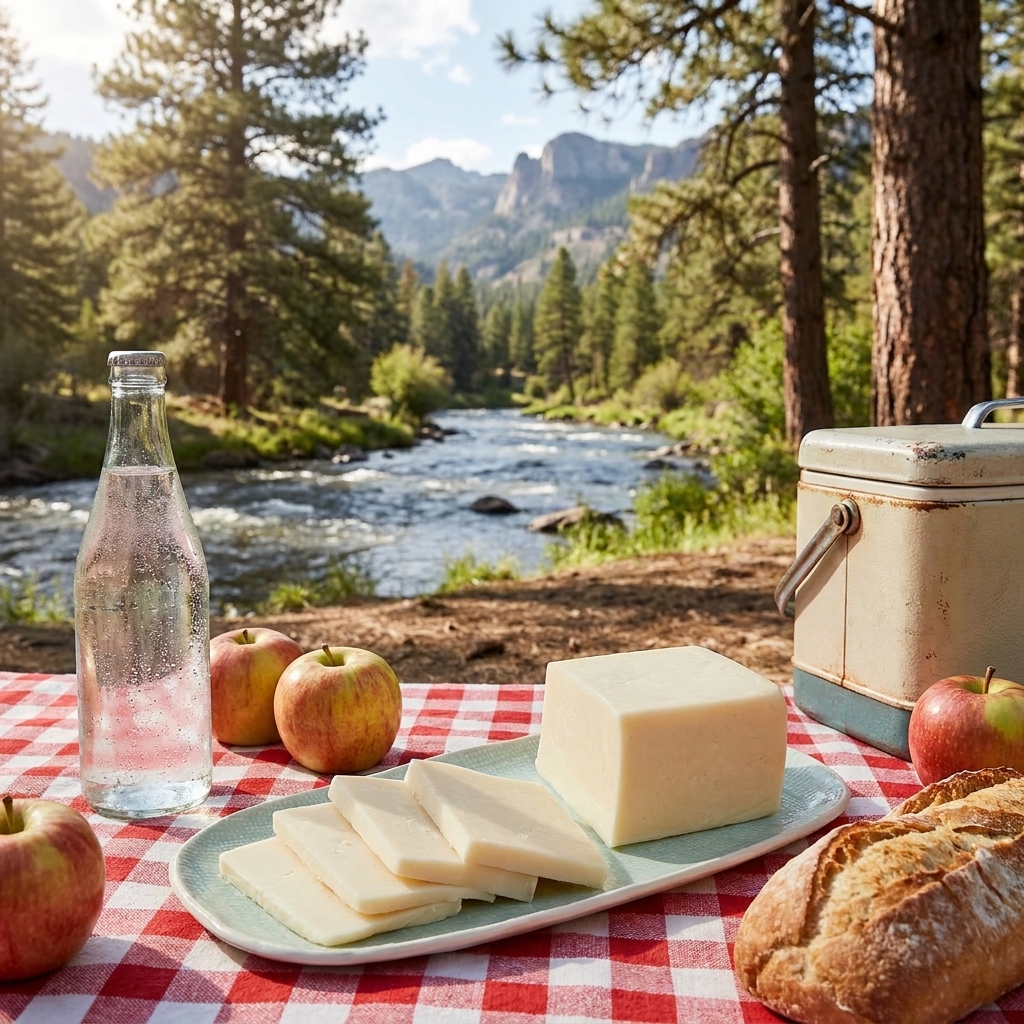
Keep the cheese refrigerated at 40 degrees Fahrenheit or below. Once opened, protect the cut surfaces with suitable wrapping or a clean, closed container, and follow the package's storage directions. For a picnic near the San Juan River, use an insulated cooler with ice packs.
Small, hard, nonfuzzy white grains can be cheese crystals rather than mold. But appearance alone isn't always enough to identify an unfamiliar spot, and crystals are not proof that a cheese is safe.
Discard cheese with unusual pink discoloration, a slimy surface, a putrid odor or an unexpectedly swollen package. Don't taste questionable cheese to test it. Harmful bacteria do not always announce themselves with an odor.
USDA guidance allows mold to be trimmed from hard block cheese by cutting at least 1 inch around and below the spot, keeping the knife out of the mold. That advice does not apply to shredded, sliced or crumbled cheese. With a small piece of semi-firm goat cheddar, discarding it is the more cautious choice if mold appears or you are unsure.
A Practical Next Bite in Pagosa Springs
Ask about Cypress Grove Goat Cheddar at Murray's Cheese inside City Market in Pagosa Springs; selection can vary. Start with a small piece, a crisp apple and bread you actually like eating.
Try it plain first. Then melt some into lunch. A cheese that works both ways is worth getting to know.
Sources and Further Reading
- Cheddar, Cypress Grove Cheese. Product details and serving suggestions.
- Cypress Grove Goat Cheddar, Murray's Cheese. Cheese characteristics and pairing ideas.
- Cypress Grove, California Cheese Trail. Creamery history and regional context.
- Cultured Dairy Products and Cheese, University of Guelph. An introduction to cultures, coagulation and cheesemaking.
- Molds on Food: Are They Dangerous?, USDA Food Safety and Inspection Service. Guidance on mold and safe food handling.