Estimated Reading Time: 7 min
An Iowa cheese with a mountain-cheese streak
Despite its name, High Plains Cheddar does not come from Colorado. It comes from Milton Creamery in Milton, Iowa, and reaches the cheese counter under Murray’s label. Its original identity is Prairie Breeze, the creamery’s flagship cheddar.
That distinction matters. Murray’s is the retailer and brand on the package; Milton Creamery is the maker behind the cheese.

High Plains belongs to the sweet-cheddar camp, with flavors that recall Alpine cheeses such as Gruyère. Think toasted nuts, a little fruit and a savory finish rather than a sharp bite that takes over your mouth. It is still cheddar, just with a broader vocabulary.
For Pagosa Springs shoppers, look for it at Murray’s Cheese inside City Market. Availability can vary, so ask at the counter before planning your whole board around it.
Terroir Tales: Small farms, one family creamery
The Musser family established Milton Creamery in 2006, building a market for milk from small local farms, including Amish and Mennonite dairies. That farming network is an important part of the cheese’s story.
You may hear the word terroir used for cheese. It means the influence of place, including farming, feed, climate and local craft. Those factors can shape milk and cheese, but they do not work alone. Cultures, moisture and aging also have a large say in what you taste. A pineapple note is not evidence that Iowa cows have discovered tropical fruit.

What is in it?
High Plains is an aged, semi-hard cheese made with pasteurized cow’s milk and vegetarian rennet.
Its essential ingredient lineup is straightforward: cow’s milk, cheesemaking cultures, salt and a nonanimal coagulant. Check the package for the current ingredient statement, especially if you have dietary restrictions.
Rennet is the ingredient that helps milk set into curds. Traditional animal rennet comes from the stomach of a young ruminant. Vegetarian alternatives perform the same basic job without that animal-derived ingredient. High Plains uses vegetarian rennet, but it remains a dairy food, not a vegan one.
Allergen alert: It contains milk. Aging generally leaves cheddar with little lactose, but that does not make it safe for someone with a milk-protein allergy. Nor should you assume that every aged cheese carries a verified lactose-free claim.
Pasteurization, curds and the wait for flavor
Pasteurization heats milk to reduce harmful microbes before cheesemaking begins. It does not make milk sterile, and it does not keep a finished cheese safe indefinitely. Clean handling and cold storage still matter.
Once cultures and rennet have done their work, the curds are cut, stirred and warmed to help release whey, the watery portion of milk. In traditional cheddar production, curds are then matted, stacked and turned before being milled, salted and pressed. The matting and stacking stage is called cheddaring.
High Plains’ Alpine character reflects its culture-driven flavor development. Alpine-style cheesemaking often uses thermophilic cultures, bacteria that thrive at warmer temperatures. One well-studied example is Lactobacillus helveticus, which can help develop nutty, savory flavors and reduce bitterness as cheese ages.
You do not need to memorize the name. The useful point is that cultures do more than sour milk. Their enzymes help turn a plain curd into something worth lingering over.
High Plains ages for at least nine months, with nine to 12 months a typical range. During that time, enzymes break down proteins into smaller pieces, changing both flavor and texture. Affinage is the term for this managed aging process.
The result is mature without being relentlessly dry. A bit crumbly at first. Creamy as you chew.
What semi-hard actually means
“Semi-hard” describes a cheese firm enough to slice or break into chunks, but not as dry and brittle as a very old grating cheese.
Federal standards for cheddar set a maximum moisture content of 39% and a minimum milkfat content of 50% of the solids. That second figure needs translation: It does not mean half the whole block is fat. It refers to the portion left after water is excluded.
Those standards are category limits, not a laboratory analysis of your particular wedge. For shopping and cooking, the practical takeaway is simpler: High Plains has a dense body that works on a board and can also melt into a sandwich or sauce.
Taste it before you dress it up
Start with a plain piece. No jam, no mustard, no towering stack of salami.
Look for toasted almond, butterscotch and a fruity note that may suggest pineapple. A savory finish follows. Not every bite will announce every flavor, and your own descriptions are perfectly useful. “Nutty and a little sweet” is a fine tasting note.
Here is a simple way to get acquainted:
- Cut only what you plan to serve. Return the rest to the refrigerator.
- Let the portion lose its refrigerator chill. About 20 to 30 minutes is a useful starting point in a cool room.
- Try a small, uneven chunk. It reveals the cheese’s crumbly structure better than a paper-thin slice.
- Let it soften in your mouth. Notice how the firm bite becomes creamy.
- Add one pairing at a time. Taste again before deciding whether the match works.
The sweetness is a flavor impression, not a reason to think of this as a sugary cheese. Nuts and butterscotch are tasting comparisons, not ingredients.
That little crunch is part of the appeal
High Plains can contain small crystals that interrupt its creamy texture with a pleasant crunch. They are not bits of rind or added salt.
Two common crystal types in aged cheeses are calcium lactate and tyrosine. Calcium lactate forms from compounds associated with milk fermentation and can appear on the surface or within cheese. Tyrosine is an amino acid released as proteins break down; it can collect into firm crystals inside the cheese.
Crystals are a natural part of some cheeses’ aging. They are not, by themselves, proof that one cheese is better than another. Still, that contrast between creamy cheese and tiny crunchy spots is a good reason to serve your first bite without a cracker.
Wine: Match the mood, not just the label
High Plains gives you several good directions:
- Sauvignon blanc: A bright, crisp contrast to the cheese’s richness. A good place to start if you prefer a refreshing pairing.
- Lightly oaked chardonnay: A fuller match for its nutty, buttery side. Avoid letting heavy oak drown out the cheese.
- Off-dry riesling: A little sweetness can bring the fruit notes forward, while acidity keeps the pairing lively.
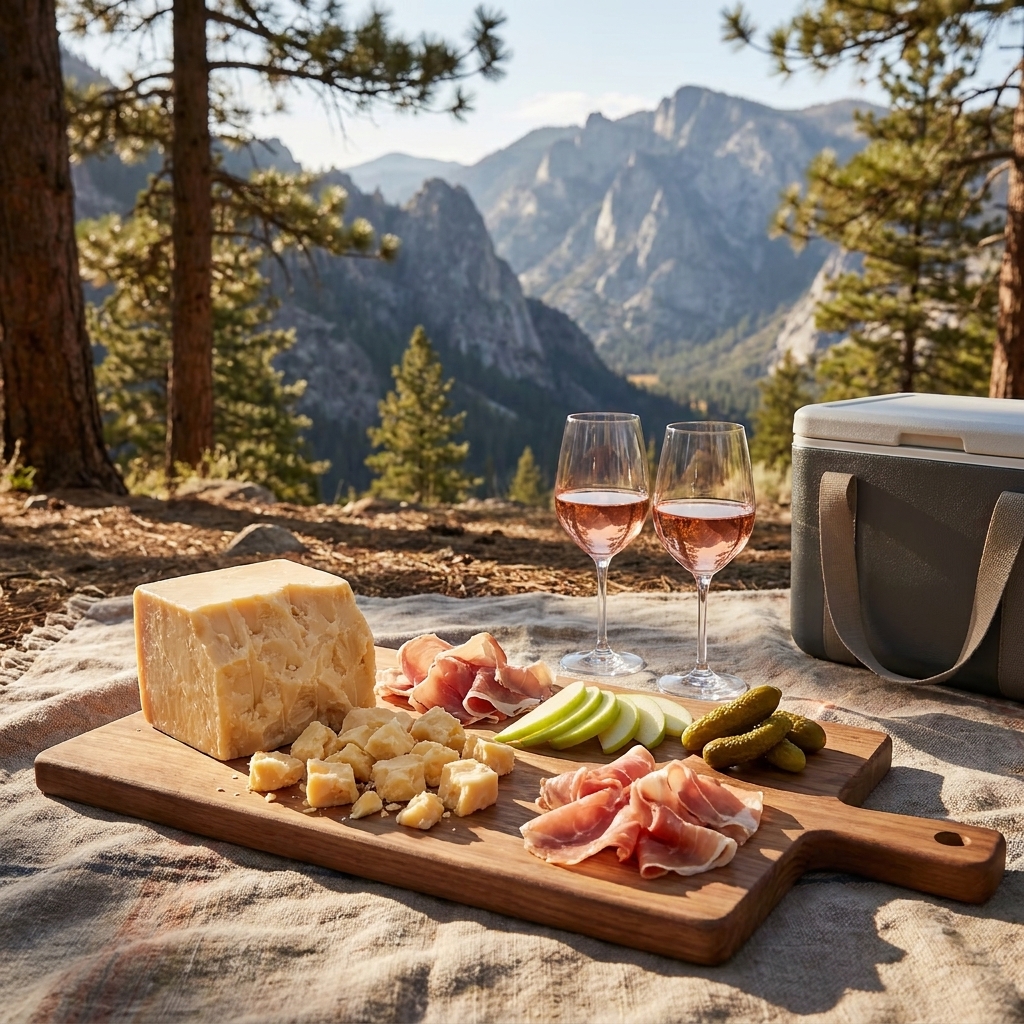
- Dry rosé: An easy choice for a warm afternoon and a board with apples, pickles and cured meat.
- Cabernet sauvignon: Worth trying if you enjoy a substantial red. The cheese has enough flavor to hold its own, though very tannic bottles can dominate.
Pro Pairing Tip
Choose contrast or similarity on purpose. Sauvignon blanc offers contrast; lightly oaked chardonnay echoes the cheese’s richness. Pour small tastes of each beside the same wedge and see which approach you prefer.
Beer, bourbon and a little restraint
For beer, a blonde ale is my first choice when the goal is to taste the cheese clearly. Its gentle malt flavor and carbonation leave room for the cheddar’s finer details.
An IPA offers a bolder contrast. Citrus-forward hops can work well with the cheese’s fruity side, though intense bitterness may overwhelm it. A porter or stout takes the pairing toward toasted and roasted flavors, especially pleasant after a cold day outside.
Sour beers are more adventurous. Try a small pour of gose or Flanders red ale rather than committing your whole evening to the experiment.
Bourbon is another option, with vanilla, oak and caramel notes that can echo the cheese. Keep the pour modest. You want a conversation between the two, not a shouting match.
Build a useful board, then cook the leftovers
For a compact board, choose one item from each of these groups:
- Fresh: Green apple slices or firm pear wedges.
- Sweet: Fig preserves, strawberry jam or a light drizzle of hot honey.
- Savory: Salami, prosciutto or thinly sliced ham.
- Tangy: Cornichons, bread-and-butter pickles or mustard.
- Plain: Baguette slices or thin, lightly flavored crackers.
Resist the urge to pile on every condiment. Too much jam can flatten the difference between a thoughtful cheese board and a very elaborate dessert plate.
For a rental-cabin supper or an easy weeknight meal, put High Plains in a grilled ham-and-cheese sandwich. Grate it so it melts more evenly, then cook over moderate heat. The bread should not finish browning before the center warms through.
It also works in macaroni and cheese. Add grated cheese to a warm sauce over low heat, or off the heat, rather than boiling it hard. Aged cheeses can release fat and turn grainy when overheated. For a milder, smoother blend, combine it with a younger cheddar.
Storage: Protect it from moisture and mountain air
Pagosa’s dry air can toughen an exposed cut face, while trapped moisture can encourage spoilage. The goal is protection without a wet wrapper.
Wrap an opened wedge in cheese paper, or parchment followed by a loosely closed bag or container. Keep it refrigerated at 40 degrees Fahrenheit or below, and replace damp or dirty wrapping. Follow the package’s storage directions and use clean utensils each time you cut it.
For a picnic, carry it in an insulated cooler with ice packs. As a conservative food-safety rule, refrigerate perishable foods within two hours, or one hour when the temperature exceeds 90 degrees. A car parked in the sun is not a cheese cave.
Crystals or spoilage? Know when to stop guessing
Hard, gritty white specks may be harmless crystals. Fuzzy growth, unusual discoloration, slime or a strong rotten or ammonia-like smell calls for caution. Appearance alone cannot settle every case, and smell cannot detect all foodborne hazards. Do not taste questionable cheese to test its safety.
For a firm, intact block of cheddar with a small patch of surface mold, USDA guidance allows cutting away at least 1 inch around and below the mold. Keep the knife out of the mold itself and rewrap the remaining cheese in fresh material.
That advice does not apply to shredded, crumbled or sliced cheese, which should be discarded if moldy. Discard a block with widespread mold, slime or other clear signs of spoilage. When you cannot confidently identify a change, throwing it out is the sensible choice.
A few names worth knowing
Prairie Breeze has earned awards in major cheese competitions, helping bring national attention to the Musser family’s Iowa creamery. Its appeal is not hard to understand: familiar cheddar form, a sweeter flavor profile and enough texture to make you pay attention.
At the counter, the names are easy:
- High Plains Cheddar: HIGH PLAYNZ CHED-er.
- Prairie Breeze: PRAIR-ee BREEZ.
- Milton Creamery: MIL-tun KREE-muh-ree.
- Lactobacillus helveticus: lak-toh-buh-SIL-us hel-VET-ih-kus, if you feel like taking the scenic route.
Ask for a small piece first. Taste it plain, then try it with an apple and your usual drink. The best pairing is not the most elaborate one. It is the one that makes you want another bite of the cheese.
Sources and Further Reading
- Murray’s High Plains Cheddar, Murray’s Cheese. Product details and serving ideas.
- A Legacy of Community & Artisanal Cheese, Milton Creamery. Producer history and farming relationships.
- Cheeses and Related Cheese Products, 21 CFR Part 133, Electronic Code of Federal Regulations, FDA standards. See Section 133.113 for cheddar.
- Cheese Crystals, Cheese Science Toolkit. An accessible guide to crystal formation.
- Molds on Food: Are They Dangerous?, USDA Food Safety and Inspection Service. Guidance on mold and safe handling.